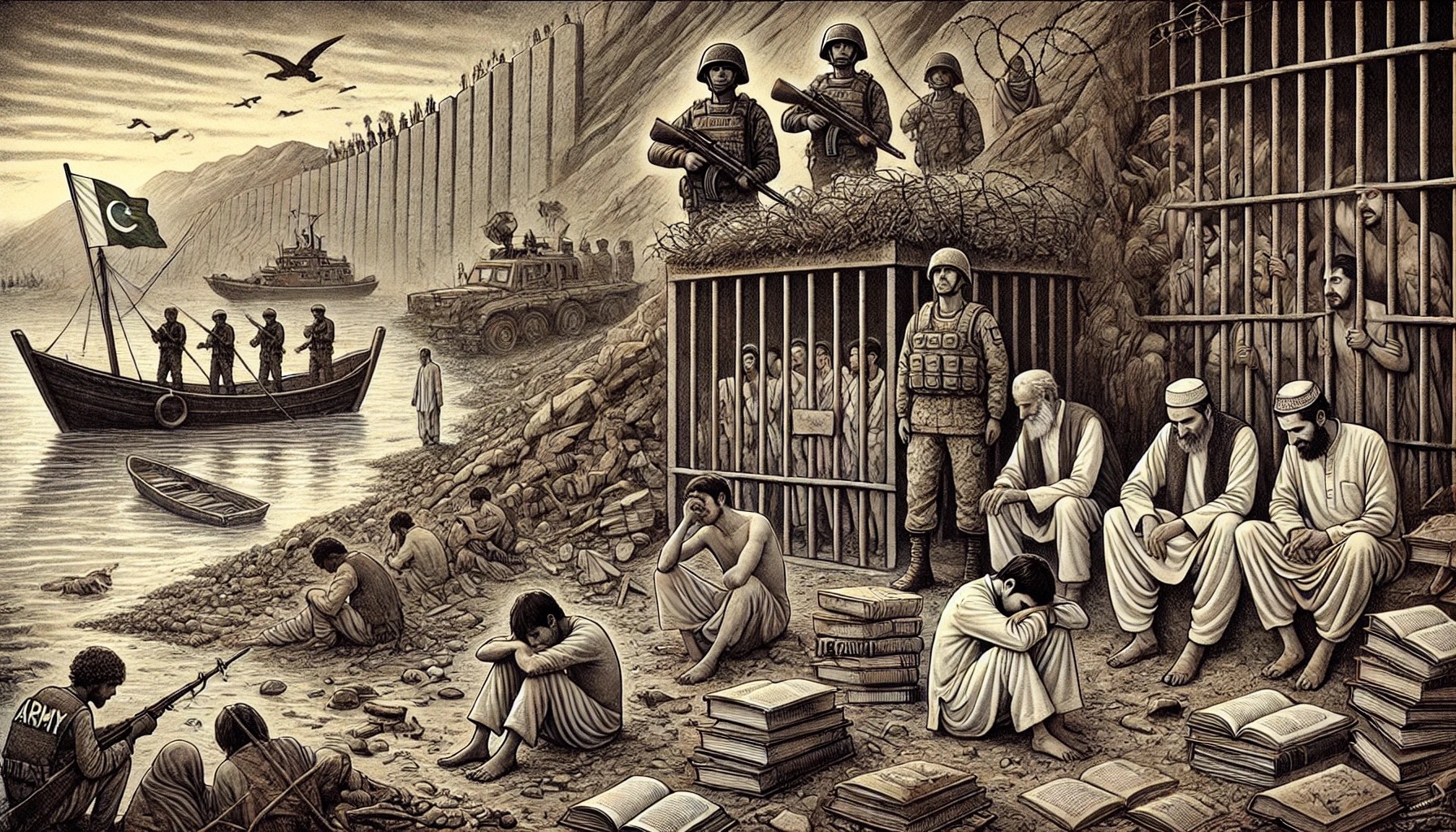
I've spent years watching human rights reports from around the world, but the stuff coming out of Balochistan right now is genuinely chilling. While most of us are distracted by the usual global headlines, a systematic "kill and dump" policy is operating in the shadows of Pakistan’s largest province. Paank, the human rights wing of the Baloch National Movement, just released a report that basically screams for help, detailing a spike in enforced disappearances, torture, and extrajudicial killings that haven't slowed down in 2026.
People are being snatched off the streets in broad daylight. Students, activists, and even disabled individuals like Mahjabeen Baloch—who vanished from the University of Balochistan in May 2025—are disappearing into a void where law doesn't exist. If you think this is just some distant political squabble, you’re wrong. It’s a humanitarian catastrophe that’s gutting an entire generation.
Why enforced disappearances aren't just arrests
In a normal country, if the police think you did something wrong, they arrest you, read you your rights, and take you to a station. In Balochistan, that’s not how it works. Security forces—often the Frontier Corps or plainclothes intelligence agents—simply grab someone and they're gone. No record. No charges. No phone call to their mother.
Paank's data shows that over 1,200 people were forcibly disappeared in 2025 alone. Think about that number. That’s 1,200 families living in a permanent state of grief and terror, not knowing if their son or daughter is being tortured in a secret cell or lying in a shallow grave. By March 2026, the trend hasn't broken. Just last week, reports surfaced of nine more individuals being taken from various districts.
The psychological toll is brutal. When someone "resurfaces" after months or years, they’re often a shell of their former selves. We're talking about young men who were "brimming with life" and come back "mentally paralyzed," as the report puts it. Their thoughts are monitored, their families are harassed, and they're essentially turned into "living corpses."
The kill and dump reality
The most horrifying part of the Paank report isn't just the snatching—it's the dumping. For years, activists have used the term "kill and dump" to describe how the bodies of the disappeared eventually show up. They aren't just killed; they're often found with clear signs of extreme physical abuse.
We aren't talking about accidental deaths in custody. We're talking about bodies found in desolate areas, often bearing marks of electric shocks, cigarette burns, and broken bones. In the first half of 2025, the Baloch Yakjehti Committee (BYC) documented 117 extrajudicial killings. These aren't just numbers on a spreadsheet; they're people like Bashir Ahmad Marri and Arman Marri, who were taken in 2023 only to have their bodies identified much later following a military operation in Kachi.
The weaponization of the legal system
If you're wondering why the courts don't stop this, it's because the system has been rigged to facilitate it. The Pakistani authorities are increasingly using the Anti-Terrorism Act to label anyone who speaks up as a "proscribed person." This includes teachers, journalists, and even students who just want better schools.
Look at the case of Mahrang Baloch. She’s one of the most prominent activists in the region, a woman who has led massive marches to Islamabad to demand the recovery of missing persons. Instead of listening, the state has hit her and four other activists with secret trials in prison. They’re being denied bail, kept away from the media, and refused medical care despite failing health.
When the state treats human rights defenders like terrorists, the law becomes a weapon rather than a shield. Amnesty International has been banging the drum about this for months, but the silence from the international community is deafening.
A province trapped in poverty and trauma
You can't talk about the violence without talking about the poverty. Balochistan is sitting on a goldmine of natural gas and minerals, yet it's the poorest province in Pakistan. Roughly 70% of the population lives in "multidimensional poverty."
It's a classic case of resource extraction without local benefit. While the China-Pakistan Economic Corridor (CPEC) moves billions of dollars through the region, the local people can’t even get clean water. This economic strangulation fuels the insurgency, which the state then uses as an excuse to ramp up the disappearances. It's a circular nightmare.
- Literacy rates: Only 28% for boys and a staggering 17% for girls in some areas.
- Health: The highest infant and maternal mortality rates in the country.
- Infrastructure: Decaying roads and schools that are often occupied by security forces.
What you can actually do
Don't just read this and feel bad. Awareness is the first step, but pressure is the second. The Pakistani government cares about its international image, especially when it comes to trade statuses like the EU’s GSP+.
- Follow the activists: Follow Dr. Mahrang Baloch and the Baloch Yakjehti Committee on social media. They are the ones on the ground risking their lives to document these cases.
- Pressure your reps: If you're in the US, EU, or UK, ask your representatives why they're providing military or financial aid to a regime that's systematically disappearing its own citizens.
- Support Paank: Human rights organizations like Paank and the Human Rights Commission of Pakistan (HRCP) need resources to continue their documentation.
The situation in Balochistan isn't going to fix itself. As long as the world looks the other way, the "kill and dump" cycle will keep spinning. It’s time to stop treating these disappearances as a "security issue" and start seeing them for what they really are: a state-sponsored campaign of terror against a marginalized population.