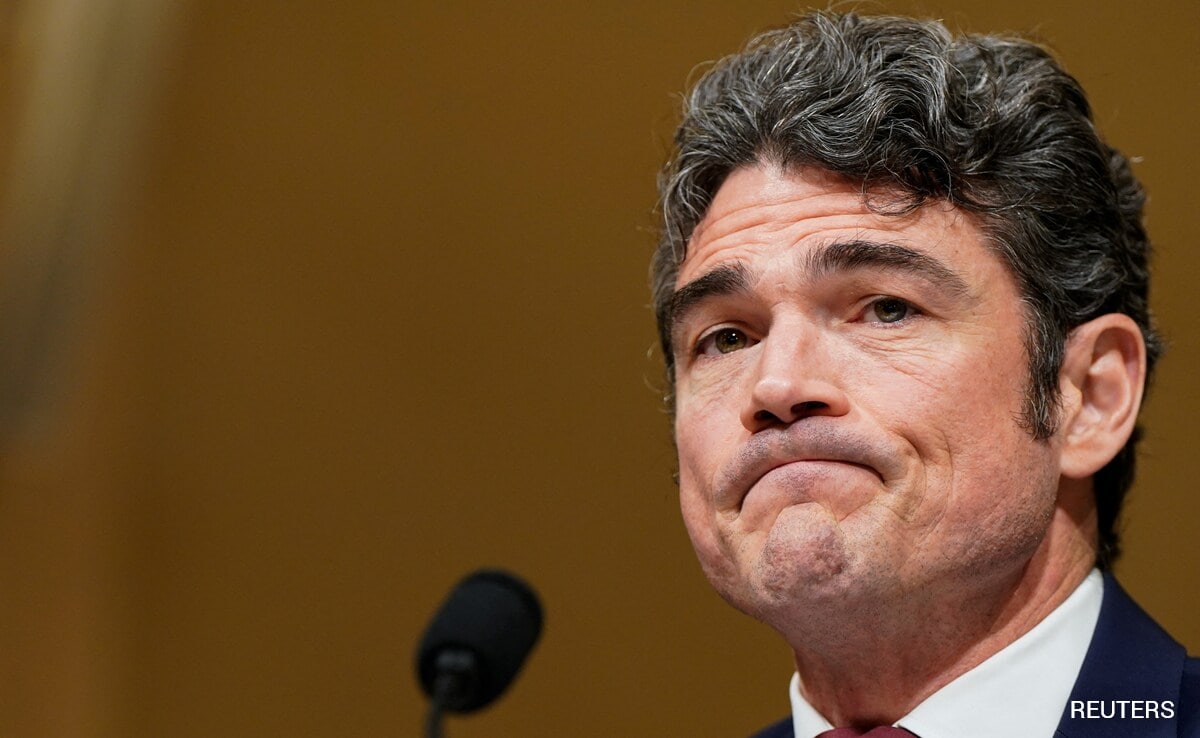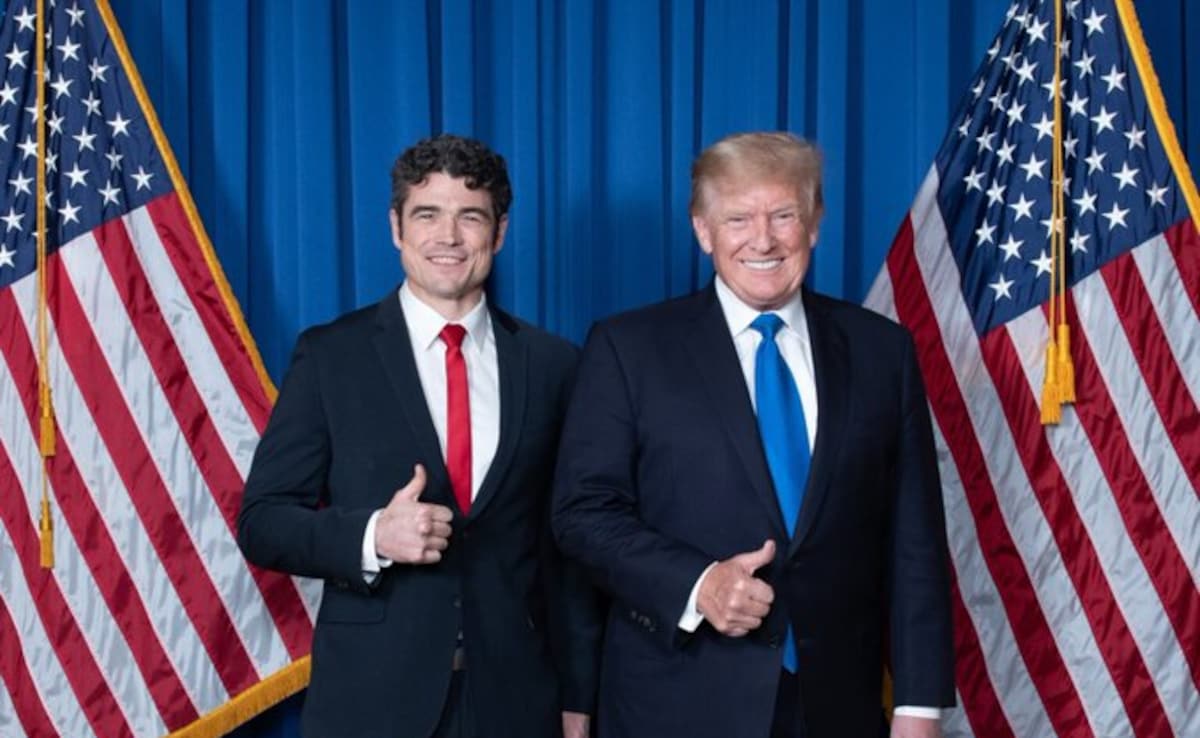
On March 17, 2026, the ideological floor of the Trump administration gave way. Joe Kent, the Director of the National Counterterrorism Center (NCTC) and a man whose personal life was torn apart by the very "forever wars" he spent decades fighting, resigned. His departure is not a standard bureaucratic exit. It is a loud, public indictment of a presidency that Kent claims has abandoned its founding promise to keep American boots off foreign soil.
Kent stepped down because he believes the United States was manipulated into a war with Iran that serves foreign interests rather than American security. In a scorched-earth resignation letter, he alleged that the administration’s march to war was the result of a coordinated pressure campaign by the Israeli government and its domestic lobbyists. For a man who completed 11 combat deployments and lost his wife to an ISIS suicide bomber in Syria, the accusation carries a weight that a career politician simply cannot replicate.
The Architect of the Break
Joe Kent was never supposed to be an insider. He was the insurgent. After failing to capture a congressional seat in Washington’s 3rd District across two brutal election cycles, he was plucked from the political wilderness by Donald Trump in early 2025. His confirmation as NCTC Director was a signal to the MAGA base that the intelligence community—the "Deep State" in their vernacular—was finally being overhauled by one of their own.
The NCTC is the central nervous system for American counterterrorism intelligence. It is the clearinghouse where data from the CIA, FBI, and NSA is synthesized to prevent another 9/11. When the head of this agency says that the "imminent threat" used to justify a war is non-existent, the internal logic of the administration’s foreign policy collapses. Kent’s resignation suggests that the intelligence being used to fuel the current conflict with Iran is being filtered through a political lens rather than a strategic one.
The Syria Ghost and the Iran Reality
To understand why Kent walked away, you have to look at January 16, 2019. That was the day his wife, Navy Senior Chief Petty Officer Shannon Kent, was killed in Manbij, Syria. She was a cryptologist, an elite specialized operator working in the shadows of a conflict that many Americans had already forgotten.
Her death transformed Kent from a quiet operator into a vocal critic of interventionism. He argued that his wife died in a war that had no clear victory condition and no direct link to American safety. When he joined the Trump administration in 2025, he did so under the belief that the President shared this skepticism.
The current war with Iran changed that calculus. The conflict, which began in late February 2026 following massive joint U.S.-Israeli airstrikes on Iranian military infrastructure, was framed by the White House as a preemptive necessity. Kent disagrees. He contends that Iran posed no immediate danger to the United States and that the intelligence was "deceptive."
A Coalition in Splinters
This resignation has exposed a massive rift in the Republican party. On one side are the "America First" loyalists like Kent, who view Middle Eastern entanglements as a drain on national wealth and lives. On the other are the traditional hawks and pro-Israel stalwarts who see the neutralization of Tehran as a generational necessity.
The reaction to Kent’s exit was instantaneous and vitriolic. President Trump, never one to let a subordinate have the last word, dismissed Kent as "weak on security." This is a fascinating pivot. Only a year ago, Trump lauded Kent as a warrior who had "hunted down terrorists his entire adult life." The speed at which a "decorated hero" becomes "weak" in the eyes of the administration reveals the precarious nature of loyalty in the 2026 political climate.
Voices of Dissent and Support
| Figure | Stance | Key Argument |
|---|---|---|
| Donald Trump | Critical | Claims Kent was "weak on security" and misunderstood the Iranian threat. |
| Sen. Mark Warner | Mixed | Opposed Kent's nomination but agrees with his current opposition to the war. |
| Ilan Goldenberg (J Street) | Critical | Accused Kent's resignation letter of utilizing "antisemitic tropes." |
| Rand Paul | Supportive | Praised Kent for highlighting the danger of foreign entanglements. |
The Intelligence Gap
The most dangerous implication of Kent's departure involves the integrity of the National Counterterrorism Center itself. If the director of the primary agency responsible for analyzing threats claims that a war is based on a "misinformation campaign," it suggests a total breakdown in the relationship between the intelligence community and the Oval Office.
In his letter, Kent specifically pointed to "high-ranking Israeli officials" and "influential members of the American media" as the primary drivers of the pro-war narrative. This goes beyond a policy disagreement. It is a formal accusation of a foreign influence operation succeeding at the highest levels of the American government.
Critics argue that Kent is simply projecting his long-standing isolationist views onto a complex geopolitical reality. They point to his past associations with far-right figures and his skepticism of the FBI as evidence that he was never fit for the role to begin with. However, his supporters see him as a whistleblower who is being punished for telling a truth that the administration finds inconvenient.
The Cost of the Third Week
As the war enters its third week, the human and economic costs are beginning to mount. Kent’s resignation provides a moral focal point for a growing anti-war movement that is cutting across traditional party lines. For the first time, the "America First" movement is being forced to choose between its leader and its stated principles.
Kent’s exit doesn’t just leave a vacancy at the NCTC. It leaves a vacuum of trust. If the administration cannot convince its own hand-picked counterterrorism chief that a war is necessary, it will have a much harder time convincing the American public as the body bags begin to return home.
The question is no longer just about Iran. It is about whether the populist movement that brought Trump back to power can survive a war that its most dedicated soldiers believe is a mistake. Kent has made his choice. He has returned to the role of the outsider, but this time, he carries the secrets of the inner circle with him.
Keep a close eye on the Senate Intelligence Committee's next move regarding the empty NCTC seat.