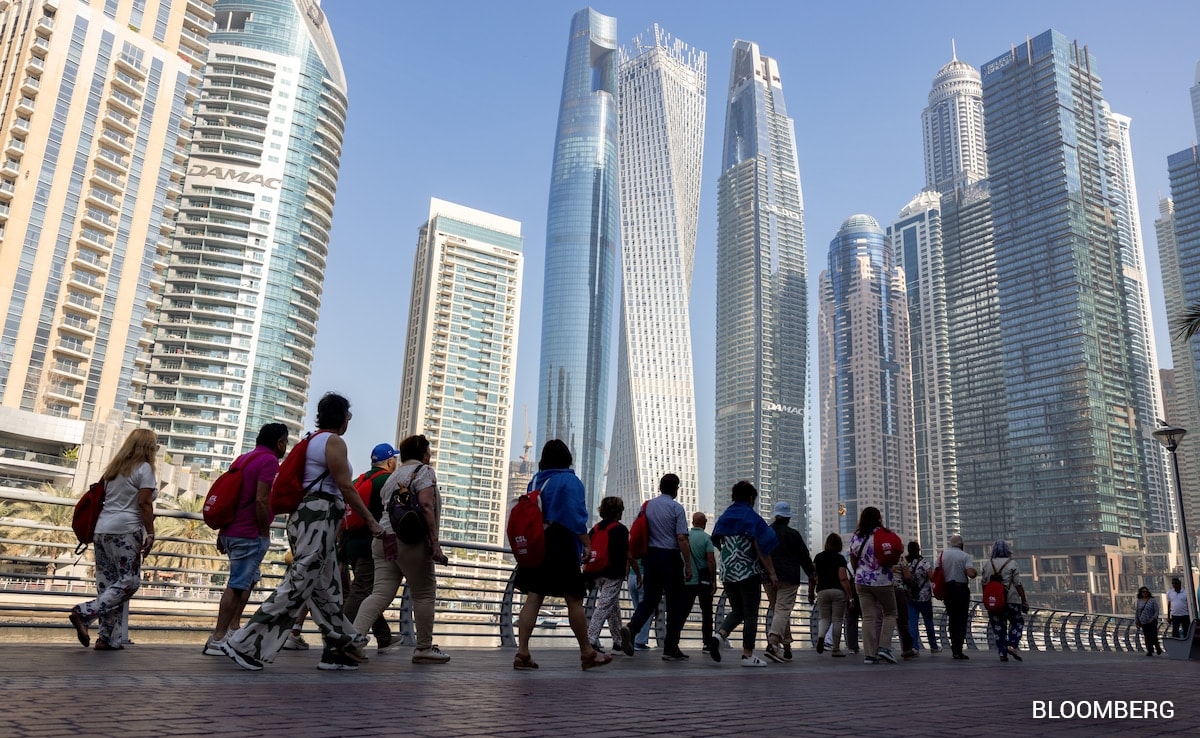
The headlines are bleeding again. You’ve seen them: "The Golden Era is Over," "Expats Fleeing High Costs," or the classic "Dubai Reality Check." They paint a picture of dejected Brits packing up their Range Rovers and retreating to a rain-soaked semi-detached in Surrey because the price of a flat white in DIFC went up by two Dirhams.
It is a comforting narrative for those who never left home. It is also fundamentally wrong.
What the "reality check" articles miss—usually because they are written by people who view wealth through a 20th-century lens—is that the exodus isn't a sign of Dubai’s failure. It is a filtering mechanism. Dubai isn't getting "too expensive"; it is finally becoming the elite global node it always intended to be. If you’re struggling to keep up, the city isn't broken. You just aren't the target audience anymore.
The Death of the Mediocre Expat
For decades, Dubai was a sanctuary for the British middle manager. You could take a mid-level marketing role, get a housing allowance that felt like a lottery win, and suddenly live a life that would require an investment banker’s salary in London. You weren't "rich"; you were just arbitrage-rich. You traded the grey skies of the UK for a tax-free subsidy on your mediocrity.
That loophole has closed.
The "reality check" isn't about inflation. It’s about the professionalization of the desert. The competition isn't just other Brits anymore; it’s the hyper-mobile elite from Singapore, Hong Kong, Mumbai, and Moscow who don't blink at a 20% rent hike because they are playing a different game.
If you are a British expat complaining that your kids' schooling costs as much as a mortgage, you are mourning a version of Dubai that was essentially a high-end welfare state for Western professionals. That era is dead. The new Dubai is a meritocracy of capital.
Rent is a Filter, Not a Barrier
The lazy consensus screams about the "cost of living crisis" hitting the Gulf. Critics point to the 2024–2025 rental spikes as the smoking gun.
Let's look at the logic. In a city like London or New York, high rents are a tax on productivity with almost zero ROI in terms of quality of life. In Dubai, those costs are the "membership fee" for an ecosystem that remains, by far, the most efficient place on earth to build and protect wealth.
- Tax Neutrality: If your rent goes up by £15,000 a year, but you are still paying 0% personal income tax on a £200,000 salary, you are still winning by a margin that would make a UK taxpayer weep.
- Safety as a Service: You aren't just paying for square footage in the Marina or the Palm. You are paying for a society where crime is a statistical anomaly.
- Infrastructure Velocity: In London, a new train line takes twenty years and billions in overruns. In Dubai, entire districts are built, populated, and connected while you're on a summer holiday.
The British expat "struggling" in Dubai is usually someone who refused to adapt their lifestyle. They want the 1990s-style villa with the 2026-style amenities. They are trying to apply a "settler" mindset to a "pioneer" city.
The Corporate Allowance Addiction
The biggest misconception in the "Reality Check" narrative is that the loss of corporate packages is a death knell.
I have seen dozens of executives crumble the moment their firm stopped paying for their school fees and annual flights to Heathrow. These people aren't expats; they are corporate dependents. The true industry insiders—the ones actually moving the needle in fintech, AI, and green energy—don't care about "packages." They want the Golden Visa. They want ownership.
The shift from "company-sponsored" to "self-sponsored" is the most significant upgrade in the history of the UAE. It has decoupled the individual’s right to exist in the country from their employment contract. This has created a class of British entrepreneurs who aren't looking for a "reality check"—they are looking for an exit.
If you are still waiting for a HR department to solve your cost-of-living issues, you have already lost.
The False Comparison: London vs. Dubai
People love to cite the "hidden costs" of Dubai. Salik gates, school levies, "knowledge fees," and the price of a pint at a five-star hotel. They use these to argue that the tax-free advantage is a myth.
Let’s run the math for a high-earner.
Imagine a scenario where a professional earns £250,000.
In the UK, after income tax, National Insurance, and the impending VAT on private school fees, that £250,000 is effectively halved before they even pay for a loaf of bread.
In Dubai, that £250,000 is... £250,000.
Even if the "cost of living" in Dubai is 30% higher than in a depressing commuter town in the Midlands, the delta in disposable income is so vast that the comparison becomes a joke. The "reality check" is actually for the people staying in the UK, watching their public services collapse while their tax burden hits a 70-year high.
The British expats leaving Dubai aren't "returning to reality." They are retreating to a controlled decline.
The "Soul" Argument is a Cop-Out
Whenever the economic argument fails, critics fall back on the "Dubai has no soul" or "it’s all fake" trope.
This is the ultimate mid-wit take. It’s what people say when they can’t afford the rent. "Soul" in this context is usually code for "old buildings and public strikes."
Dubai is a frontier. It is a 50-year-old experiment in human engineering. Of course it doesn't have the "soul" of a city that spent 800 years figuring out its sewage system. But it has something more valuable to the ambitious: Optionality.
The British expat who complains about the lack of culture is usually the one who spends every weekend at a brunch in a hotel that looks exactly like the one they visited last week. The culture is there—it’s just not being served to you on a silver platter at the Burj Al Arab. It’s in the trade routes, the massive influx of African and South Asian art, and the fact that you can build a global company in a weekend.
The Strategy for the 1% British Expat
If you want to survive the "reality check," stop acting like a tourist with a job.
- Stop Renting Your Life: The expats crying about rent are the ones who refused to buy in 2021 when the market was screaming "buy." If you treat Dubai as a two-year stint, the city will extract value from you. If you treat it as a base, you extract value from the city.
- Exit the British Bubble: The most successful "expats" in Dubai don't hang out at British social clubs. They are networking with the family offices of the GCC and the tech founders from Eastern Europe.
- Accept the Volatility: Dubai is a high-beta city. It swings. If you want stability, go to Zurich and die of boredom. If you want growth, you accept that the "reality check" is just the market clearing out the weak hands.
The "Golden Era" isn't over. It’s just becoming exclusive. The gates are closing, and the price of entry is no longer just a British passport and a decent accent. It’s actual capital, actual skill, and the stomach to handle a city that moves faster than your ability to complain about it.
Stop looking for the Dubai that was. It’s gone. And frankly, it wasn't that good anyway. The new version is leaner, more expensive, and far more rewarding for those who aren't looking for a tax-free holiday, but a global headquarters.
If you can’t afford the "reality check," the exit is at Terminal 3. Don't let the door hit your stagnant career on the way out.