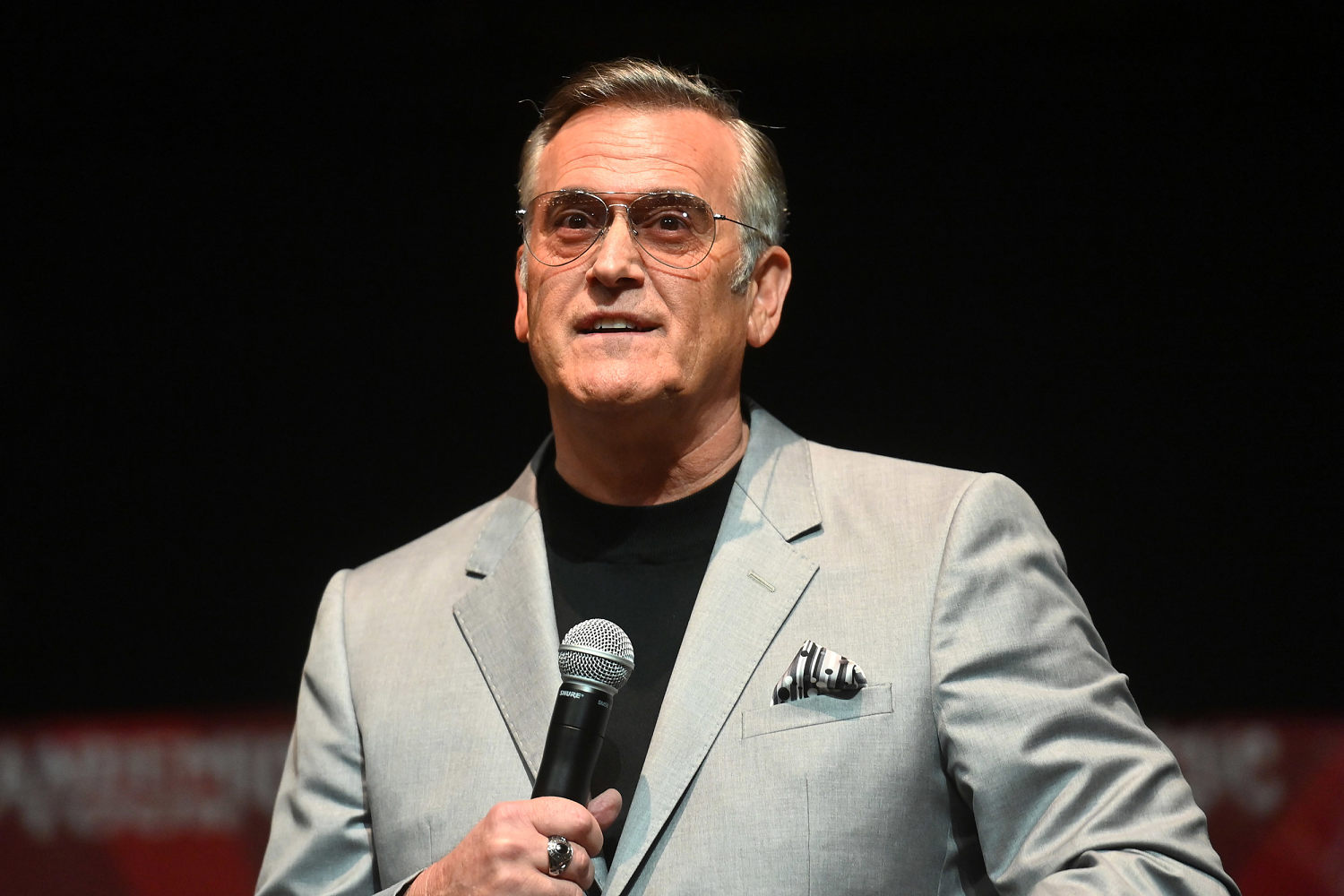
Bruce Campbell isn't interested in your pity. The man who spent decades fighting Deadites with a chainsaw strapped to his arm just revealed he’s fighting a different kind of monster. He’s been diagnosed with cancer. But before you start writing the Hollywood obituary, listen to the nuance in his words. It’s treatable, but not curable. That distinction matters immensely. It’s the difference between a sprint toward recovery and a lifelong marathon of management.
Most celebrity health announcements follow a predictable script. There’s a vague statement about privacy, a mention of "fighting hard," and then they vanish until they’re either "cancer-free" or the news turns grim. Campbell is taking a more grounded, almost blue-collar approach to the diagnosis. He’s essentially telling fans that he’s moving into a maintenance phase. He’s still Bruce. He’s still working. He just has a new, permanent passenger.
The Massive Gap Between Treatable and Curable
We’re conditioned to think of cancer as a binary. You either beat it or you don't. That’s old-school thinking. Modern medicine has shifted the goalposts for millions of people. When a doctor says a condition is "treatable but not curable," they’re often talking about managing it like Type 1 diabetes or high blood pressure. You don't "get over" it, but you don't let it kill you today, either.
This usually applies to specific types of lymphomas, certain stages of prostate cancer, or chronic lymphocytic leukemia (CLL). In these cases, the goal isn't to blast every single cancer cell out of the body with scorched-earth chemotherapy. Instead, doctors use "watchful waiting," targeted therapies, or immunotherapy to keep the cancer at a simmer. You stay in the game. You keep your quality of life. You just have to check in with an oncologist more often than you’d like.
Campbell’s choice to be blunt about this is refreshing. It strips away the "warrior" imagery that can feel exhausting for patients. Sometimes, you aren't winning a war; you’re just successfully occupying the territory.
Why This Diagnosis Hits Horror Fans Differently
If you grew up watching Evil Dead or Army of Darkness, Bruce Campbell represents a specific kind of resilience. Ash Williams isn't a superhero. He’s a guy who gets beat up, bleeds, loses a hand, and still keeps going because he has no other choice. Seeing the actor face a chronic health issue feels like a meta-extension of his most famous character.
He’s 67. That’s the age when the "indestructible" facade starts to crack for everyone. By being open about the "not curable" aspect, he’s doing a massive service to men of his generation. Men are historically terrible at talking about health. They wait until symptoms are unbearable. They ignore the "treatable" window because they’re afraid of the "incurable" label. Campbell is showing that you can carry the label and still be the coolest guy in the room.
The Strategy of Maintenance Therapy
Living with a chronic cancer diagnosis involves a radical shift in mindset. You aren't looking for an end date for your treatment. The treatment becomes part of your lifestyle. This often involves oral medications that target specific proteins or genetic mutations in cancer cells.
How Maintenance Works in 2026
- Targeted Therapy: Using drugs to identify and attack specific cancer cells without harming normal cells. It’s a sniper, not a grenade.
- Immunotherapy: Training your own immune system to recognize the cancer as an intruder.
- Active Surveillance: Regular scans and blood work to ensure the "simmer" hasn't turned into a "boil."
This approach requires a high level of mental discipline. It’s easy to feel like a ticking time bomb. But for many, these "incurable" cancers have five-year survival rates that rival much "safer" diseases. The trick is staying on top of the data.
Moving Forward With a New Normal
Bruce Campbell is still hitting the convention circuit. He’s still producing. He’s still the chin that won't quit. His diagnosis doesn't mean he's retiring; it means he's adapting. If you’re facing a similar "treatable but not curable" diagnosis, or if you’re supporting someone who is, the first step is to stop looking for the "all clear" signal. It might never come.
The second step is to focus on the "treatable" part. We live in an era where "incurable" doesn't mean "terminal." It means "manageable." It means more time. It means another sequel.
Start by asking your oncology team for a long-term management plan rather than a short-term eradication strategy. Focus on mitigating side effects so you can keep doing what you love. If Bruce can keep his sense of humor while staring down a permanent diagnosis, you can find a way to navigate your own new normal. Don't wait for a cure to start living again.