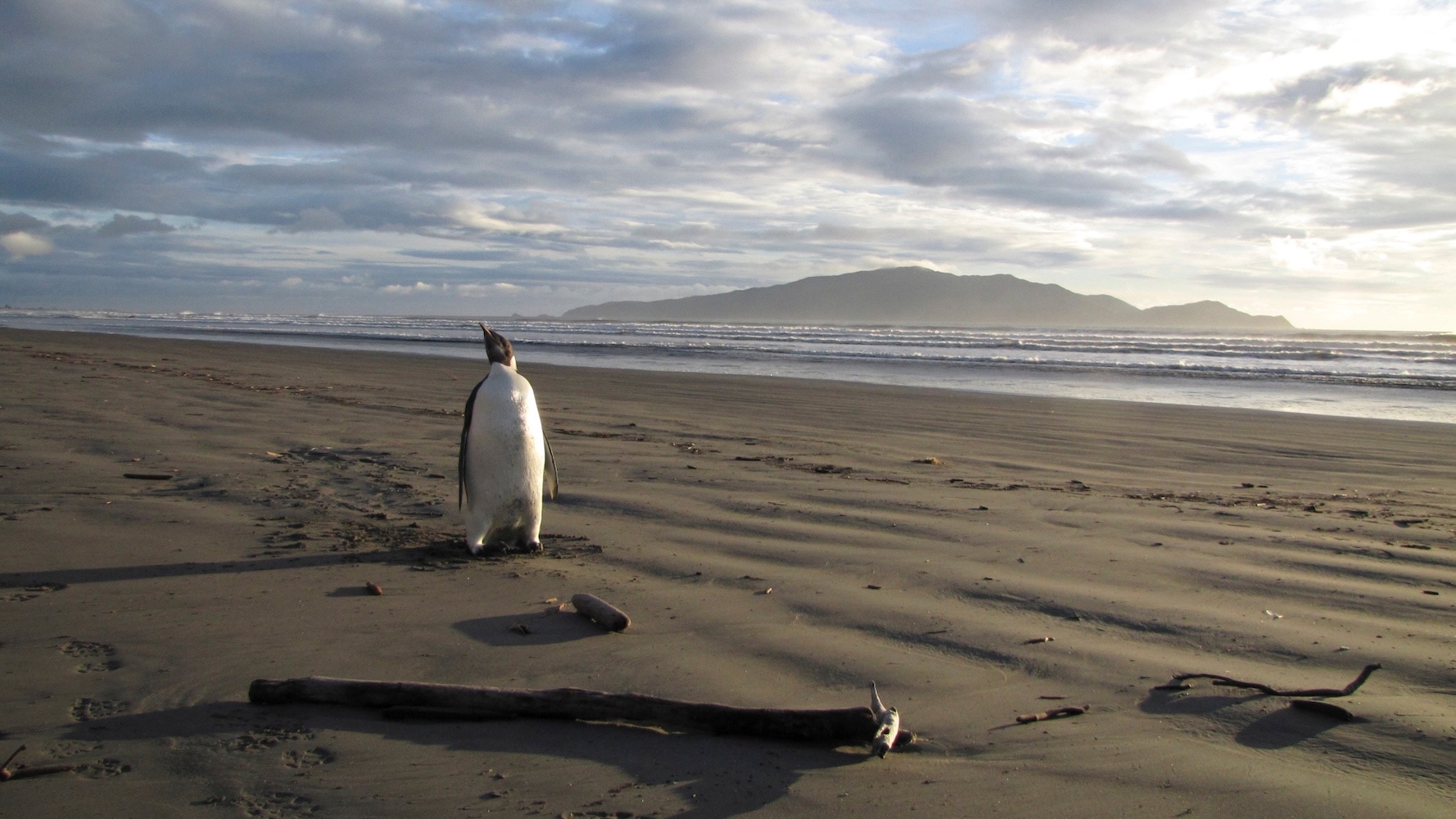
The survival of the emperor penguin is no longer a question of biological adaptation but a matter of simple, unforgiving physics. While headlines often frame the decline of the species as a distant environmental tragedy, the reality is a mechanical failure of the Antarctic ecosystem. The primary driver is the catastrophic loss of "fast ice"—the platform of frozen seawater attached to the shore where these birds breed. When this ice thins or shatters prematurely, entire generations of chicks perish before they develop waterproof feathers. Without immediate intervention or a radical shift in global warming trajectories, we are looking at the functional extinction of 90% of colonies by the end of the century.
The Architecture of a Breeding Failure
To understand why the emperor penguin is uniquely vulnerable, you have to look at their reliance on a very specific type of geography. Unlike other penguins that nest on rock or pebbles, emperors are the only species that breed exclusively on sea ice. They require a stable platform that persists for at least nine months of the year. If you enjoyed this piece, you might want to read: this related article.
The cycle is rigid. They arrive in March or April, endure the brutal Antarctic winter, and hatch their eggs in the dark. The chicks are then dependent on that ice remaining solid until December or January. If the ice breaks up in November, the chicks, still covered in downy fluff, fall into the ocean and drown or freeze. This isn't a theoretical risk. In 2022, a massive collapse of sea ice in the Bellingshausen Sea resulted in total breeding failure across four out of five known colonies in the region. Thousands of chicks died.
This represents a "black swan" event that is becoming the new baseline. For decades, Antarctic sea ice was surprisingly resilient, even expanding in some sectors while the Arctic melted. That trend has ended. Since 2016, we have seen a sharp, erratic decline in ice extent, hitting record lows in 2022 and 2023. The buffer is gone. For another perspective on this development, refer to the latest coverage from Al Jazeera.
The Satellite Data Gap
Much of what we know about these birds comes from space. Because the Antarctic interior is so hostile and remote, researchers use high-resolution satellite imagery to track colonies. They don't usually count the penguins themselves; they look for the brown stains of guano against the white ice.
However, relying on remote sensing has created a false sense of security in previous years. We see the colonies moving, trying to find more stable ground, and we assume they are adapting. They aren't. They are retreating. When a colony moves from a traditional breeding ground to a nearby ice shelf—the thick glacial ice that extends over the water—it is often a desperate last stand. Ice shelves are steeper and harder to climb, and they offer less protection from the katabatic winds that scream off the polar plateau.
The Problem with Dispersal
A common counter-argument suggests that as one area becomes unlivable, the penguins will simply migrate to a better one. This ignores the biology of the bird. Emperors are highly philopatric, meaning they have a deep-seated drive to return to the same site year after year.
While some "scout" penguins might find new territory, a mass relocation of thousands of birds is rare and often unsuccessful. They are colonial animals; their survival depends on the huddle. If a colony splits into smaller, fractured groups, they lose the collective body heat necessary to survive -60°C temperatures. Smaller huddles mean higher caloric burn, leading to starvation or egg abandonment.
The Food Web Disruption
The ice isn't just a floor; it's a factory. The underside of sea ice is home to vast quantities of algae, which feed Antarctic krill. These tiny crustaceans are the bedrock of the entire Southern Ocean food web. Emperor penguins eat krill, but more importantly, they eat the fish and squid that eat the krill.
As sea ice disappears, the krill habitat shrinks. This creates a ripple effect that hits the emperors from two sides. First, they have to travel further from their breeding grounds to find food for their chicks, leaving the young vulnerable for longer periods. Second, they face increasing competition from other predators, like fur seals and minke whales, which are also being squeezed into smaller feeding zones.
We are seeing a shift in the energetic cost of being a penguin. If a parent has to swim an extra 100 kilometers because the local "pantry" is empty, the math of survival stops working. The energy spent hunting exceeds the energy delivered to the chick.
The Endangered Species Act and Global Politics
In late 2022, the U.S. Fish and Wildlife Service officially listed the emperor penguin as endangered. Critics argued that a domestic U.S. law has no jurisdiction over a bird in Antarctica. They are technically correct, but the move was never about policing the South Pole.
The listing is a diplomatic and regulatory lever. It mandates that U.S. federal agencies evaluate how their actions—including large-scale carbon-emitting projects—might impact the species. More importantly, it sets a global precedent. It acknowledges that a species can be pushed to the brink not by overhunting or direct habitat destruction, but by the systemic alteration of the planet's thermostat.
The Limits of Conservation
Traditional conservation methods fail here. You cannot build a fence around a melting ocean. You cannot "reseed" a penguin population if there is no ice for them to stand on. Captive breeding programs are a logistical nightmare and wouldn't solve the habitat problem.
Some researchers have floated the idea of "assisted colonization," moving penguins to the few areas of the continent expected to hold ice the longest, such as the Ross and Weddell Seas. But the scale of such an operation is staggering, and the risk of introducing diseases to pristine areas is high.
The Economic Reality of the Southern Ocean
While we focus on the birds, there is a quiet industrial expansion happening in their backyard. Commercial krill fishing is a billion-dollar industry, primarily fueling the market for omega-3 supplements and fishmeal for aquaculture.
The Commission for the Conservation of Antarctic Marine Living Resources (CCAMLR) is tasked with managing these waters, but it is often paralyzed by geopolitics. Russia and China have repeatedly blocked the creation of new Marine Protected Areas (MPAs) that would restrict fishing in key penguin foraging grounds.
If we want to save the emperor, the fight isn't just about carbon emissions. It’s about the immediate protection of the food they have left. Every ton of krill scooped up by a commercial trawler is energy taken directly from a struggling colony.
The False Hope of Adaptation
There is a lingering hope among some circles that the penguins will learn to breed on land. We have seen small groups of emperors on the Danger Islands and other rocky outcrops. But this is not a viable long-term strategy.
Emperors are heavy. They are built for sliding on ice, not trekking over jagged rock. Land-based colonies face new threats, including predatory birds like skuas and giant petrels, which find it much easier to steal eggs on land than on the flat, open sea ice. Furthermore, the heat of the sun reflecting off dark rocks can actually cause the penguins to overheat—an absurd thought for an Antarctic bird, but a documented reality.
The biological specialized nature of the emperor penguin—the very thing that allowed it to conquer the most hostile environment on Earth—is now its death warrant. It is too well-adapted to a world that is vanishing.
The Trajectory of the 2026 Season
Current climate models suggest that the erratic sea ice behavior of the last three years is not a fluke but a phase shift. We are moving from a period of high variability to a period of sustained decline. For the emperor penguin, this means the "good years" where colonies can recover are becoming fewer and further between.
A colony can survive one or two years of breeding failure. They are long-lived birds, often reaching 20 years of age. But they cannot survive a decade of failure. As the older breeding adults die off without being replaced by a new generation, the colony enters a death spiral.
The focus must shift from observation to aggressive mitigation. This includes a total moratorium on krill fishing in the high latitudes and an immediate expansion of the MPA network. Without the ice, the birds are gone. Without the food, they don't even stand a chance to wait for the ice to return.