The 2026 Bafta Television Awards nominations have finally landed, and they confirm what industry insiders have whispered for months: the era of the "safe" BBC procedural is under siege by high-concept streaming giants and a new wave of uncompromising social realism. Leading the charge is the technical marvel Adolescence, which secured a staggering 11 nominations, followed by Disney’s Andor and the gritty period drama A Thousand Blows.
While these nominations celebrate artistic achievement, they also expose a deepening rift between traditional terrestrial broadcasting and the aggressive, big-budget storytelling of global platforms. The list, announced on March 24, 2026, sets the stage for a May 10 ceremony hosted by Greg Davies—a night that will likely be remembered more for its glaring snubs and the shadow of recent controversies than for the trophies themselves.
The Technical Dominance of Adolescence
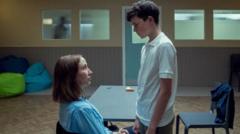
Netflix’s Adolescence is the undisputed heavyweight of the year. Written by Stephen Graham and Jack Thorne, the four-part series managed to pull off a continuous-take format that wasn't just a gimmick but a harrowing, claustrophobic necessity for its story about a 13-year-old accused of murder. Its 11 nominations, spanning from Leading Actor for Stephen Graham to a history-making nod for young Owen Cooper, prove that Bafta voters are increasingly seduced by formal audacity.
This isn't just about good acting; it's about a shift in how British stories are told. For years, the Academy favored the "kitchen sink" drama. Now, it demands that those same stories be told with the cinematic vocabulary of a Hollywood thriller. The sheer volume of nominations for Adolescence suggests that the "one-shot" experiment has set a new benchmark that will be difficult for standard multi-cam productions to match.
Disney and the High Budget Incursion
The presence of Andor and A Thousand Blows (Disney+) at the top of the leaderboard signals a permanent change in the British television ecosystem. Andor leads the Craft categories with six nominations, proving that even a "Star Wars" property can command respect in the hallowed halls of British prestige if it’s dressed in the somber tones of a political espionage thriller.
Major Nominees by the Numbers
| Programme | Total Nominations | Key Categories |
|---|---|---|
| Adolescence | 11 | Drama Series, Leading Actor, Director |
| A Thousand Blows | 7 | Drama Series, Supporting Actor |
| Andor | 6 | Director (Fiction), Production Design, Sound |
| Trespasses | 6 | Limited Drama, Leading Actress |
| The Celebrity Traitors | 5 | Entertainment Performance, Reality |
This level of investment is something the BBC and ITV are struggling to keep pace with. While Blue Lights remains a critical darling with a Drama Series nomination and a Leading Actress nod for Siân Brooke, it is one of the few terrestrial survivors in a sea of high-gloss streaming exclusives.
The Leading Categories and Notable Snubs
The Leading Actor race is a collision of industry titans and fresh blood. Stephen Graham’s nomination for Adolescence was a foregone conclusion, but the inclusion of Colin Firth for Lockerbie: A Search for Truth and Matt Smith for The Death of Bunny Munro creates a crowded field of veterans. The real story, however, is Ellis Howard for What It Feels Like for a Girl, a performance that has been lauded for its raw, uncomfortable honesty.
In the Leading Actress category, the competition is even tighter. Jessie Buckley is absent from the TV list (having already triumphed at the 2026 Bafta Film Awards for Hamnet), leaving the door open for Siân Brooke (Blue Lights) and Lola Petticrew (Trespasses). Petticrew’s performance as Cushla in the Northern Ireland-set drama has been the dark horse of the season, and her nomination confirms the Academy's current obsession with stories that tackle the complex legacy of the Troubles with fresh eyes.
The Missing Names
The snubs this year are particularly pointed. Despite massive viewership, several mainstream hits were completely shut out of the major categories:
- Gavin & Stacey: The Finale: While Ruth Jones secured a Comedy Performance nod in 2025, the show’s legacy hasn't translated into a 2026 sweep for the farewell special.
- The Crown: After years of dominance, the final ripples of the royal drama seem to have finally faded from the Academy's memory.
- Standard Procedurals: If your show doesn't have a unique visual hook or a heavy social message, Bafta isn't interested this year.
The Shadow of the Film Awards Controversy
It is impossible to discuss the 2026 Baftas without acknowledging the atmospheric tension following the Film Awards in February. The incident involving Tourette syndrome activist John Davidson, which resulted in a racial slur being broadcast during a presentation by Michael B. Jordan and Delroy Lindo, has forced the Academy into a defensive posture.
A "comprehensive review" is currently underway. This has led to a much more somber tone in the Television nominations announcement. There is a palpable sense that the Academy is trying to "course-correct" by emphasizing its "Learning, Inclusion, and Talent" programs. Whether this translates into a more diverse group of winners in May remains to be seen, but the pressure on host Greg Davies to navigate this minefield is immense.
The Reality TV Hegemony
While the drama categories are locked in a battle between art and commerce, the Entertainment and Reality categories show a different kind of evolution. The Celebrity Traitors has effectively cannibalized the "water cooler" conversation, earning five nominations. It is no longer enough to just have a competition; the Academy now rewards "psychological gameplay" and "high-stakes social dynamics."
The Assembly, a groundbreaking series featuring neurodivergent journalists interviewing celebrities, also secured a nomination in the Factual Series category. This represents the "better" side of the Academy’s recent focus—rewarding programs that actually change the way viewers perceive disability, rather than just checking a box.
The Industry Outlook
The 2026 nominations tell a story of a British industry in transition. The "middle ground" of television is disappearing. You are either a massive, $100 million streaming epic like Andor, or you are a fiercely intelligent, technically daring production like Adolescence.
The traditional broadcasters are being squeezed. While they still dominate the "Daytime" and "Current Affairs" categories—where Panorama and Scam Interceptors continue to hold ground—their influence on the "Prestige" narrative is waning. The 2026 winners will likely cement this trend, proving that in the modern era, the Academy favors the bold, the expensive, and the disruptive.
Watch the broadcast on BBC One on May 10 to see if the continuous-take gamble of Adolescence pays off, or if the "Star Wars" machine can finally claim the top prize in British television.