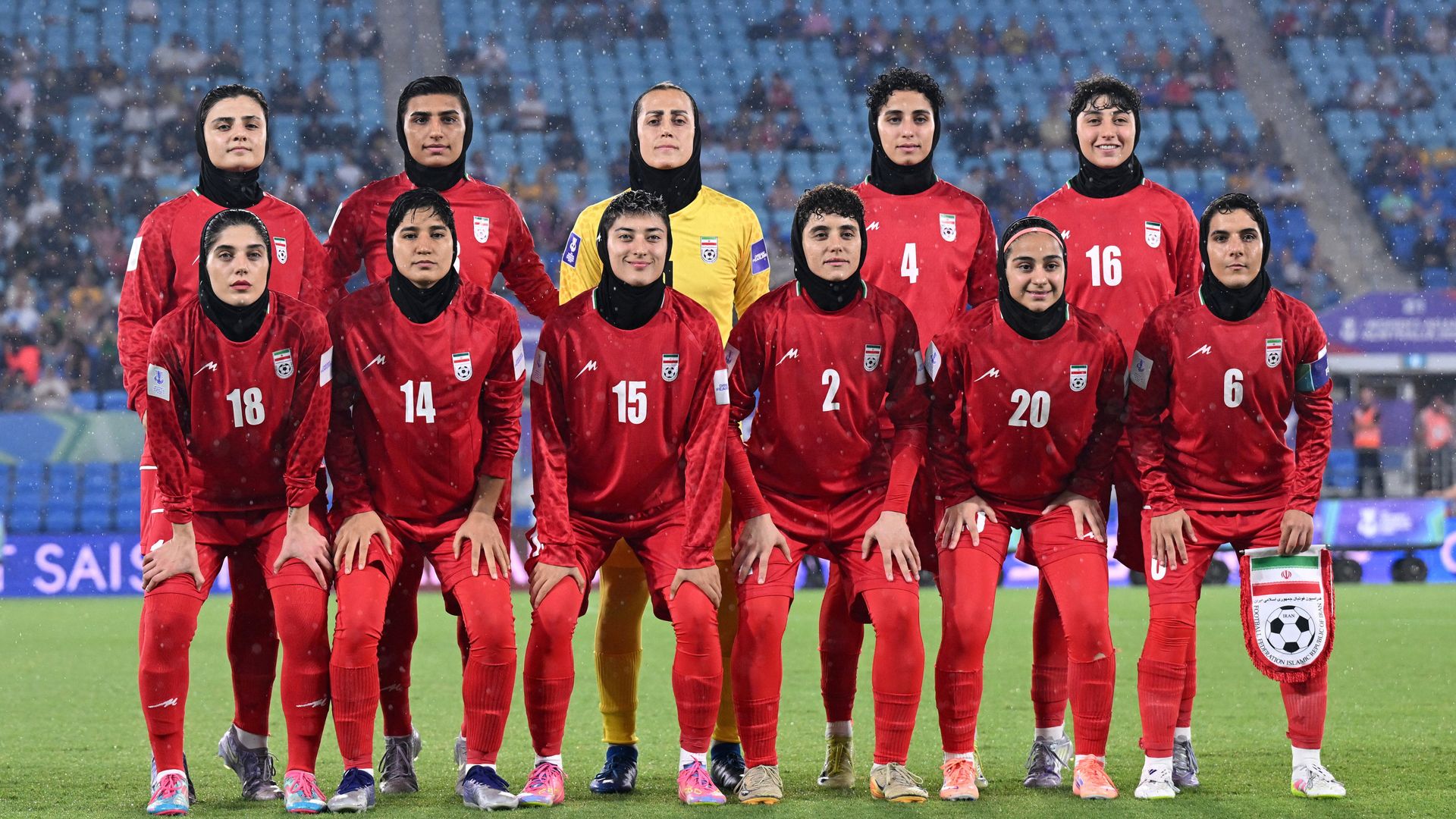
The midnight extraction of five Iranian soccer players from a Gold Coast resort this week was not a routine immigration matter. It was a high-stakes geopolitical collision that required a 2:00 AM phone call between a U.S. President and an Australian Prime Minister to finalize. While the world watched the Women’s Asian Cup, five athletes—captain Zahra Ghanbari, Fatemeh Pasandideh, Zahra Sarbali, Atefeh Ramazanzadeh, and Mona Hamoudi—were calculating the cost of their lives against the price of their silence.
They chose to speak through silence, refusing to sing the Islamic Republic’s national anthem during their opening match against South Korea. By the time the final whistle blew on their tournament run following a loss to the Philippines, the Iranian state apparatus had already labeled them "wartime traitors." In Tehran, that label is often a precursor to a death sentence.
The Midnight Extraction
The logistics of the escape reveal the terrifying reality of being an Iranian athlete abroad. Since the "Woman, Life, Freedom" movement began, the Iranian regime has tightened its "handler" system. Athletes are rarely left alone; their passports are often held by "security officials" who travel with the team under the guise of coaching staff.
To get these five women out, Australian Federal Police (AFP) had to execute a plan that felt more like a Cold War defection than a sporting transfer. They were moved from the Royal Pines Resort to a secure, undisclosed location under the cover of darkness. The urgency was fueled by reports of a tense standoff at the hotel, where protesters gathered to block the team bus, fearing it was a one-way trip to a Revolutionary Guard interrogation room.
The Trump Intervention
The most jarring element of this saga is the sudden role of Donald Trump as a humanitarian catalyst. For a leader who built a political identity on travel bans and restricted asylum, his aggressive demand that Australia provide a "safe haven" for the team caught Canberra off guard.
Trump’s rhetoric was blunt. He publicly shamed the Australian government on Truth Social, claiming they were making a "terrible humanitarian mistake" and threatening that "the U.S. will take them if you won’t."
This wasn't just bluster. Behind the scenes, the pressure forced a rapid acceleration of Australian bureaucracy. Home Affairs Minister Tony Burke signed off on the humanitarian visas at 1:30 AM on Tuesday. It is a rare instance where the "loudest voice in the room" diplomacy actually bypassed the usual months-long vetting process for asylum seekers. Critics point out the irony: thousands of other Iranians fleeing the same regime remain in limbo, yet these five athletes moved to the front of the line because they became a focal point for a former president's social media feed.
The Hostages Left Behind
We must talk about the 21 women still in the squad. While five players celebrated their freedom with chants of "Aussie Aussie Aussie" in a safe house, the rest of the team remains under the watchful eyes of their handlers.
The decision to stay or flee is not a simple choice of "freedom versus oppression." It is a calculation of family safety. The Iranian regime is notorious for transnational repression, a tactic where the relatives of defectors are arrested, tortured, or stripped of assets back home. Trump himself acknowledged this, noting that some players feel they "must go back" because of threats against their families.
For those still with the team, the environment is now one of extreme suspicion. The "handlers" have failed their primary mission—keeping the flock together—and the remaining players will likely face even more restricted movement and intensified interrogation upon their return to a country currently under military bombardment and internal unrest.
Sport as a Battlefield
The AFC and FIFA have remained largely reactive, issuing boilerplate statements about player safety while the Iranian Football Federation continues to operate as an arm of the state. This incident proves that for Iranian women, the pitch is not a sanctuary from politics; it is the front line.
When a captain refuses to sing an anthem, she isn't just making a "personal statement." She is committing an act of defiance against a system that has spent decades trying to erase women from the public sphere. The Australian government has left the door open for the remaining players to seek protection, but the window is closing as the flight back to Tehran looms.
The "delicate situation" Prime Minister Anthony Albanese described is actually a brutal reality of modern statecraft. These athletes are now symbols in a larger war of influence. They are safe for now, but their families remain within reach of a regime that does not forget "dishonor."
Would you like me to track the status of the remaining 21 squad members as they approach their scheduled departure from Australia?