Somewhere in the rolling, war-scarred terrain of Ukraine, a man named Viktor—hypothetically, though his real-world counterparts exist by the thousands—places a hand on a steel pipe. It is cold. This is the Druzhba pipeline. Its name translates to "Friendship," a bitter irony that has aged poorly since its construction during the Soviet era. Through this artery, Siberian crude oil has pulsed for decades, feeding the refineries of Central Europe like a mechanical umbilical cord.
Viktor doesn't see the oil. He feels the vibration. He knows that every gallon flowing through this steel determines whether a refinery in Hungary stays open or whether a politician in Brussels loses their job. But lately, the vibration has become a point of geopolitical friction so hot it threatens to melt the very alliances meant to protect Ukraine.
The European Union recently requested a mission to inspect this specific stretch of the pipeline. They wanted eyes on the ground. They wanted to ensure the integrity of the transit. Ukraine said no.
The Geometry of a Grudge
To understand why a country fighting for its life would block an inspection by its most vital allies, you have to look past the blueprints and into the ledger of survival. This isn't about technical safety. It is about leverage.
For years, the Druzhba pipeline has been a ghost in the room. While the maritime world moved toward a total ban on Russian oil, Hungary, Slovakia, and the Czech Republic secured exemptions. They argued that their landlocked geography made them prisoners of the pipe. They couldn't just back a tanker up to a port that didn't exist. So, the "Friendship" continued to flow, and with it, billions of euros continued to flow back into Moscow’s coffers.
Ukraine watches this flow with a mixture of necessity and resentment. They collect transit fees—money that helps keep their own battered economy upright—while simultaneously watching that same oil fuel the tanks that cross their borders. It is a paradox of modern warfare: protecting the infrastructure of your enemy because your friends still need what’s inside it.
The EU's push for an inspection mission wasn't just a routine maintenance check. It was a move toward transparency in a zone where fog is the preferred climate. By blocking the mission, Kyiv sent a message that echoed louder than any official press release. They are reminding the landlocked nations of Europe that the valve doesn't turn in Brussels. It turns in Ukraine.
The Landlocked Trap
Imagine a refinery in Százhalombatta, Hungary. This isn't a hypothetical place; it’s the beating heart of the Hungarian energy sector. For decades, it has been tuned specifically to "Urals" grade crude—the heavy, sour stuff that comes out of Russia. You cannot simply flip a switch and run light Brent crude through those systems. It would be like trying to run a diesel engine on high-octane racing fuel. It might work for a moment, then the whole thing seizes.
The people working at these refineries aren't thinking about grand strategy. They are thinking about the pressure gauges. They are thinking about the cost of heating their homes. When Ukraine blocks an inspection mission, those workers feel a chill that has nothing to do with the weather.
Budapest and Bratislava see the move as a veiled threat. If the pipeline is "uninspectable," it becomes easy for Ukraine to claim technical failures or "security concerns" later on, providing a convenient excuse to pinch the flow. It is a game of high-stakes poker where the cards are made of cold-rolled steel.
A Fracture in the Union
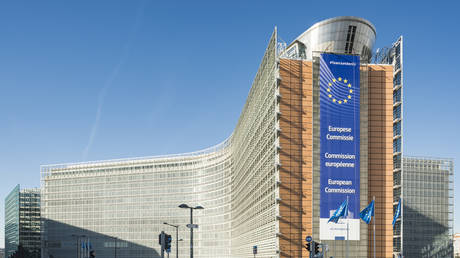
The tension isn't just between Kyiv and its immediate neighbors. It is vibrating through the halls of the European Commission. The EU is trying to maintain a united front against Russian aggression, but energy is the one wedge that always finds the grain.
Ukraine's refusal to allow the mission stems from a deeply held belief that Europe’s "addiction" to Russian oil is being prolonged by bureaucratic foot-dragging. From Kyiv’s perspective, every day the Druzhba remains operational is a day the war is subsidized. They aren't interested in helping the EU "manage" the transit. They want the transit to end.
But the EU operates on the principle of the "slow yes." They prefer transition periods, impact assessments, and diplomatic off-ramps. Ukraine, living in a reality of "fast nos" and immediate consequences, has run out of patience for the slow road.
Consider the optics: a candidate country for EU membership telling the EU it cannot enter its territory to look at a pipe. It is an assertion of sovereignty that borders on defiance. It signals that Ukraine is no longer willing to be the passive transit corridor. They are now a gatekeeper.
The Ghost in the Machine
The technical reality of the Druzhba is that it is aging. Without regular, high-level inspections, the risk of a spill or a mechanical failure increases. In any other context, an inspection mission would be welcomed as a way to ensure environmental safety.
But in a war zone, "safety" is a relative term.
Ukraine argues that the security situation makes such a mission impossible to guarantee. They point to the constant threat of missile strikes and the reality of a frontline that shifts like sand. There is truth in this. Bringing a team of international inspectors into a high-risk zone is a logistical nightmare.
However, the skeptical eye sees a different truth. By keeping the condition of the pipeline a mystery, Ukraine maintains a "strategic ambiguity." If something goes wrong, who is to blame? Was it a Russian strike? Was it a lack of maintenance? Was it a deliberate act of sabotage? Without an independent baseline from an inspection mission, the truth becomes whatever the person holding the valve says it is.
The Price of "Friendship"
There is a specific kind of exhaustion that comes with being the middleman in your own destruction. The Ukrainian engineers who maintain the Druzhba are essentially fixing the tools that help pay for the shells falling on their cities. It is a psychic weight that no economic statistic can capture.
This refusal to allow the EU mission is the first crack in a much larger dam. It signals the end of the era where Ukraine would quietly facilitate the energy needs of neighbors who are perceived as being "soft" on Moscow.
The landlocked countries—Hungary, Slovakia, Czechia—now face a terrifying math problem. They have spent years avoiding the massive capital investment required to retro-fit their refineries for non-Russian oil. They gambled that the Druzhba would always be there, a relic of the past that served the present.
They lost that bet.
The "Friendship" is dead. Only the pipe remains.
The standoff over a few inspectors and a few miles of steel is the herald of a cold winter, not of temperature, but of relations. When the flow eventually stops—and it will—the map of Europe will change forever. The umbilical cord is being severed, not by a sudden cut, but by a slow, agonizing squeeze.
Viktor takes his hand off the pipe. The vibration continues, steady and rhythmic, carrying the ghost of an empire toward a continent that isn't sure it's ready to let go. The steel is cold, but the pressure inside is rising to a point where something, somewhere, has to break.
Would you like me to analyze the specific economic impact on the Hungarian and Slovakian refineries if this transit conflict leads to a full shutdown?