The sound is so ubiquitous we’ve stopped hearing it. It is the rhythmic, mechanical heartbeat of the modern world: beep-pause-beep. Since 1974, that chirping cadence has defined the ritual of the checkout line. It is the sound of the Universal Product Code, or UPC, the humble barcode that transformed the chaos of general stores into the hyper-efficient engines of global commerce.
But at a Tesco in the United Kingdom, the heartbeat is changing.
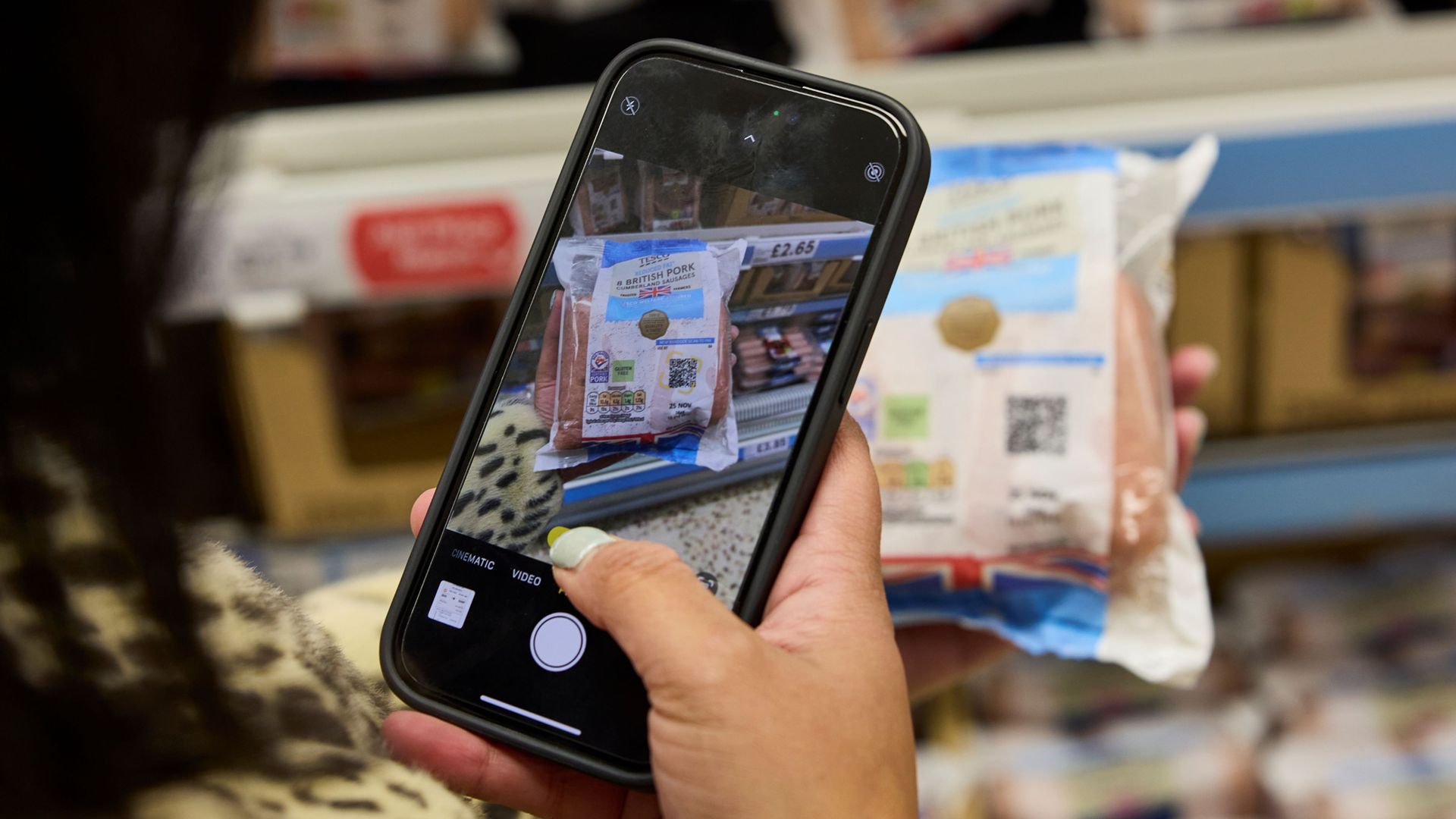
The thin black bars of the 20th century are being quietly ushered toward the exit. In their place sits a small, dense thicket of black-and-white pixels—the QR code, or more specifically, the GS1 Digital Link. To the casual shopper, it looks like a minor software update. To the people who manage the vast, invisible rivers of food flowing across the planet, it is the most significant shift in retail history since the invention of the price tag.
Consider a woman named Sarah. She is standing in a brightly lit aisle, clutching a pack of chicken breasts. She has three minutes before she needs to pick up her son from football practice. She checks the date. She checks the price. That is all the barcode allows her to see. But the barcode is a mute witness. It knows Sarah is buying chicken, but it knows nothing about this specific chicken. It cannot tell her if the pack in her hand was part of a recalled batch until she reaches the till and the system blocks the sale—or worse, until she gets a notification hours after dinner.
The barcode is a static ID card. The QR code is a living diary.
The Information Ceiling
For decades, we have lived under an information ceiling. The traditional barcode can only hold about 13 digits. Those digits represent a category of product. Every 500ml bottle of a specific cola has the exact same barcode. The scanner doesn't know if the bottle was bottled in June or July. It doesn't know if it’s about to expire. It certainly doesn't know which farm the sugar came from.
This lack of granularity creates a staggering amount of waste. Think about the "yellow sticker" ritual. Every evening, supermarket staff roam the aisles like scavengers, manually checking dates and slapping discounted labels on sandwiches and milk. It is a labor-intensive, error-prone process. If a staff member misses a crate of yogurt tucked at the back of a shelf, that food is destined for a landfill simply because the system didn't know it was there.
Tesco’s shift to QR codes—powered by the GS1 standard—tears that ceiling down. These 2D codes can hold exponentially more data. When a checkout scanner reads one of these new marks, it isn't just looking for a price. It is checking the "Best Before" date in real-time.
Imagine Sarah again. If she accidentally picks up a pack of ham that expired two hours ago, the till won't just beep; it will refuse to process the item. The safety net moves from the human eye to the digital architecture of the store itself.
The Ghost in the Supply Chain
Beyond the checkout line, there is a deeper, more human struggle occurring in the supply chain. We live in an era of radical transparency, yet our primary tool for tracking goods is a relic from the Nixon administration.
When a foodborne illness breaks out, the reaction is often a sledgehammer. Because retailers often can't pinpoint exactly which farm a specific pallet of spinach came from, they have to pull all the spinach. Thousands of tons of perfectly good food are destroyed out of an abundance of caution. It is a tragedy of data.
The transition Tesco is spearheading allows for a "surgical strike" approach to food safety. If a batch is tainted, the system knows exactly which QR codes are affected. The recall happens in seconds, not days. The waste is minimized. The trust is preserved.
But let’s look at the emotional weight of a purchase. We are increasingly haunted by the origins of our things. Was this coffee grown ethically? Is this packaging actually recyclable, or is that little green arrow a lie?
A barcode cannot answer those questions. It is a closed door. A QR code is a window. By scanning the same code used by the cashier, a shopper can suddenly see the journey of their food. They can see the carbon footprint, the nutritional breakdown, and the specific recycling instructions for their local council. It transforms the shopper from a passive consumer into an informed participant in the global economy.
The Friction of Change
Change is never a straight line. It is a jagged, uncomfortable process.
For Tesco to make this work, every single scanner in every single store has to be upgraded or recalibrated. Every supplier, from the multinational cereal giant to the local strawberry farmer, has to change their packaging. It is a massive, expensive, and logistically daunting overhaul.
There is also the human friction. We are creatures of habit. We know how to swipe a barcode. We understand the "beep." Introducing a new way to interact with a product requires a retraining of the collective psyche. There will be moments of frustration at the self-checkout. There will be blurry scans and software glitches.
But the alternative is a mounting pile of "expired" food that is still perfectly safe to eat, and a consumer base that remains in the dark about what they are putting into their bodies.
The barcode was built for speed. The QR code is built for honesty.
The End of the Mystery
We are moving toward a world where objects have memories.
Think of a hypothetical scenario involving a small bakery supplying a regional Tesco. Under the old system, if their oven temperature fluctuated and a batch of bread was slightly underbaked, they might not know until the complaints started rolling in. With 2D barcodes, that bread is tracked with such precision that the bakery can see exactly which stores received the batch and alert them before the first loaf is sold.
This isn't just "business efficiency." It is a reduction of the anxiety that governs our modern lives. It is the end of the mystery of the "Best Before" date. It is the beginning of a conversation between the producer and the person sitting at the kitchen table.
The transition is already underway. By 2027, the global retail industry aims to have moved toward this "Sunrise 2027" goal—a universal adoption of 2D barcodes. Tesco is simply getting there first, acting as the canary in the coal mine for a new era of commerce.
Soon, the old barcode will look as quaint as a rotary phone. We will tell our children that we used to buy food using nothing but a series of thin black lines that told us almost nothing. They will find it hard to believe. They will be used to a world where every item in their basket has a story, a birth certificate, and a transparent path back to the earth.
The beep isn't going away. It’s just finally going to mean something.
The next time you hear that sharp, electronic chirp at the till, look closer at the package. If you see that small, pixelated square, you are looking at the end of the dark ages of retail. You are looking at a system that finally knows what it is holding. And in a world of infinite choices and hidden costs, knowing the truth about a single gallon of milk is a small, quiet revolution.