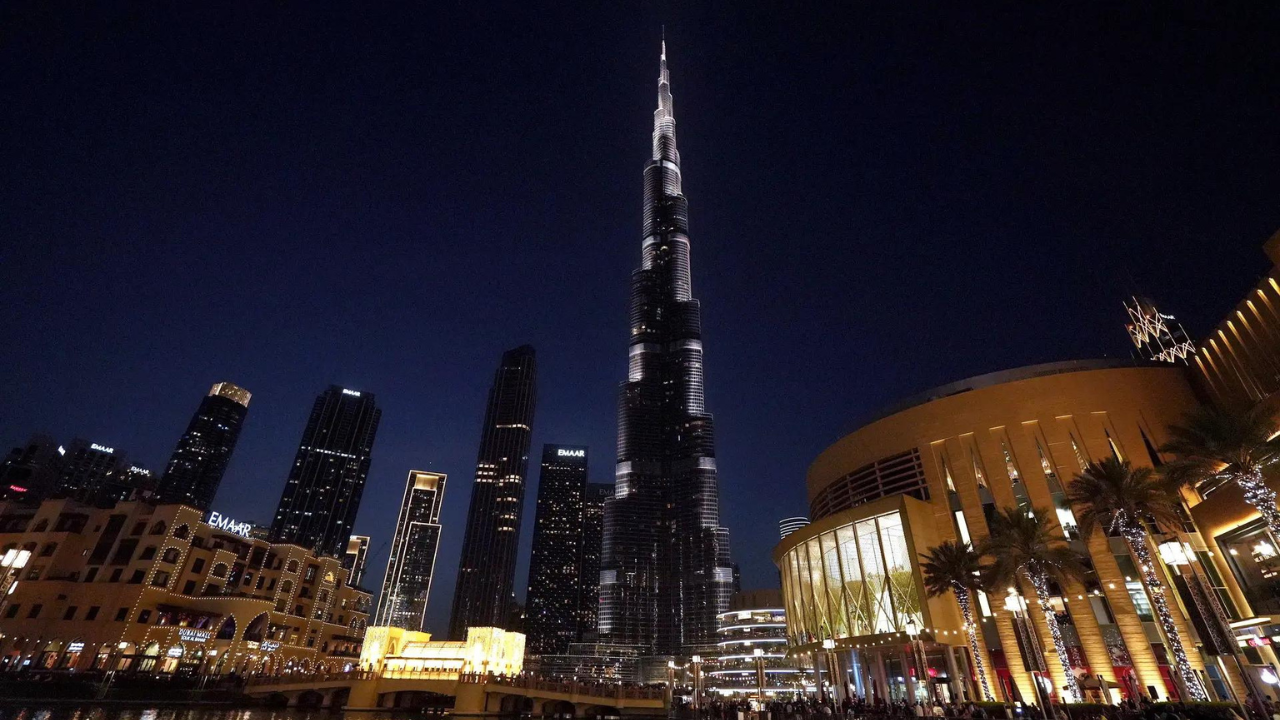
The gilded gates of Dubai are currently locked from the inside. Following the weekend’s escalation of "Operation Epic Fury"—the joint U.S.-Israeli strikes on Iranian nuclear infrastructure—the world’s busiest international aviation hub has transformed from a playground for the global elite into a high-stakes bottleneck. For the ultra-high-net-worth individuals and corporate titans currently grounded in the Emirates, the cost of an exit has moved beyond the realm of luxury travel and into the territory of war-zone extraction.
Since the conflict ignited on February 28, 2026, more than 12,000 commercial flights have been scrubbed from regional schedules. This is not a simple supply chain hiccup. It is a total systemic failure of the Middle Eastern corridor. While thousands of tourists sleep on the marble floors of shuttered terminals, a desperate, parallel economy has emerged in the shadows. Private jet charter prices have tripled in seventy-two hours. A single flight from the Gulf to Europe, which might normally command $100,000, is now being quoted at $350,000.
The Logistics of a High Priced Exodus
The primary reason for this price explosion is not merely opportunistic gouging. It is a mathematical consequence of risk and scarcity. Most of the charter fleet typically based at Dubai International (DXB) or Al Maktoum (DWC) is currently trapped. These aircraft are sitting on tarmacs under "Notice to Airmen" (NOTAM) restrictions, unable to move while drone debris falls near landmarks like the Burj Al Arab and the Fairmont The Palm.
To secure a flight, brokers must now source aircraft from "clean" zones—mostly Europe or Southeast Asia—and fly them into the periphery of the conflict. This requires repositioning flights that cost tens of thousands of dollars before a single passenger even boards. Furthermore, war-risk insurance premiums for hull and liability have reached levels not seen in decades. Underwriters are demanding massive surcharges for any tail number crossing into Gulf airspace, and many aircraft owners are simply refusing to sign off on the risk, regardless of the payout.
The Ten Hour Drive to a Runway
With Dubai’s runways effectively paralyzed for commercial traffic, the evacuation has moved to the asphalt. Wealthy families and executive teams are contracting private security firms to coordinate armored convoys for the ten-hour trek across the desert to Riyadh or the four-hour drive to Muscat.
Saudi Arabia’s capital has become the de facto escape hatch. Because Riyadh’s King Khalid International remains operational and relatively insulated from the immediate missile exchanges affecting the coast, it serves as the primary "launchpad" for these six-figure charters.
- Riyadh to Porto (16 passengers): Current price $232,000 (Up from $115,000).
- Muscat to Istanbul (Light Jet): Current price $92,000 (Up from $30,000).
- Individual "Seat Shares" to Moscow: $22,000 per person.
This last category is a new development in the private aviation sector. Families who usually fly first class on Emirates are now pooling their resources to share the cost of a mid-size jet. It is a rare moment of "middle-class" millionaires being forced to adopt the travel habits of billionaires just to cross a border.
Shattered Insularity and the Future of the Hub
For decades, Dubai’s value proposition was its status as a neutral, safe haven in a volatile neighborhood. That psychological shield has been pierced. When debris from intercepted Iranian drones falls near Jebel Ali Port, the math for global business changes instantly. The city has doubled its population in the last fourteen years, betting everything on the idea that it could remain a frictionless transit point for the world.
Now, the friction is total. The "Golden Visa" crowd—those 9,800 millionaires projected to move to the UAE this year—are looking at the smoke on the horizon and questioning the long-term viability of a city that can be disconnected from the global grid in a single weekend.
The current surge in charter prices is a fever. It will eventually break when the military situation stabilizes, but the damage to the "safe haven" brand may be permanent. Major carriers like Emirates and Etihad have deeper pockets than any private broker, but even they cannot fly through closed airspace. As long as "Operation Epic Fury" continues, the only way out is through the checkbook.
If you are currently coordinating an exit for a corporate team or family, the immediate priority should be securing "dry" transport to Riyadh before the Saudi gateway also faces capacity constraints. Would you like me to track the current operational status of the Riyadh and Muscat air corridors for the next twenty-four hours?