Dubai just cut the ribbon on a "first-of-its-kind" flying taxi station. The press releases are glowing. The renderings are crisp. The promise is simple: skip the gridlock on Sheikh Zayed Road and glide over the city in a quiet, electric miracle of engineering.
It is a beautiful lie.
What we are actually witnessing is not the birth of a transportation revolution. It is the construction of the world’s most expensive vanity project—a high-tech band-aid for a wound that requires surgery, not gadgets. While the media swoons over the "vertiport" architecture, they are ignoring the physics, the math, and the brutal reality of urban throughput that makes the current eVTOL (electric Vertical Take-off and Landing) dream a logistical nightmare.
The Throughput Delusion
The industry loves to talk about "democratizing flight." This is nonsense.
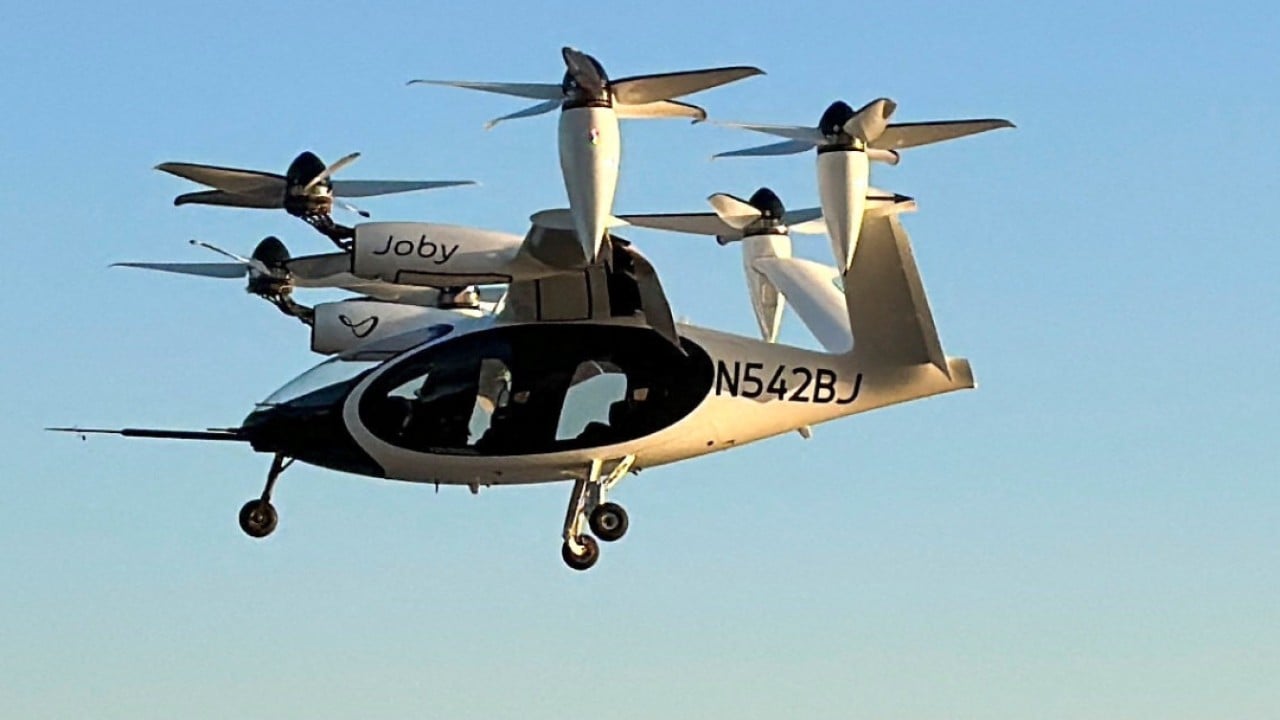
Let’s look at the actual capacity. A standard eVTOL aircraft, like those being touted by Joby or Archer, carries four passengers and a pilot. If a vertiport has two pads and handles a launch every five minutes—a staggering pace for air traffic control—it moves 96 people per hour.
Compare that to a single lane of a standard highway, which moves roughly 2,000 people per hour in cars. A metro line? 30,000.
Building a "station" for flying taxis is like building a massive, gold-plated pier for a boat that only holds four people. It doesn't solve traffic; it displaces it into a more expensive, more dangerous medium. I have watched venture capitalists pour hundreds of millions into these startups, ignoring the fact that the "last mile" problem doesn't go away just because you’re 500 feet in the air. You still have to get to the vertiport. You still have to clear security. You still have to wait for your window. By the time you land at the Burj Al Arab, the guy in the Tesla who left at the same time is already ordering his second espresso.
The Battery Density Lie
We need to talk about energy. The "electric" part of these taxis is the bait, but the physics is the switch.
To lift a 2,000kg vehicle vertically requires an immense burst of power. In traditional aviation, we use energy-dense kerosene. In the eVTOL world, we use lithium-ion batteries. The problem? The energy density of top-tier batteries is roughly $250 \text{ Wh/kg}$. Jet fuel is roughly $12,000 \text{ Wh/kg}$.
Even with the most efficient brushless motors, these "flying taxis" spend a massive percentage of their energy just staying in the air, leaving very little for actual horizontal travel. When you hear claims of 100-mile ranges, realize those numbers are calculated under "perfect" conditions—no headwind, no hovering, and a battery pushed to a depth of discharge that would ruin its lifespan in weeks.
In a desert climate like Dubai’s, where temperatures regularly exceed 40°C, battery efficiency plummets. You need active cooling. Cooling adds weight. Weight requires more lift. More lift drains the battery faster. It’s a thermodynamic death spiral that the glossy brochures conveniently omit.
The Noise Fallacy
The "quiet" promise is the next casualty of reality.
Advocates claim these rotors are "whisper-quiet" compared to helicopters. Technically, they are right. Instead of the rhythmic "thwack" of a single large rotor, you have the high-pitched whine of six to twelve smaller ones.
However, physics dictates that to lift weight, you must move air. Moving air creates pressure waves. Pressure waves are noise. When you have a fleet of 50 eVTOLs buzzing over a residential neighborhood every ten minutes, it won't sound like a "future utopia." It will sound like a swarm of angry hornets the size of SUVs. The public's tolerance for this will last exactly until the first flight path is established over a luxury villa.
Why Vertiports are the New Monorails
Every few decades, we fall in love with a "point-to-point" solution that ignores the network effect.
The vertiport in Dubai is being pitched as a hub. But hubs only work if they connect to something. If you have five vertiports in a city of millions, you haven't built a transit system; you’ve built a private club for the 0.1%.
I've consulted for logistics firms that looked at the "urban air mobility" (UAM) space and walked away shaking their heads. The infrastructure cost is astronomical. You aren't just building a roof; you’re building a fire-suppression system for lithium fires, high-speed charging grids that can draw megawatts of power, and a localized weather monitoring station.
All of this for a vehicle that can’t fly in a sandstorm.
The Air Traffic Control Nightmare
Let’s address the "People Also Ask" favorite: When will I be able to hail a flying taxi from my phone?
Never. At least, not in the way you think.
Current airspace management is designed for separation and safety. It is a slow, manual, and incredibly conservative process. To make "flying taxis" viable, you need a fully autonomous, high-density Unmanned Traffic Management (UTM) system. This system doesn't exist yet. Not at scale.
If two eVTOLs get within a few hundred feet of each other, the wake turbulence from the first could easily destabilize the second. In a city like Dubai, where wind shear between skyscrapers is a constant threat, the computational power required to keep these "taxis" from swatting each other out of the sky is immense. We are decades away from a computer-controlled sky that can handle the density needed to make these stations anything more than a curiosity.
The Harsh Reality of Maintenance
In the airline industry, we talk about "cycles." Every takeoff and landing is a cycle that stresses the airframe and engines.
eVTOLs are built on the edge of what materials can handle to keep them light enough to fly. The maintenance requirements for a vehicle that performs 20 vertical takeoffs a day will be staggering. This isn't a car you take to the mechanic once a year. This is a high-performance aircraft that requires specialized technicians and constant inspections.
The cost per passenger mile will stay closer to a private jet than an Uber Black for the foreseeable future. Dubai isn't building a solution for the masses; they are building a monument to the tech-bro fantasy that we can "disrupt" the laws of physics if we just have enough venture capital and a nice enough lounge.
Stop Trying to Fix Traffic with Flight
If you want to fix Dubai’s traffic, you don't look up. You look down.
High-speed rail, dedicated bus rapid transit lanes, and better pedestrian connectivity do more for a city’s soul and its speed than a dozen flying taxis. But those solutions aren't "sexy." They don't make for good PR for a city trying to prove it lives in the year 2050.
The "first-of-its-kind" station is completed. Congratulations. You’ve built the most expensive parking lot in history for a vehicle that isn't ready, isn't efficient, and won't be allowed to fly where it’s actually needed.
Stop calling it the future of transport. Call it what it is: an amusement park ride for billionaires who are tired of looking at the backs of other people's cars.
The sky isn't the limit. The math is.