The business post-mortems are already out, and they are lazy. They point to the usual suspects: "global expansion was too fast," "the capital markets froze," or "the hardware margins were too thin." This narrative is a comfortable lie. It suggests that if EO Charging had just stayed a bit smaller, or if the interest rates hadn't spiked, we wouldn't be looking at a collapsed entity.
That is nonsense.
EO Charging didn't fail because it ran out of money. It failed because it was trying to solve a 2015 problem in a 2024 reality. The industry wants to frame this as a tragedy of financial strain. The truth is far more brutal. We are witnessing the violent correction of the "dumb hardware" era.
The Myth of the Global Expansion Trap
Every analyst with a keyboard is currently blaming EO's push into North America for their downfall. They argue that a UK-based firm had no business trying to fight for dirt in the US and DACH regions simultaneously. This view is incredibly short-sighted.
In the EV infrastructure space, if you aren't trying to capture global fleet contracts, you aren't a player. You're a local electrician with a fancy website. Expansion wasn't the mistake. The mistake was expanding with a product philosophy that was already obsolete.
I have seen companies burn through nine figures trying to "localize" hardware that nobody actually wants. The "lazy consensus" says you need a physical presence in every market. I say you need a product that creates a moat. EO’s moat was paper-thin. They were selling boxes and cables in a world that is rapidly shifting toward integrated energy management.
Hardware is a Race to the Bottom
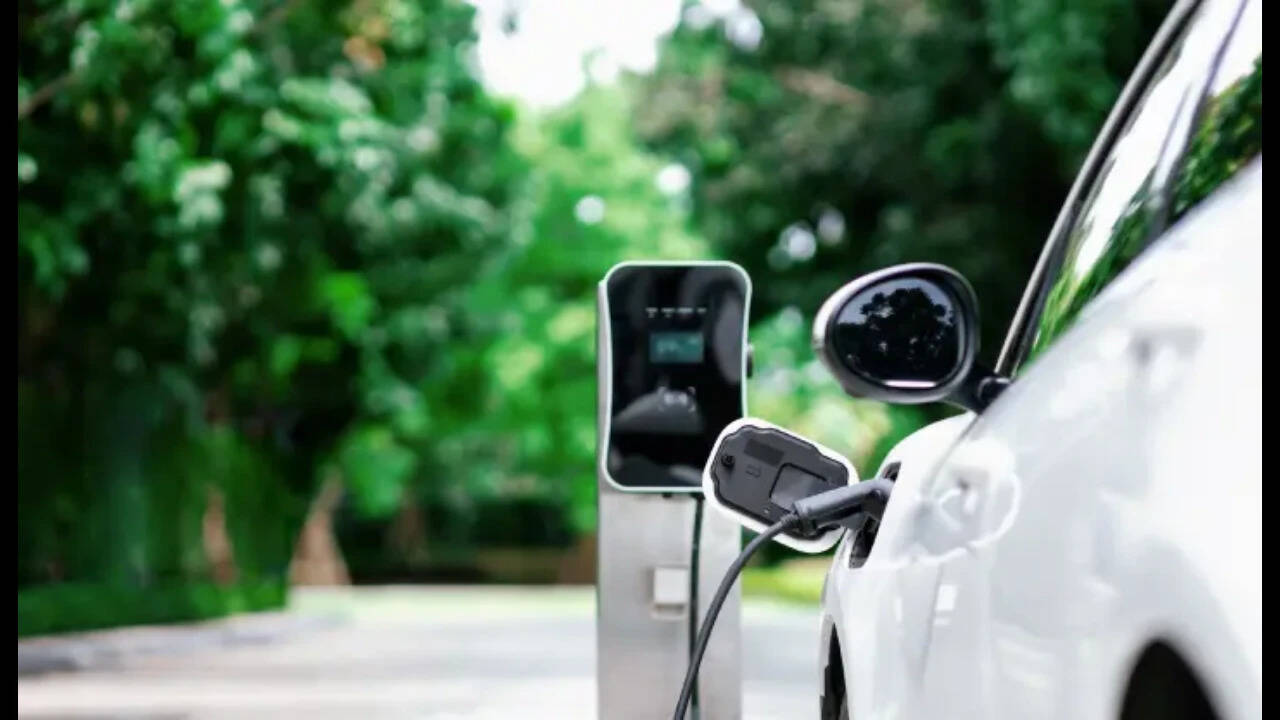
Let’s be precise about the economics of EV charging. A standard AC charger—the kind EO built its reputation on—is effectively a glorified extension cord with a handshake protocol. There is zero intellectual property in the copper. There is zero long-term value in the plastic casing.
When you scale a hardware-heavy business, your margins don’t just get "strained"; they evaporate. The "commodity trap" is real.
- The China Factor: You cannot out-manufacture the scale of East Asian giants who can produce the same basic internal components for 40% less.
- The Maintenance Debt: Every box you put in the ground is a liability. If your software isn't perfect, the truck rolls for repairs will eat your remaining profit before the ink on the contract is dry.
- The Interoperability Lie: We pretend "open standards" are good for business. For a hardware startup, they are a death sentence. If any charger can work with any software, why should a fleet manager pay a premium for yours?
EO wasn't a victim of "financial strain." They were a victim of the fact that their core product had become a commodity faster than they could pivot to a service-based model.
The Fleet Delusion
The "People Also Ask" sections of the internet are obsessed with whether fleets are ready for EVs. That’s the wrong question. The right question is: Do fleets need a hardware manufacturer to tell them how to manage power?
EO’s pitch was heavily centered on fleet management. They targeted the big names—Amazon, DHL, Tesco. Winning those contracts looks great on a pitch deck. In reality, these are the most demanding, low-margin, high-attrition clients in existence.
Imagine a scenario where you win a contract for 5,000 charge points. You celebrate. Then, you realize the client expects 99.9% uptime in environments ranging from sub-zero Scottish winters to Mojave heatwaves. You’ve locked yourself into a price point based on 2022 shipping costs. Then, the supply chain breaks.
You aren't a "tech leader" anymore. You’re a warranty fulfillment department.
The Capital Freeze is a Convenient Excuse
The industry likes to moan about the "difficult fundraising environment." It sounds better than admitting your business model doesn't work when capital isn't free.
During the 2020-2021 bubble, any company with "EV" in their name could get a valuation that defied gravity. EO went for a SPAC (Special Purpose Acquisition Company) merger at a $675 million valuation. When that fell through, the writing wasn't just on the wall; it was etched in neon.
A viable business model survives a 5% interest rate. A "growth at all costs" machine fueled by cheap debt and optimistic projections does not. The collapse isn't a sign of a bad market; it's a sign of a healthy market finally pruning the deadwood.
The Missing Link: Grid Intelligence
If you want to understand why companies like EO struggle while others pivot, look at the grid.
Charging isn't about the plug. It’s about the $kWh$ and the $kW$ load.
$$P = V \times I$$
The physics haven't changed, but the software has. Most charging companies treat the grid as an infinite buffet. It isn't. The real value is in V2G (Vehicle-to-Grid) and load balancing.
If your hardware isn't essentially a sophisticated edge-computing node, you are irrelevant. EO’s hardware was "smart," but it wasn't "grid-integrated" in the way the next decade demands. They were selling shovels while the world was moving to automated excavators.
The Brutal Truth for Investors
Stop looking for the "Tesla of Charging." There isn't one. Tesla's Supercharger network succeeded because it was a vertically integrated loss leader for their cars. Attempting to replicate that as a standalone business is a fool's errand.
The companies that survive the next twenty-four months will have three things in common:
- Asset-Light Software: They won't own the chargers. They will own the data that tells the chargers when to fire.
- Energy Arbitrage: They will make money on the spread of electricity prices, not the markup on a plastic box.
- Brutal Cost Cutting: They will outsource 100% of the manufacturing to the lowest bidder and focus entirely on the ecosystem.
EO tried to do everything. They wanted to design, build, distribute, and manage. In a specialized economy, "end-to-end" is often just another word for "unfocused."
The Actionable Reality
If you are a fleet manager or an investor looking at the wreckage of the charging sector, change your metrics immediately.
Don't ask about "Total Ports Deployed." That's a vanity metric. Ask about "Revenue per Megawatt Managed."
Don't ask about "Global Footprint." Ask about "Proprietary Software Integration."
The collapse of EO Charging isn't a warning about the EV transition. The transition is happening regardless. It’s a warning about the arrogance of thinking hardware scale equals a business moat.
The era of getting rich by selling "smart" plugs is over. The era of managing the electrons has begun. If your business model relies on a high-margin sale of a physical object that a factory in Shenzhen can replicate by Tuesday, you aren't an industry leader. You're a ghost.
Stop mourning the companies that couldn't survive the end of easy money. Start looking for the ones that don't need it.