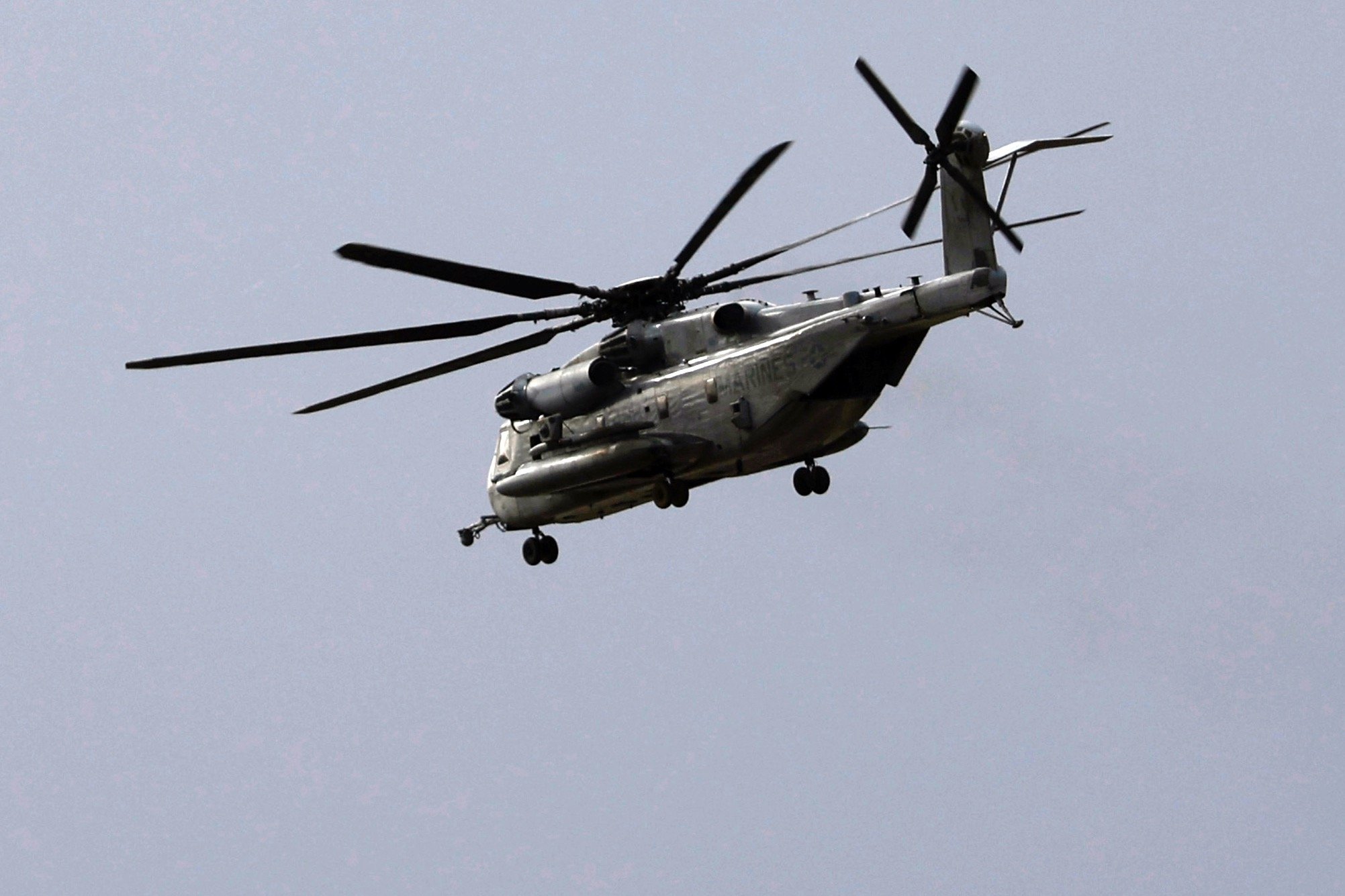
The United Nations Secretary-General has officially welcomed the cessation of hostilities between Israel and Lebanon, but behind the diplomatic applause lies a grim reality of systemic failure. While the UN calls for full compliance with Resolution 1701, the structural flaws that allowed this conflict to erupt in the first place remain untouched. This is not a peace treaty. It is a temporary pause in a decades-long cycle of attrition, managed by an international body that lacks the teeth to enforce its own mandates.
The immediate silence of the guns offers a reprieve for civilians on both sides of the border, yet the "why" behind this ceasefire is more about exhaustion than it is about a political breakthrough. Both parties have reached a point where the tactical gains no longer justify the strategic costs. For Israel, the objective was the degradation of militant infrastructure to allow displaced citizens to return north. For Lebanon, the goal is survival amidst a collapsing domestic economy. The UN’s role in this moment is largely performative, acting as a witness to a deal brokered by regional power players rather than the architect of a lasting settlement.
The Illusion of Resolution 1701
Since its inception in 2006, UN Security Council Resolution 1701 has served as the theoretical bedrock for peace in Southern Lebanon. It demands a zone free of any armed personnel, assets, and weapons other than those of the Lebanese government and UNIFIL. In reality, this zone has become one of the most heavily militarized strips of land in the Middle East. The UN’s insistence on "full compliance" ignores twenty years of documented evidence that neither side views the resolution as anything more than a suggestion.
The failure is rooted in the mandate of UNIFIL. These peacekeepers are tasked with monitoring a situation they are powerless to change. They cannot conduct searches of private property without the accompaniment of the Lebanese Armed Forces, a body that often lacks the political will or the physical capability to confront local militant groups. This creates a loophole large enough to drive a missile convoy through. When the Secretary-General urges compliance, he is speaking to a vacuum where the mechanisms of enforcement do not exist.
The Mechanics of a Managed Conflict
To understand how we arrived here, one must look at the shifting incentives of the belligerents. This ceasefire was not born out of a sudden desire for harmony. It was necessitated by the logistical limits of modern warfare. Israel’s military establishment has faced the dual pressure of maintaining an open-ended occupation while managing internal political dissent. Constant bombardment and ground incursions are expensive, both in terms of financial capital and international standing.
On the other side of the Blue Line, the non-state actors operating within Lebanon have faced a depletion of their medium-range assets. They need time to reorganize. The ceasefire provides the necessary window for restocking and rebuilding tunnels that were destroyed during the height of the kinetic phase. By agreeing to a pause, these groups ensure their long-term survival, betting on the fact that the international community will be too relieved by the silence to notice the rearmament.
The Role of Domestic Collapse
Lebanon is not a functioning state in the traditional sense. Its banking sector has evaporated, its currency is worthless, and its political class is paralyzed by sectarian gridlock. The ceasefire is a desperate gasp for air for a country that cannot afford to fix its power grid, let alone rebuild the shattered villages of the south. International aid often follows these diplomatic announcements, providing a financial lifeline that keeps the ruling elite in power without forcing them to enact the reforms the UN supposedly demands.
The tragedy of the Lebanese civilian is that they are caught between a military superpower and a domestic militia, with a government that exists only on paper. When the UN calls for the Lebanese Armed Forces to take control of the south, it is asking an underfunded, underfed military to police a region controlled by some of the most battle-hardened fighters in the world. It is a logistical impossibility presented as a diplomatic solution.
The Intelligence Gap and the Border
Border security in this region has always been a game of cat and mouse played with high-tech sensors and low-tech tunnels. Despite the ceasefire, the "shadow war" continues. Intelligence agencies on both sides are currently mapping out the new reality of the front lines. The ceasefire does not stop the surveillance drones; it only changes their mission from target acquisition to monitoring the reconstruction of forbidden sites.
The UN’s monitoring capability is hampered by its own transparency. Peacekeepers move in marked vehicles on set schedules. They are easily avoided by anyone with a basic understanding of their patrol routes. For the ceasefire to hold in any meaningful way, there would need to be a fundamental shift in how the border is monitored, moving away from static observation posts toward a more intrusive, tech-driven verification system. However, such a move would be rejected by Lebanon as a violation of sovereignty and by Israel as an interference with their security prerogatives.
The Geographic Reality of Attrition
The terrain of Southern Lebanon—jagged limestone hills and deep wadis—favors the defender and the insurgent. This geography dictates the pace of any conflict and the nature of any peace. Throughout the latest round of fighting, the tactical advantage shifted constantly based on who held the high ground overlooking the Galilee. A ceasefire doesn't change the topography. The strategic points remains just as valuable today as they were a month ago, and the desire to control them hasn't faded.
We are seeing a trend where "peace" is merely the period required to develop new ways to bypass the enemy’s defenses. In the 1990s, it was roadside bombs. In the 2000s, it was short-range rockets. Today, it is autonomous drones and precision-guided munitions. Each ceasefire serves as a laboratory phase where both sides analyze the failures of their previous campaign to ensure the next one is more lethal.
The Cost of Diplomatic Inertia
By treating every ceasefire as a success, the international community inadvertently subsidizes the next war. There is a palpable fear in diplomatic circles that pushing for a "final status" agreement is too risky, so they settle for the status quo. But the status quo is a decaying structure. Each time the cycle repeats, the humanitarian cost grows, and the weapons used become more sophisticated.
The UN’s "welcome" of the ceasefire is a reflex, not a strategy. True stability would require a massive infusion of political courage that involves addressing the core issue: the existence of a state within a state in Lebanon. As long as the central government in Beirut remains a bystander in its own defense policy, the Blue Line will remain a tripwire for regional catastrophe.
The Return of the Displaced
The metric of success for this ceasefire, according to the Israeli government, is the return of its citizens to the northern communities. This is a tall order. A ceasefire on paper does not stop a rocket from being fired by a rogue cell or a local commander. For families who have spent months in hotels and temporary housing, the "urgency of compliance" mentioned by the UN Secretary-General feels hollow. They require a level of security that a UN resolution has never been able to provide.
On the Lebanese side, the return of displaced persons to the south is equally fraught. They return to homes that may be booby-trapped, or simply gone, in a region where the social contract has been replaced by the rule of the gun. The reconstruction effort will be used as a political tool, with various factions vying to take credit for rebuilding, further entrenching the sectarian divisions that prevent national unity.
The Geopolitical Chessboard
This conflict is never just about Lebanon and Israel. It is a proxy battleground for a larger regional cold war. The ceasefire was likely greenlit in foreign capitals where the calculation was made that a full-scale regional conflagration was not currently in their best interest. This means the peace is only as stable as the relationship between those external powers. If a shift occurs in Tehran or Washington, the Blue Line will ignite within hours, regardless of what the UN says in its press releases.
The hard truth is that the UN is an observer in a game played by actors who do not respect its authority. The Secretary-General’s call for "full compliance" is a standard script for a play that everyone has seen before. The actors know their lines, the audience knows the ending, and the cycle of violence remains the only constant.
Investors and analysts looking at the region shouldn't be fooled by the temporary dip in the "conflict premium." The underlying tensions—territorial disputes, water rights, and existential ideological shifts—remain unresolved. The ceasefire is a tactical breather. It is a moment for the medics to clear the field and the engineers to repair the tanks.
The international community needs to stop treating these ceasefires as ends in themselves and start treating them as the failures they are. A ceasefire is evidence that the political process has collapsed so thoroughly that the only thing left to do is stop the bleeding. To move forward, the conversation must shift from "compliance" to "dismantling" the structures that make war inevitable. Until the Lebanese state is the only entity with the power of the sword within its borders, the Blue Line will continue to be a scar across the map of the Middle East, ready to reopen at any moment.
Ground your expectations in the historical pattern. Since 1948, this border has seen more "permanent" ceasefires than almost any other place on earth. None of them survived the first test of political stress. This one is no different. It is a pause, not a peace, and the clock for the next escalation is already ticking. Move your assets accordingly and don't mistake a quiet night for a settled debt.