The loss of three U.S. Air Force F-15E Strike Eagles to Kuwaiti air defenses on March 2, 2026, is the most damning evidence yet that the regional coalition against Iran is buckling under its own weight. During the frantic early hours of Operation Epic Fury, as a swarm of Iranian drones and ballistic missiles crossed the Gulf, Kuwaiti batteries opened fire on what they believed were hostile targets. Instead, they shredded $250 million of American hardware. While the six crew members ejected safely and were recovered in the Al Jahra area, the debris scattered across the desert floor represents a catastrophic failure of the very integrated defense systems the Pentagon has spent decades building.
This was not a simple case of a nervous finger on a trigger. It was a systemic collapse of "identification friend or foe" (IFF) protocols during the most dense aerial combat environment the world has seen in the 21st century.
The Al Jahra Incident
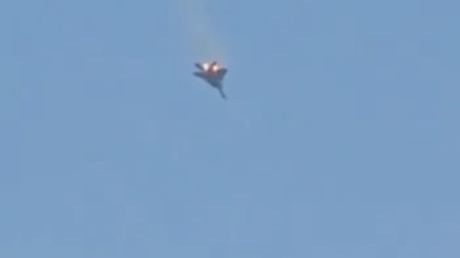
As the third day of the U.S.-Israeli campaign against Iran unfolded, the skies over the Gulf became a chaotic corridor of high-speed metal. Centcom confirmed that the three F-15Es were returning from a combat mission when they were engaged by Kuwaiti surface-to-air missile units. Local footage from Al Jahra showed one of the dual-engine fighters spiraling toward the earth in a flat spin, its tail a plume of orange flame, before a massive fireball signaled its impact.
Sources within the Pentagon, speaking on condition of anonymity, suggest that the Kuwaiti batteries were operating in an autonomous "free-fire" mode due to the sheer volume of Iranian "suicide" drones saturating their radar. When the F-15Es entered the engagement zone, the digital handshake that should have signaled their status as allies never happened. Whether this was due to electronic warfare interference from Iranian "shadow" units or a failure to update the daily rotating IFF codes remains the subject of an urgent investigation.
Why Integrated Defense is Failing
For years, the promise of a "Middle East Air Defense" (MEAD) alliance was marketed as a wall of seamless protection. The reality is a patchwork of hardware that speaks different languages. Kuwaiti forces operate a mix of American-made Patriots and older systems that must be manually deconflicted with U.S. flight paths.
The failure at Al Jahra highlights three critical vulnerabilities:
- Sensor Saturation: Iranian tactics now involve "cluttering" the sky with low-cost decoys. This forces regional partners to prioritize speed of engagement over target verification.
- Electronic Warfare Spillover: The intense jamming environment used to blunt Iranian missile guidance also degrades the very communication links meant to protect friendly aircraft.
- Political Friction: As the conflict with Iran escalates, Gulf states like Kuwait find themselves in an impossible position, caught between their security pacts with Washington and the risk of total Iranian retaliation.
The Human Element in the Back of a Pickup
Social media footage captured the raw aftermath of the downing. One video showed a downed American pilot, still in a flight suit and clutching his oxygen mask, being transported in the bed of a civilian pickup truck by local Kuwaitis. The optics are jarring. They reflect a conflict that has spilled out of the high-altitude stratosphere and into the suburban streets of Al Jahra and Kuwait City.
While the Kuwaiti Ministry of Defense was quick to confirm the "complete safety" of the crews, the incident has sparked a quiet fury in Washington. General Dan Caine, Chairman of the Joint Chiefs, notably avoided blaming the Kuwaiti military directly, but his brief, grim statement at the Pentagon spoke volumes. The U.S. cannot afford to lose its most advanced strike platforms to its own partners while trying to maintain a front against Tehran.
A Systemic Crisis
The friendly fire incident is a symptom of a much larger strategic misalignment. As the U.S. and Israel press their advantage against Iranian nuclear and military infrastructure, the "shield" provided by Gulf partners is showing deep cracks. If the IFF systems cannot distinguish a Strike Eagle from a Shahed drone over a friendly capital, the operational tempo of Operation Epic Fury will have to be drastically throttled.
This isn't just about three lost jets. It is about the collapse of the technical trust required to fight a multi-national war in a cramped, high-tech theater. The investigation now underway in Kuwait City and at Centcom headquarters in Qatar will likely find "human error" at the core, but the truth is more uncomfortable. The technology has outpaced the ability of the coalition to manage it under fire.
If you are following the tactical shifts in the Gulf, keep a close eye on the upcoming changes to "No-Fly" corridors over Kuwaiti and Qatari airspace.