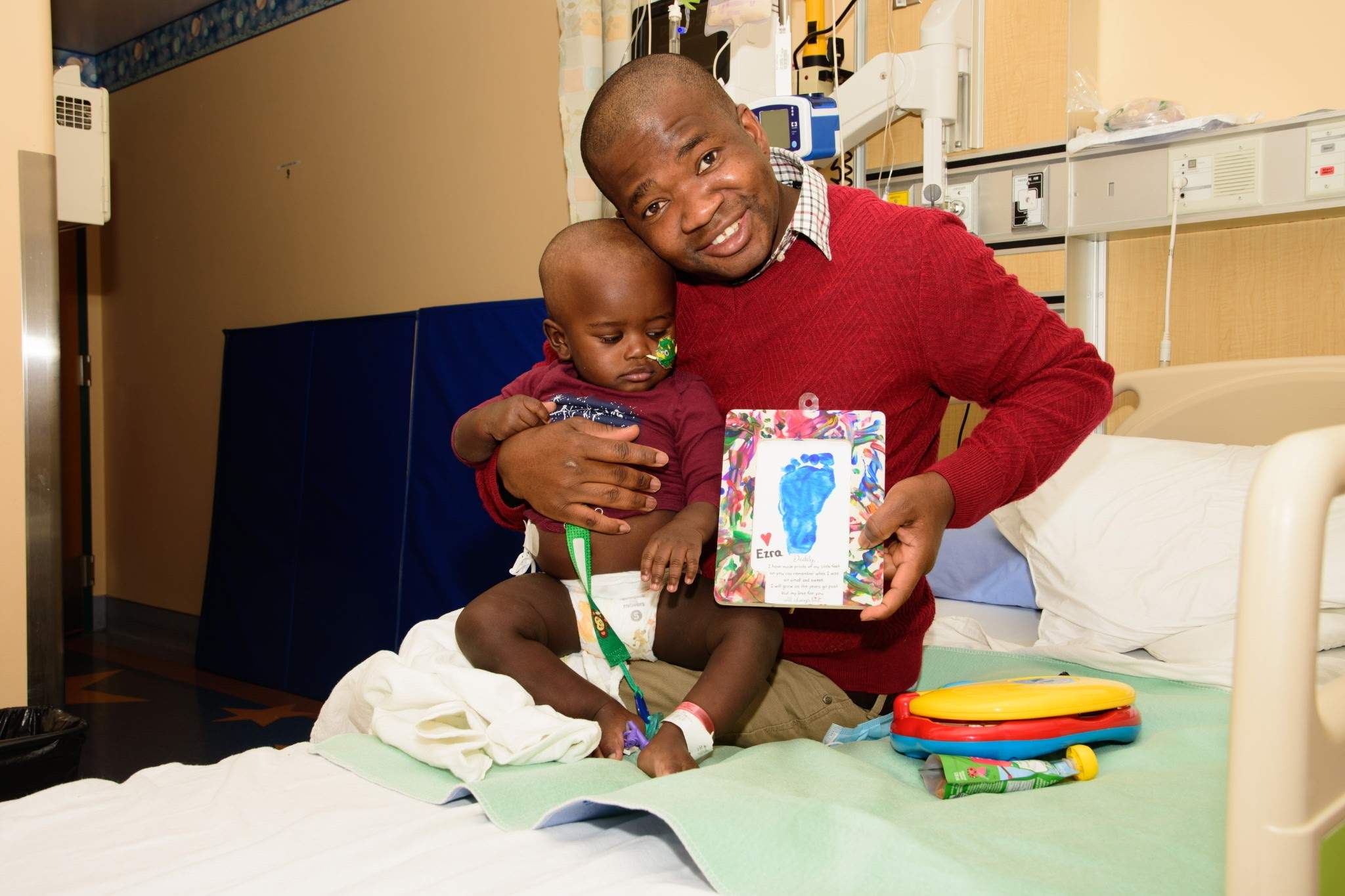
The hospital room in Calgary smells of antiseptic and quiet desperation. For Chris Tse, the air is thick with a specific kind of silence—the kind that settles when you realize the person you love most is trapped behind a wall of biology. His daughter, Maya, needs a hero. But the hero isn’t a man in a cape or a doctor with a scalpel. The hero is a stranger with a very specific, very rare set of proteins on the surface of their white blood cells.
This is the reality of the stem cell registry. It is a massive, global database of names, yet for people of color, it often feels like a library where all the books are written in a language they can’t read.
When a patient is diagnosed with a blood cancer like leukemia or a metabolic disorder, the standard "cure" is often a bone marrow or stem cell transplant. We talk about it like it’s a simple procedure. It isn't. It is a biological takeover. You are wiping out a human being’s entire immune system and replacing it with another person's. If the match isn't perfect, the new system attacks the host. It is civil war at a cellular level.
To prevent this, doctors look for Human Leukocyte Antigen (HLA) markers. These are the genetic "fingerprints" of our immune systems. To survive, you need a match. Usually, a ten-out-of-ten match.
The Odds Are Not in Your Favor
If you are of white European descent, your chances of finding a perfect match on the global registry sit comfortably around 75 percent to 80 percent. You have a massive pool of donors. Generations of recruitment and a history of medical infrastructure in Western nations have built a safety net for you.
But the moment you move away from that specific ancestry, the net starts to fray.
For patients of Chinese, South Asian, Black, or Indigenous heritage, the numbers plummet. A person of mixed race or from an underrepresented ethnic group might face odds as low as 20 percent or 30 percent. In some cases, the odds are virtually zero.
Consider the math. It is brutal.
There are over 40 million donors on the global registry. That sounds like plenty. It sounds like an ocean of hope. But the registry is overwhelmingly white. For a father like Chris, watching his daughter wait for a match, that 40-million-person list starts to look like a desert.
The documentary Vying for Life follows this journey. It isn't just a film about a sick child; it is a film about the systemic invisible barriers built into our DNA and our donor systems. Chris Tse didn't just become a caregiver; he became a recruiter. He had to. Because if he didn't find a donor for Maya, no one would.
Why Your Ancestry Is the Key
We often think of race as a social construct, but in the world of transplant medicine, ancestry is a physical map. Your HLA markers are inherited. They are passed down through generations. Because humans have spent most of history living in geographically concentrated groups, these markers clustered.
If your ancestors stayed in one region of South Asia for a thousand years, your immune system’s "password" is going to look like other people from that region. If you are biracial—say, half-Japanese and half-Italian—your password is a complex, unique hybrid. Finding a stranger with that exact same hybrid password is like trying to find a specific grain of sand on a beach during a hurricane.
The problem is compounded by a lack of awareness. Many people in diverse communities believe that donating stem cells is a gruesome, surgical ordeal involving large needles and hip bones. That is an outdated fear.
Today, about 90 percent of donations are "peripheral," meaning it’s similar to giving blood. You sit in a chair, a machine filters the stem cells out of your blood, and you go home and watch Netflix. But the myth of the painful "marrow harvest" persists, keeping thousands of potential lifesavers off the registry.
The Emotional Weight of the Search
Imagine being told your life depends on someone you’ve never met. Now imagine being told that because of your heritage, that person probably doesn't exist in the system.
That is the "invisible stake."
When Chris Tse stands in front of a crowd, he isn't just asking for a name on a list. He is asking for a correction of a historical imbalance. He is fighting against a clock that doesn't care about fairness.
The documentary highlights a jarring reality: the Canadian Blood Services and similar organizations globally are desperate for donors between the ages of 17 and 35, specifically those from diverse backgrounds. Why young men? Because they generally provide the highest volume of stem cells and the best long-term outcomes for patients.
Yet, when you look at the donor drives in many cities, the turnout often reflects the same old demographics. We are stuck in a loop. We don't have enough diverse donors, so patients of color die. Because patients of color die, their communities feel the medical system isn't for them, which leads to fewer donors.
Breaking the Loop
The solution isn't just "awareness." Awareness is a soft word. The solution is a cultural shift in how we view our responsibility to our genetic kin.
We need to understand that the registry is a public utility, like a power grid. If only one neighborhood contributes to the grid, the rest of the city stays dark. Right now, whole swaths of the global population are living in the dark, hoping they never get sick because they know the grid won't support them.
Chris Tse’s fight isn't just for Maya. It is for every person who has been told their genetics are "too complicated" to save. It is about demanding that the medical infrastructure reflects the actual face of the world, not just a portion of it.
The process of joining the registry is deceptively simple. A swab of the cheek. A pre-paid envelope. That’s it. You are entered into a database that spans the globe. You might never get called. Most people don't. But for the one person who does, you are the difference between a funeral and a future.
The Mirror in the Registry
When we look at the data, we see the holes.
| Ethnic Background | Probability of Finding a Match |
|---|---|
| White / European | ~77% |
| Chinese | ~42% |
| South Asian | ~35% |
| Black / African American | ~23% |
| Mixed Race | <20% |
These aren't just percentages. They are people. They are daughters like Maya. They are fathers like Chris. They are the silent "No" that a doctor has to deliver to a family because the "password" couldn't be found.
We often wait for a crisis to act. We wait for a documentary or a viral social media post to remind us that our bodies hold the power to keep someone else breathing. But the crisis is already here. It is happening in every oncology ward where a patient of color is told to wait, and wait, and wait.
The tragedy isn't that we lack the technology to cure these diseases. We have the technology. We have the doctors. We have the hospitals. The tragedy is that we are missing the raw material. We are missing the people.
Chris Tse continues his work because he has seen the alternative. He has felt the weight of a system that wasn't built for him, and he has decided to rebuild it by hand, one cheek swab at a time. He is a reminder that while our DNA may be a lottery, the way we care for one another shouldn't be.
He stands in the middle of a crowded room, holding a kit, waiting for one person to realize that they might be the only one in the world who can provide the answer to someone else's impossible prayer.
The light in the hospital room doesn't have to be so dim. The silence doesn't have to be so heavy. The answer is literally inside us, coded into our cells, waiting for the moment we decide to share it.
One swab. One match. One more day for a child who just wants to go home.