The proposed €90 billion financial package for Ukraine, currently under deliberation by European Union leaders in Brussels, represents a fundamental shift from direct aid to a complex debt-leveraging instrument. This mechanism is not a simple grant; it is a structured financial vehicle designed to bypass internal EU fiscal constraints by utilizing the interest generated from frozen Russian sovereign assets as collateral. The viability of this strategy hinges on three specific variables: the stability of the Eurozone’s legal framework regarding windfall profits, the long-term interest rate environment, and the absorption capacity of the Ukrainian state apparatus.
The Architecture of Windfall Collateralization
The primary innovation of this €90 billion facility is the decoupling of the principal from the interest. The European Union is attempting to operationalize the "windfall profit" theory, which posits that while the principal of Russian central bank assets (approximately €210 billion held in Euroclear) may be legally protected by sovereign immunity, the interest accrued on those assets does not belong to the Russian state.
The mathematical tension in this model lies in the yield-to-debt ratio. To service a €90 billion loan, the annual interest generated by the frozen assets must exceed the cost of borrowing for the EU. If the European Central Bank (ECB) pivots toward a lower interest rate environment to stimulate Eurozone growth, the yield on these frozen cash holdings decreases. This creates a collateral shortfall risk. In such a scenario, the EU member states would be legally obligated to cover the deficit from their own national budgets, effectively turning a "free" loan into a direct taxpayer liability.
The Three Pillars of the EU Credit Strategy
- Legal Insulation: Establishing a precedent that interest income from immobilized assets constitutes a separate legal entity from the assets themselves.
- Multilateral Risk Sharing: Distributing the default risk across the G7 and EU member states to prevent a single-point-of-failure in the event of a Ukrainian fiscal collapse.
- Front-Loaded Liquidity: Providing a massive capital injection in the short term to stabilize the Ukrainian hryvnia and fund critical defense infrastructure before the 2024-2025 winter cycle.
Macroeconomic Absorption and the Inflationary Feedback Loop
A common oversight in high-level geopolitical analysis is the assumption that capital injection translates directly into military or civilian efficacy. Ukraine’s economy faces a significant absorption bottleneck. When €90 billion enters a depleted economy with a degraded industrial base, it risks triggering hyper-inflation if the funds are not strictly tied to external procurement.
The credit facility must be viewed through the lens of a Cost-Plus-Fixed-Fee (CPFF) model. If the funds are used primarily for internal payroll and local reconstruction, the influx of euros will drive up the price of local labor and materials, effectively reducing the "purchasing power" of the aid. To maintain efficiency, the EU must enforce a procurement-centric distribution model where the majority of the €90 billion is recycled back into the European and American defense industrial bases. This creates a circular economic flow: Russian asset interest pays for European-manufactured hardware, which is then deployed in Ukraine.
The Bottleneck Variables
- Supply Chain Lead Times: The time delay between capital allocation and the delivery of 155mm artillery shells or air defense batteries currently exceeds 12 to 18 months.
- Logistical Throughput: The physical capacity of the Polish and Romanian borders to handle the volume of goods purchased by a €90 billion budget.
- Institutional Corruption Risk: The lack of a robust, independent auditing body within the Ukrainian Ministry of Defense to track the movement of liquid credit.
The Sovereign Immunity Dilemma and Market Credibility
The decision to weaponize interest income carries a secondary cost: the erosion of the Euro as a global reserve currency. Central banks in the Global South are monitoring the Brussels summit as a stress test for the sanctity of sovereign assets.
The Precedent Risk Factor suggests that if the EU proceeds with this €90 billion plan, it signal to other nations that their assets are only safe as long as their foreign policy aligns with Brussels. This could lead to a "flight from the Euro," where non-Western central banks diversify into gold or other currencies to avoid similar freezes. The long-term cost of this capital flight might eventually outweigh the short-term benefit of the €90 billion loan.
The EU is attempting to mitigate this by labeling the move as "exceptional and temporary." However, in financial markets, temporary measures frequently become permanent fixtures. The structural integrity of Euroclear, the world's largest settlement house, is at stake. If Euroclear is perceived as a political tool rather than a neutral financial utility, its credit rating and market dominance could degrade, increasing the cost of capital for all European entities.
Political Fragmentation and the Unanimity Constraint
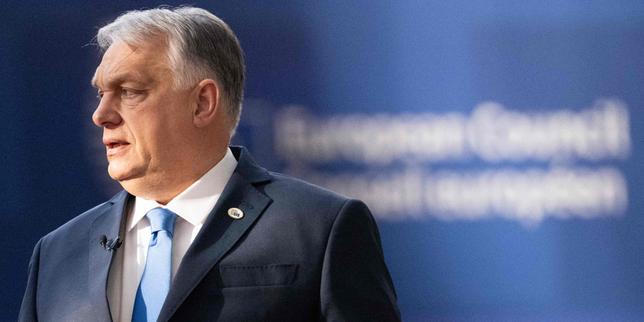
The Brussels summit is not merely a financial meeting; it is a battle over the Unanimity Principle. Under current EU treaties, major foreign policy and financial decisions require the consent of all 27 member states. The €90 billion package is being structured to bypass potential vetoes from dissenting members like Hungary or Slovakia.
One strategy being deployed is the "Intergovernmental Agreement" (IGA) route. By moving the funding mechanism outside the formal EU budget (the Multiannual Financial Framework), a subset of "willing" nations can provide guarantees for the loan. This creates a tiered integration model within the EU, where a core group of hawks drives the continent’s defense policy while the periphery remains sidelined. This fragmentation reduces the collective bargaining power of the Union but increases its operational speed.
Comparative Funding Frameworks
- Grants (Standard Aid): Direct transfers with no repayment obligation. These are politically difficult to pass in domestic parliaments facing austerity.
- Loans (The €90B Proposal): Requires a repayment schedule, likely subsidized by Russian interest. This preserves the "fiscal responsibility" narrative for European voters.
- Debt Forgiveness: A future inevitability that is currently being ignored. Given Ukraine's debt-to-GDP ratio, the likelihood of the €90 billion being repaid in full is statistically negligible.
Strategic Forecast: The Shift Toward Defense Industrial Autonomy
The mobilization of €90 billion signals that the EU has accepted a "long war" hypothesis. The transition from ad-hoc donations to structured credit facilities indicates a move toward a permanent war economy. The immediate strategic priority is the transition from capability transfer (giving old stock) to capacity building (funding new production).
The success of this financial maneuver depends on the EU’s ability to synchronize its fiscal policy with its industrial output. Without a corresponding increase in factory floor space and raw material procurement (lithium, steel, explosives), the €90 billion will simply sit on a ledger, losing value to inflation while the tactical situation on the ground remains static.
The final iteration of this plan will likely see the €90 billion disbursed in quarterly tranches, contingent on specific judicial and anti-corruption milestones within Kyiv. This "conditionality-based funding" is the only mechanism left to ensure that the leverage provided by Russian assets is not squandered. The EU must now treat Ukraine not as a charity case, but as a high-risk, high-reward investment in the security of the European perimeter.
The move to use the interest on Russian assets is the first step toward a broader confiscatory regime. Once the interest is normalized as a funding source, the political barrier to seizing the principal will drop. This creates a binary outcome: either the Russian state negotiates to protect its €210 billion, or it accepts the total loss of those assets as the EU ramps up its credit facility to €200 billion or more in the coming years.
The most effective play for the EU is the immediate establishment of a "Defense Clearing House." This entity would manage the €90 billion by issuing direct contracts to European manufacturers, bypassing the Ukrainian treasury entirely to minimize graft and maximize logistical speed. By maintaining control of the cash until the point of hardware delivery, the EU can satisfy both the legal requirements of the credit facility and the urgent tactical needs of the Ukrainian front lines.