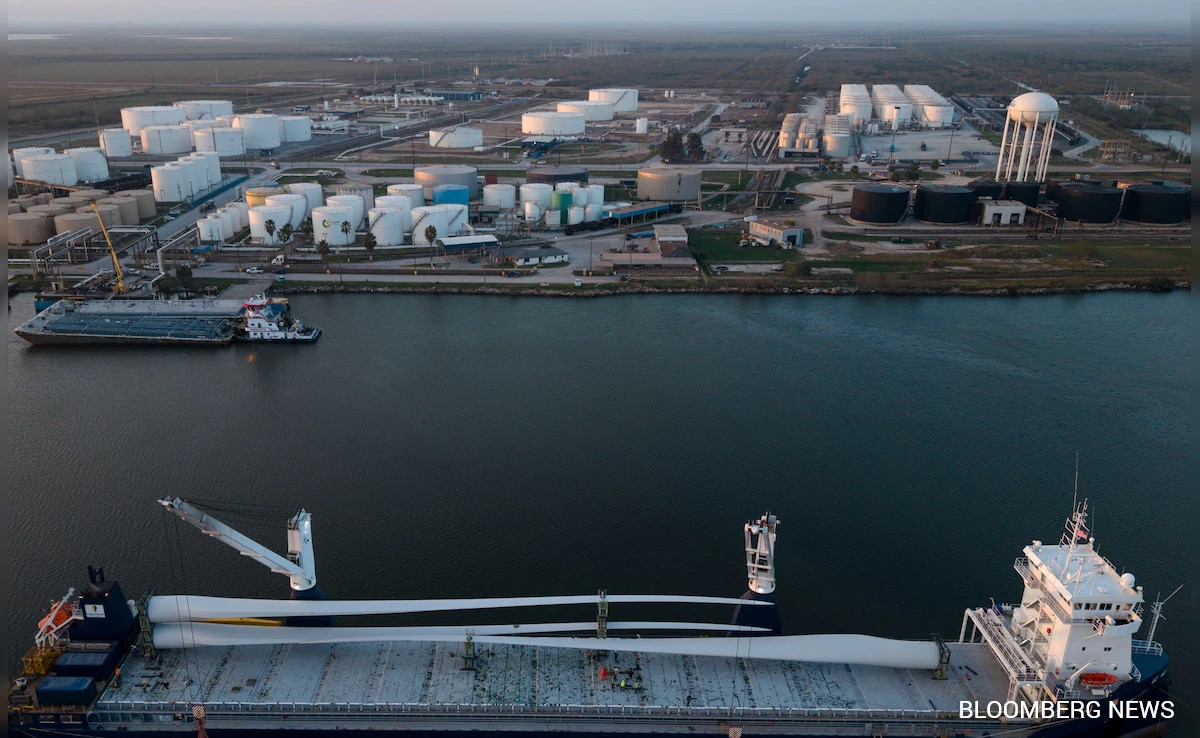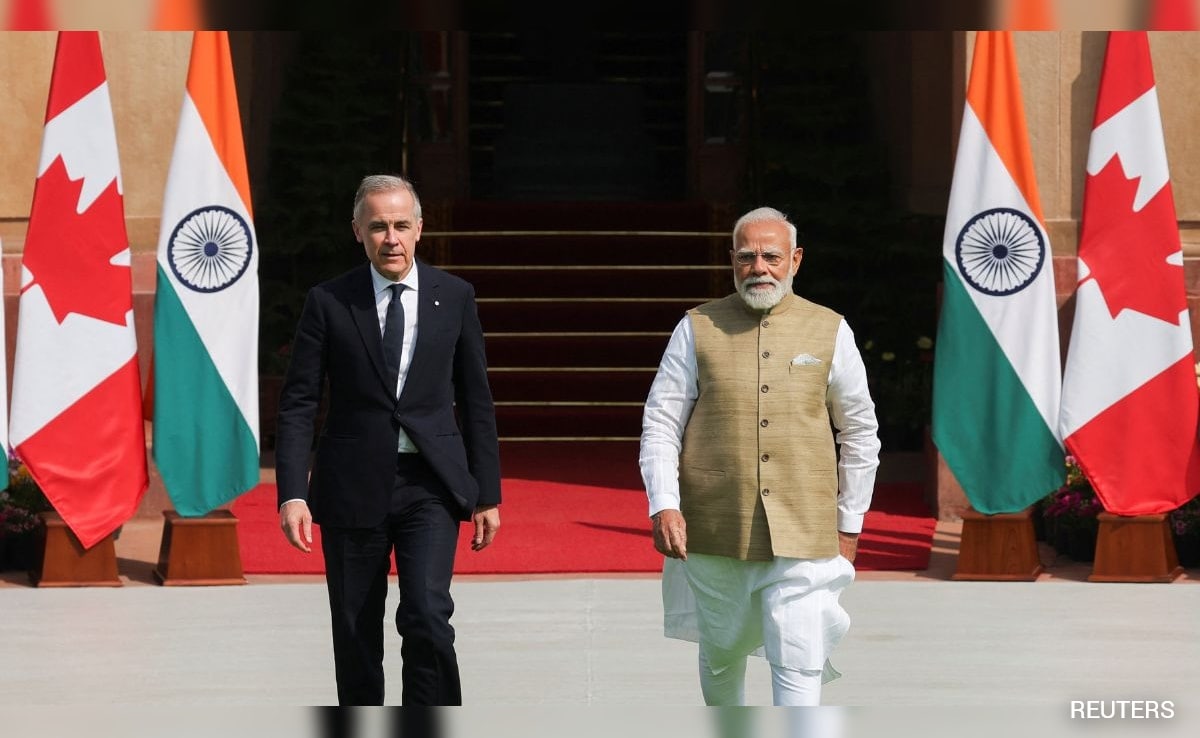
The diplomatic freeze that once paralyzed Ottawa and New Delhi has thawed, not through a sudden surge of political goodwill, but under the crushing weight of energy necessity. For months, the narrative surrounding Canada’s energy future focused on the American market, which swallows 97% of Canadian exports. That era is ending. Prime Minister Mark Carney’s recent trip to India was less about a diplomatic reset and more about a survival strategy for a Canadian resource sector that can no longer afford to ignore the Indo-Pacific.
India’s energy appetite is gargantuan. As the world’s third-largest oil consumer and fourth-largest importer of Liquified Natural Gas (LNG), New Delhi is currently executing a plan to more than double the share of natural gas in its energy mix—from 6% to 15% by 2030. Canada, meanwhile, is finally ready to move product. The LNG Canada terminal in Kitimat, British Columbia, is now operational, and the federal government has cleared a path for a network of terminals that could push export capacity to 50 million tonnes annually by the end of the decade. This is the "big offer" on the table: a reliable, democratic alternative to the volatile supply chains of the Middle East and the sanctioned corridors of Russia.
But this partnership is not a guaranteed success. While the headlines focus on the $2.6 billion uranium deal and the promise of "strategic energy partnerships," the reality on the ground is a high-stakes poker game where price sensitivity and infrastructure bottlenecks threaten to derail the momentum.
The Strait of Hormuz Crisis and the Canadian Alternative
The urgency of this deal was laid bare this month. GAIL India, the state-run gas utility, recently saw its LNG allocations from Petronet cut to zero. The cause was a force majeure declared following navigation restrictions in the Strait of Hormuz—a choke point that handles a fifth of the world’s traded oil and a massive share of Qatari gas. When the Middle East burns, India’s industrial engines stutter.
This is where the Canadian value proposition becomes undeniable. By shipping from British Columbia’s Pacific coast, Canada offers a direct, blue-water route to India that bypasses the geopolitical minefields of the Suez Canal and the Strait of Hormuz. For India, Canada represents "peace of mind" energy. For Canada, India represents a chance to finally break the "monopsony" of the United States, which has long enjoyed deep discounts on Canadian resources simply because Canadian producers had nowhere else to go.
Breaking the Price Deadlock
Despite the strategic alignment, a significant hurdle remains: the "Asia Premium." Indian buyers, led by Petronet and GAIL, are notoriously price-sensitive. They are currently pushing for flexible, long-term contracts at rates that reflect a looming global oversupply.
- The Indian Demand: Importers want prices between $3 and $5 per MBtu to make gas a viable alternative to cheap domestic coal and rapidly expanding solar capacity.
- The Canadian Reality: To cover the immense capital expenditure of projects like LNG Canada and the Indigenous-owned Cedar LNG, Canadian producers need delivered costs to average closer to $8 per MBtu.
This $3 to $5 gap is the silent killer of many energy deals. While the Canadian government can sign MOUs and issue joint statements, it cannot force private producers to sell at a loss. The success of this "Big Offer" depends on whether both sides can find a middle ground on contract duration—moving away from 20-year rigid agreements toward more agile 10- or 15-year deals that allow for price adjustments based on global market shifts.
The Indigenous Factor and the New Export Model
One of the most overlooked aspects of Canada’s LNG offer is its radical shift in project ownership. The old model of energy development—top-down, corporate-heavy, and often mired in years of legal challenges from First Nations—has been replaced by a partnership model that India finds attractive for its stability.
The Cedar LNG project, a floating facility in Kitimat, is the first Indigenous-majority owned LNG project in the world. By making the Haisla Nation central partners rather than just stakeholders, the project has avoided the regulatory and social quagmires that sank previous attempts to build pipelines in British Columbia. For Indian investors, this provides a level of sovereign risk mitigation that didn't exist five years ago. They aren't just buying gas; they are buying into a system that has finally figured out how to build infrastructure in a modern democracy.
Beyond the Pipeline: The Nuclear and Refined Product Swap
The "Energy Partnership" is not a one-way street. While Canada aims to send raw resources west, India is looking to send value-added products east. This is the "secret sauce" of the Carney-Modi agreement.
- Uranium for Nuclear Expansion: Saskatoon-based Cameco’s 22-million-pound uranium contract is the bedrock. India plans to boost its nuclear capacity from 8.7 to 100 gigawatts by 2047. Canada is providing the fuel that makes this "Atmanirbhar Bharat" (Self-Reliant India) vision possible.
- The Refined Product Loop: In a fascinating twist, the agreement explores the supply of refined petroleum products from India back to Canada. India has some of the world’s most sophisticated and high-capacity refining infrastructure. Canada, while rich in crude, often lacks the refining capacity to meet domestic demand for specialized fuels.
This reciprocal trade creates a "symbiotic" dependency that makes it much harder for diplomatic tiffs to derail the relationship. When both nations’ energy security is intertwined, a stray comment from a Prime Minister carries less weight than a delayed tanker.
The TMX Factor and Oil Egress
While LNG is the future, the Trans Mountain Expansion (TMX) is the present. The newly expanded pipeline capacity has finally allowed Canadian heavy oil to reach Pacific tidewater in significant volumes. India, which has been trying to reduce its reliance on Russian crude to avoid U.S. sanctions pressure, sees Canadian heavy oil as a perfect match for its refineries, which are designed to handle complex, heavy grades.
Currently, less than 1% of Canadian production reaches India. The goal of the Strategic Energy Partnership is to move that number into the double digits by 2030. However, the competition is fierce. Canada isn't just competing with Russia and Qatar; it's competing with a domestic Indian energy revolution that is betting heavily on green hydrogen and solar.
The window for Canada to lock in these contracts is narrow. If the Pacific terminals aren't scaled up rapidly—hitting that 50-million-tonne target—India may well decide that the cost and complexity of Canadian gas aren't worth the wait, choosing instead to "leapfrog" directly to renewables and domestic coal-to-gas technologies.
Canada has finally stopped talking about being an "energy superpower" and started building the infrastructure to prove it. The offer to India is a masterpiece of timing, born of necessity and geopolitical realignment. Whether it becomes the cornerstone of a new Pacific economy or remains a series of signed papers depends entirely on whether the two nations can bridge the gap between "strategic need" and "market price."
Would you like me to analyze the specific shipping cost advantages of the Kitimat-to-Dahej route compared to the Gulf Coast-to-India route?