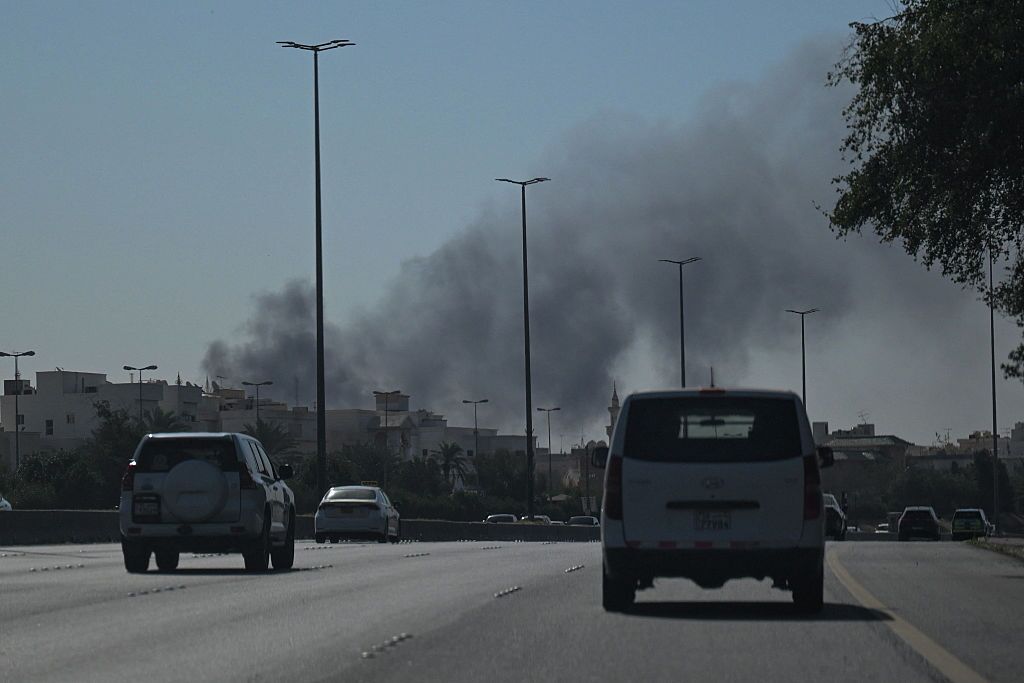
The current expansion of hostilities between Israel and the Iranian-led "Axis of Resistance" is not a series of isolated skirmishes but a systematic failure of deterrence thresholds. What was once a contained conflict in Gaza has transitioned into a multi-front attrition war, with Lebanon serving as the primary kinetic pressure point. The risk of a "widening war" is often discussed in vague emotional terms, yet the reality is governed by a rigid logic of escalation cycles, resource depletion, and the strategic necessity of buffer zones. Understanding this conflict requires a shift from tracking individual strikes to analyzing the structural drivers that make a full-scale regional conflagration statistically probable.
The Lebanese Front: A Calculus of Proximity and Arsenal
The conflict in Lebanon operates on a different scale than the operations in Gaza. Hezbollah is not a non-state actor in the traditional sense; it is a high-capacity paramilitary force with an arsenal estimated at 150,000 to 200,000 rockets and missiles. The "Lebanon problem" for Israeli defense planners is defined by the Geography of Attrition.
The northern border of Israel has become uninhabitable for approximately 60,000 to 80,000 civilians. This creates a political internal pressure in Israel that overrides traditional diplomatic restraint. The strategic objective is no longer "quiet," but the "re-establishment of the security perimeter." For Hezbollah, the objective is "linkage"—maintaining a high-tension northern front to divert Israeli Defense Forces (IDF) resources away from Gaza and the West Bank.
This creates an Escalation Trap:
- Israel must push Hezbollah forces north of the Litani River to allow its citizens to return home.
- Hezbollah cannot retreat without losing its primary domestic and regional leverage.
- Every incremental increase in strike depth (moving from border villages to Baalbek or Beirut) forces a reciprocal response to maintain the "balance of terror."
The technical limitation of this balance is the Saturation Point. Once Hezbollah utilizes its precision-guided munitions (PGMs) to target critical Israeli infrastructure—such as the Haifa chemicals plants or the electrical grid—the conflict transitions from a border dispute to a total war.
The Iranian Strategy: Distribution of Risk
Tehran’s involvement is often characterized as "shadow warfare," but it follows a clear Portfolio Diversification Strategy. Iran manages its proxies to achieve three specific outcomes:
- Strategic Depth: By fighting in Lebanon, Syria, and Yemen, Iran ensures that any kinetic response to its actions occurs far from its own sovereign borders.
- The Cost-Imposition Framework: It is significantly cheaper to manufacture a One-way Attack (OWA) drone or a "dumb" rocket than it is to intercept one with a $50,000 Tamir missile (Iron Dome) or a $1 million+ David’s Sling interceptor. This creates an economic deficit for the defender over a long-duration conflict.
- Sanction Circumvention: Regional instability keeps energy markets volatile, providing Iran with leverage in back-channel negotiations and maintaining the relevance of its "Resistance" narrative in the Arab street.
The bottleneck in this strategy is the Survival of the Crown Jewel. Hezbollah is Iran’s most potent deterrent against a direct strike on its nuclear program. If Hezbollah is decimated in a full-scale war with Israel, Iran loses its primary second-strike capability. Therefore, Iran must calibrate the violence in Lebanon to be high enough to drain Israel but low enough to avoid the total destruction of Hezbollah’s organizational structure.
The Mechanics of Regional Contagion
The "widening" of the war is a function of logistical and political spillover. We can categorize this into three specific contagion vectors:
1. The Syrian Land Bridge
Syria serves as the essential logistics hub for the Axis. The IDF’s increased frequency of strikes on Damascus and Aleppo airports is an attempt to disrupt the Supply Chain of Escalation. As Israel targets Iranian IRGC commanders in Syria, the distinction between the "Lebanese front" and the "Syrian front" vanishes. This forces the Syrian government—and by extension, its Russian patrons—into a precarious position where they must either facilitate Iranian movement or risk becoming a secondary theater of the war.
2. The Maritime Bottleneck
The Houthi movement in Yemen has successfully internationalized the conflict by targeting Red Sea shipping. This is a classic example of Asymmetric Leverage. By disrupting the Bab el-Mandeb Strait, a group with relatively low-tech capabilities can impose a global tax on trade. This forces Western powers, specifically the United States and the UK, into the kinetic theater, further diluting the diplomatic focus on de-escalation.
3. The Domestic Stability Variable
Jordan and Egypt are the "silent casualties" of a widening war. Jordan, with its significant Palestinian population, faces extreme internal pressure. A massive influx of refugees or a perceived "betrayal" of the Palestinian cause could destabilize the Hashemite Kingdom, turning a regional war into a series of internal revolutions.
The Failure of the Status Quo Deterrence
The core reason the war continues to widen is the obsolescence of the 2006 Deterrence Model. After the Second Lebanon War, a fragile peace was maintained because both sides understood the "price" of conflict. However, that model relied on a predictable set of "rules of the game."
Those rules were shattered on October 7. Israel has signaled a shift toward a Preemptive Doctrine, moving away from "mowing the grass" (periodic limited strikes) toward "uprooting the threat." When a state shifts its strategy from containment to elimination, the threshold for entering a full-scale war drops significantly.
[Image illustrating the 2006 Lebanon War's impact on regional deterrence and its subsequent decay]
Quantifying the Threshold of Full-Scale War
To determine if we have reached the point of no return, we must monitor three specific indicators:
- Targeting Logic: Are strikes hitting military outposts or civilian/dual-use infrastructure? The shift to the latter signals a move toward total war.
- Mobilization Depth: The sustained presence of three or more IDF divisions on the northern border indicates an offensive posture rather than a defensive one.
- Red Line Erosion: When "red lines" (such as hitting Beirut or Tel Aviv) are crossed without immediate, overwhelming escalation, it paradoxically increases the risk of war through miscalculation. Both sides begin to believe they can push further without consequence until they hit a tripwire they didn't know existed.
The current trajectory suggests that the "simmering" conflict is reaching a boiling point where tactical accidents will dictate strategic outcomes. A single errant missile hitting a high-casualty target in either Northern Israel or Central Lebanon could trigger the automated response mechanisms that lead to a regional firestorm.
The strategic play for any actor involved—or any observer managing risk—is to recognize that the window for a negotiated "buffer zone" is closing. If a diplomatic solution involving the enforcement of UN Resolution 1701 is not achieved within the next tactical cycle, the transition to a high-intensity, multi-front war becomes the baseline scenario rather than a worst-case possibility. Military planners must now prioritize the hardening of domestic infrastructure and the security of alternative trade routes, as the Mediterranean and Red Sea corridors are no longer guaranteed safe zones.


