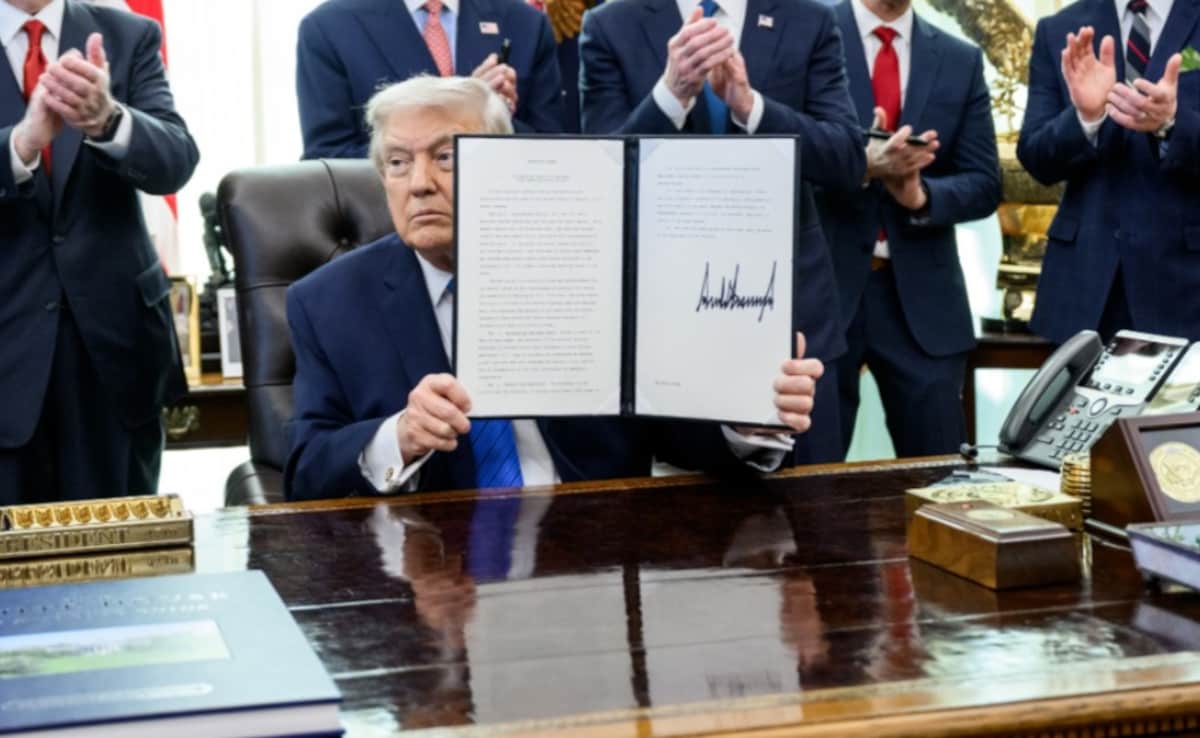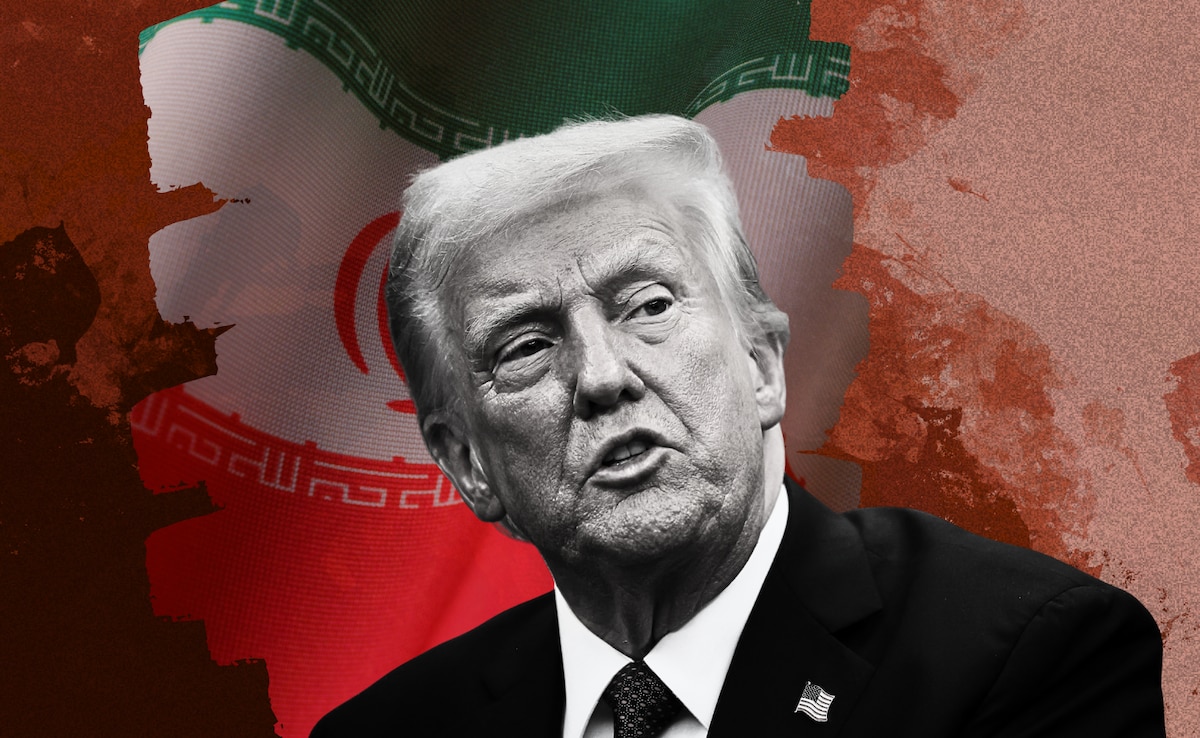
The room in the Mar-a-Lago club smelled of expensive steak and old-world ambition. Donald Trump leaned back, his hands gesturing toward a horizon only he seemed to see, and spoke about a job opening that most geopolitical analysts treat with the gravity of a holy scripture. He wasn’t talking about a CEO position at a Fortune 500 company or a seat on the Federal Reserve. He was talking about the Supreme Leader of Iran.
"No thanks," he remarked, his voice carrying that specific New York shorthand for a bad deal. He claimed that despite the absolute power, the gold-flecked ceilings, and the ability to command legions with a whisper, nobody actually wants the job.
It sounds like a classic Trumpian hyperbole. A punchline. But if you peel back the layers of the political theater, you find a jagged truth about the nature of modern power. We are taught to crave the top. We are conditioned to believe that the ultimate "win" is the seat where the buck stops. Yet, in the high-stakes ecosystem of Tehran—and perhaps in the boardrooms of our own crumbling monopolies—the view from the very top is beginning to look less like a summit and more like a gallows.
Consider the hypothetical life of a high-ranking official in Tehran, let's call him Abbas.
Abbas has spent thirty years climbing the jagged rocks of the bureaucracy. He has outlived rivals. He has navigated the labyrinth of the Revolutionary Guard. He has enough wealth to retire to a villa in a country that doesn't recognize his extradition. But when the whispers start—the ones suggesting he might be the successor to the aging Ayatollah—Abbas doesn't feel a rush of adrenaline. He feels a cold sweat.
To be the Supreme Leader is to inherit a house on fire.
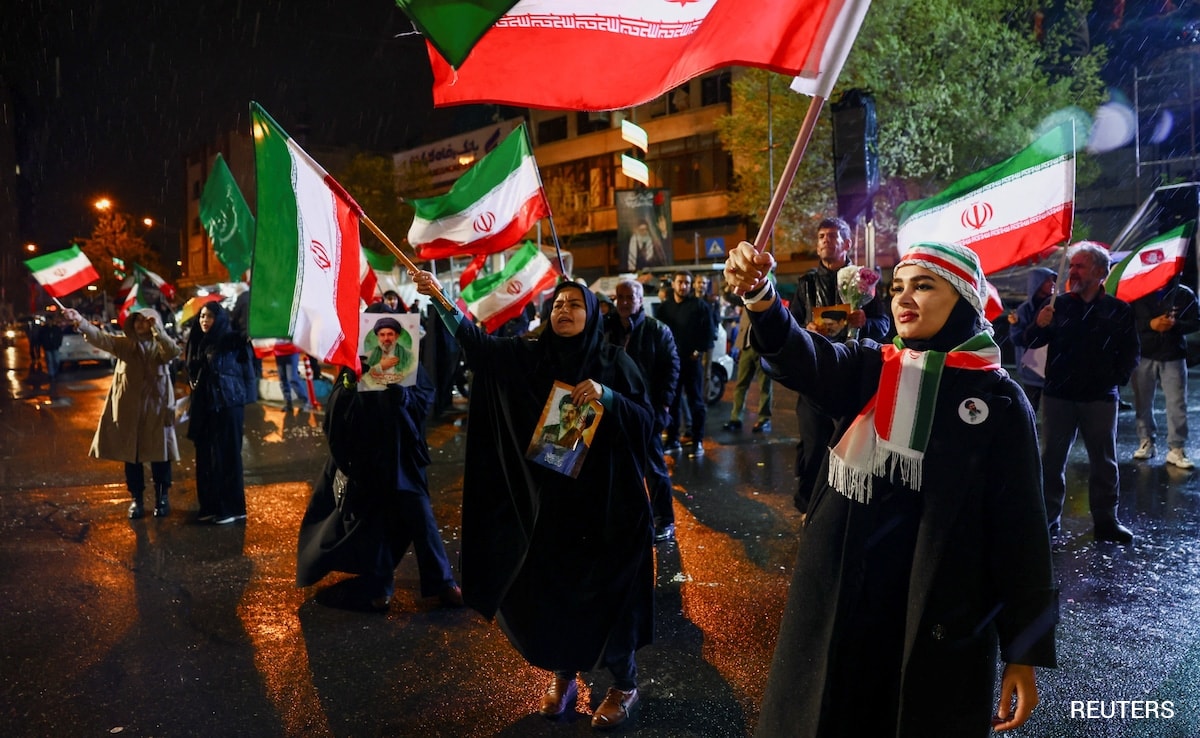
The facts on the ground are relentless. Iran’s inflation has recently hovered around 40 percent. The rial, the national currency, has become a ghost of its former value, haunting the pockets of every merchant in the Grand Bazaar. When the currency fails, the social contract dissolves. The person at the top isn't just a ruler; they are the face of every empty refrigerator and every shuttered business.
Power is only intoxicating when it is functional.
When power becomes purely performative—a series of decrees that cannot fix the price of bread or the flow of water—it becomes a liability. Trump’s assertion, stripped of its bluster, touches on the "Succession Trap." In business, we see this when a legendary founder leaves a company just as the market shifts. No one wants to be the CEO who presides over the decline. No one wants to be the captain of the Titanic after the iceberg has already been sighted, even if they get to wear the best hat.
The "No Thanks" sentiment isn't born of a lack of ambition. It is born of a sophisticated risk-reward calculation.
In the current geopolitical climate, the Supreme Leader is the ultimate target. Internally, you are the bullseye for a Gen Z population that is increasingly secular, hyper-connected via VPNs, and fundamentally exhausted by ideological rigidity. Externally, you are the focal point for every sanction, every cyber-attack, and every shadow-war maneuver from global superpowers.
It is a lonely existence.
The job requires a total surrender of the self to a system that is increasingly brittle. You cannot be a reformer, because the hardliners will devour you. You cannot be a hardliner, because the streets will rise against you. You are a human shock absorber for a nation’s collective trauma.
Imagine the daily schedule. It isn't filled with the creative joy of building a nation. It is a grueling marathon of managing factions. You are the referee in a game where every player is carrying a concealed weapon. The Revolutionary Guard wants more control over the oil. The clerics want more control over the culture. The technocrats just want the lights to stay on.
Trump’s rhetoric often simplifies complex realities into binary choices: winners and losers. But here, he stumbled upon a third category: the victim of victory.
Winning the ultimate power in a fractured state is a pyrrhic triumph. It is the business equivalent of being named the head of a department that has just been gutted of its budget, tasked with a goal that is mathematically impossible to achieve. You get the title. You get the corner office. You also get the blame for the inevitable collapse.
The human element of this struggle is often lost in the headlines about nuclear enrichment and drone strikes. We forget that these leaders are men who watch the news and see the fate of those who came before them. They saw Gaddafi. They saw Mubarak. They see the walls closing in.
There is a specific kind of exhaustion that comes from maintaining a facade of absolute control when the foundations are cracking.
This isn't just an Iranian problem. It is a symptom of the "Great Refusal" happening in leadership roles globally. We see it in the "Great Resignation" at the executive level. We see it in the difficulty of finding local politicians willing to endure the vitriol of public life. When the cost of leadership—the loss of privacy, the physical risk, the certain knowledge of being hated by half the population—outweighs the ability to actually effect change, the "A-players" exit the stadium.
What remains are the desperate or the delusional.
If Trump is right, and no one truly wants the job, then the transition of power in Iran won't be a coronation. It will be a game of hot potato played with a live grenade. The invisible stakes are not just about who sits in the chair, but whether the chair itself can survive the weight of the person sitting in it.
The Grand Bazaar still hums with the sound of trade, but the conversations have shifted. They aren't about who is next. They are about what is next. There is a profound difference. One is a question of personality; the other is a question of survival.
The tragedy of absolute power is that it eventually isolates the ruler from the very reality they seek to control. They sit in high-walled compounds, surrounded by "yes-men" who are too terrified to mention the smoke rising from the city below. They are the masters of all they survey, but they are prisoners of their own position.
A job that no one wants is a job that has lost its purpose.
Power, in its healthiest form, is a tool for construction. When it becomes a shield for self-preservation, it loses its magnetism. The "Peacock Throne," once a symbol of ancient, untouchable majesty, now looks more like a high-backed chair in an interrogation room.
Trump, a man who has built his entire brand on the allure of the top spot, recognizing the worthlessness of this particular throne is a rare moment of clarity. It is an admission that some mountains aren't worth climbing, not because the path is too steep, but because there is nothing but thin air and a long drop waiting at the peak.
The sun sets over the Milad Tower, casting long, distorted shadows across the concrete. Somewhere in the corridors of power, a man is looking at a list of names for the succession. He sees his own. He remembers the feeling of the steak dinner he once had in a distant land, or perhaps just the simple peace of being nobody. He picks up a pen.
He wonders if he has the courage to say no.
The world waits for a leader, while the leaders wait for an exit. It is the ultimate paradox of the modern age: we are all fighting for a seat at a table that is about to collapse.