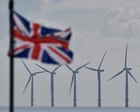
The British public is not nearly as divided on climate policy as the shouting matches on social media or the headlines in the Sunday papers suggest. For years, a specific narrative has been meticulously crafted, suggesting that the average voter is in open revolt against "green tyranny" and the costs of Net Zero. But when you strip away the political theater and look at the raw data from sociological studies and deep-tier polling, a different reality emerges. The British public remains broadly supportive of the transition to a low-carbon economy. The real crisis isn't a lack of public will. It is a profound disconnect between what people actually believe and what they think their neighbors believe—a phenomenon known as pluralistic ignorance that is being actively exploited by specific interest groups.
This gap in perception matters. When a silent majority believes they are a vocal minority, they stop speaking up. This creates a vacuum. It allows fringe views to dominate the national conversation, giving policymakers a convenient excuse to delay difficult decisions. This isn't just about the environment. It is about the health of British democracy and the way information is being weaponized to stall industrial evolution.
The Mirage of Resistance
The idea that Net Zero is a "middle-class obsession" or an "urban elite project" is a potent piece of political fiction. Recent research, including comprehensive studies by the University of Oxford and various social research institutes, consistently shows that roughly 70 percent to 80 percent of the UK population supports the goal of reaching Net Zero by 2050. This support isn't limited to the London bubble. It crosses regional lines, age groups, and even party affiliations.
Yet, if you ask the average person in a Manchester pub or a Norfolk village what they think the rest of the country feels, they will tell you the nation is split down the middle. This is the "Net Zero Gap." The perception of opposition is vastly higher than the actual opposition. This didn't happen by accident. It is the result of a feedback loop between tabloid media, contrarian think tanks, and political opportunists who benefit from the appearance of a culture war.
Consider the rollout of Low Traffic Neighborhoods (LTNs) or the expansion of the Ultra Low Emission Zone (ULEZ). In the media, these were portrayed as the start of a civil uprising. In reality, local polling often showed that while residents had specific logistical complaints, they generally favored the reduction of air pollution and traffic congestion. The loud, organized protests of a few hundred people were filmed and distributed as if they represented the feelings of millions.
The Economics of Fear
The most effective weapon against climate policy is the cost-of-living argument. It is a simple, brutal pitch. It tells the worker that their boiler is being taken away and their petrol car is being taxed into oblivion to pay for a globalist fantasy. This narrative works because it touches on a fundamental truth: the transition to Net Zero will be expensive and disruptive.
However, the narrative conveniently ignores the counter-factual. The cost of inaction—not just in terms of climate disasters, but in terms of missing out on the next industrial revolution—is significantly higher. Britain is currently caught in a trap where it pays a "gas price premium" because it has been slower than its neighbors to decouple from international fossil fuel markets.
By framing Net Zero as a purely "cost" centered endeavor, opponents hide the "investment" side of the ledger. They speak about the £20,000 price tag of a heat pump but rarely mention the long-term reduction in energy bills or the creation of a domestic manufacturing base. This is a deliberate narrowing of the lens. It forces the public to view the future through the prism of immediate loss rather than long-term security.
Who Benefits from the Gridlock
To understand why the narrative of public opposition persists despite evidence to the contrary, you have to follow the money and the influence. There is a small but highly influential network of think tanks based around Westminster that have made it their mission to cast doubt on the feasibility of the energy transition. These groups often receive funding from undisclosed donors, and their "experts" are given disproportionate airtime on news channels.
They don't argue that climate change is fake—that battle was lost a decade ago. Instead, they argue that the timing is wrong, that the cost is too high, or that Britain is doing "too much" compared to China or the US. This "delayism" is the new denialism. It seeks to paralyze policy by creating the illusion that the public is on the verge of a populist revolt. For the oil and gas lobby, every year of delay is another year of record-breaking profits. For the politician, it's another year they don't have to explain to their constituents why the local grid needs a massive, disruptive upgrade.
The Infrastructure of Discontent
The real struggle isn't about the "what," it's about the "how." The British public is remarkably pragmatic. They want cleaner air, more efficient homes, and energy independence. What they don't want is a transition that feels like it's being "done to them" rather than "with them."
When a government announces a ban on gas boilers without first ensuring a robust supply chain for heat pumps and a workforce trained to install them, they create a flank for their opponents to attack. This is where the narrative of "public opposition" finds its grain of truth. People aren't necessarily opposing the green goal; they are opposing the perceived incompetence of the delivery.
The UK's National Grid is a relic of a centralized, coal-fired past. To support a Net Zero future, it requires a total overhaul. This means more pylons, more substations, and more digging in rural areas. When these projects are proposed, they often face local resistance. The "anti-Net Zero" lobby seizes on these local planning disputes as proof that the entire project is failing. In reality, it’s a standard "Not In My Back Yard" (NIMBY) issue that has plagued British infrastructure for a century, from railways to housing.
Weaponizing the Rural-Urban Divide
A particularly cynical part of the false narrative is the attempt to frame Net Zero as an attack on rural life. The argument suggests that heat pumps don't work in old farmhouses and that electric vehicles are useless in areas without charging points. While these are legitimate technical challenges, they are presented as insurmountable barriers designed by city-dwellers to punish those in the country.
This ignores the fact that rural communities are often the most vulnerable to the effects of a changing climate and the most likely to benefit from decentralized energy production. Farmers can be—and increasingly are—the biggest producers of renewable energy through wind, solar, and anaerobic digestion. The narrative of "rural vs. urban" is a tool used to fragment the public consensus and prevent a unified demand for better infrastructure investment.
The Role of Media Echo Chambers
The way we consume news has fundamentally changed the way we perceive public opinion. Algorithmic feeds prioritize high-arousal content, which usually means conflict. A video of a protester blocking a road gets ten times the engagement of a report on a successful community energy project.
This creates a skewed reality where the average citizen sees a constant stream of friction. They see the "Just Stop Oil" protests and the angry drivers reacting to them, and they conclude that the country is at war with itself. This visual data overrides the statistical reality that most people are quietly getting on with installing solar panels, buying hybrid cars, and insulating their lofts.
The media’s "both-sidesism" also plays a role. In an effort to appear balanced, broadcasters will pair a climate scientist representing 99 percent of the scientific community with a professional contrarian representing a tiny, well-funded minority. This gives the false impression that the debate is still 50/50.
Breaking the Perception Trap
If the UK is to move forward, it has to address this psychological gap. We need to stop treating Net Zero as a partisan football and start treating it as a national security and economic imperative. The consensus is there; it’s just muffled.
The government and industry leaders must stop being intimidated by the ghost of a populist uprising that hasn't materialized. When policies are explained clearly, when the benefits are localized, and when the costs are distributed fairly, the public support remains steadfast. The "Green Homes Grant" debacle is a prime example of how poor execution can damage public trust, but it shouldn't be mistaken for a lack of public appetite for home improvements.
We are currently witnessing a massive, silent investment in green tech by the British public. There are now over one million homes with solar panels in the UK. The sale of electric vehicles continues to rise despite the withdrawal of subsidies and a coordinated campaign of disinformation regarding their reliability. People are voting with their wallets while the political class remains paralyzed by a fear of a narrative that isn't reflected in the data.
The "brutal truth" of Net Zero is that it is not a choice between the status quo and a green future. The status quo is already gone. The choice is between a managed transition that creates jobs and lowers bills, or a chaotic one where we remain at the mercy of volatile global markets and decaying infrastructure. The public understands this far better than the pundits give them credit for.
To turn this consensus into action, we need to stop debating whether the public wants Net Zero and start focusing on the massive engineering and financial challenge of building it. The conversation needs to shift from "if" to "how fast." The public isn't the roadblock; they are waiting for the road to be built.
Audit your own news feed. Look at the sources of the "Net Zero backlash" stories. You will often find they lead back to the same handful of voices, amplified by an algorithm that loves a fight. Realize that the person next to you on the train or in the shop likely shares your concerns about the future and your desire for a cleaner, more secure energy system. Once we realize we are the majority, the false narrative loses its power.
Identify the local green energy projects in your area and support the planning applications. The loud voices at the town hall meetings are rarely the majority, but they are the only ones the local councilors hear. Your voice, backed by the data of a national consensus, is the only thing that can break the gridlock.