The valves didn't scream when they turned. They groaned. It was a heavy, metallic sound that echoed through the frost-caked pumping stations of the Yamal-Nenets region, a place where the wind cuts through layers of wool and skin like a sharpened blade. For decades, those valves had a rhythmic, predictable heartbeat. They pushed the lifeblood of the Russian economy westward, through thousands of miles of steel veins, ending in the furnaces of German steel mills and the radiators of Parisian apartments.
Then, the world changed. The rhythm broke.
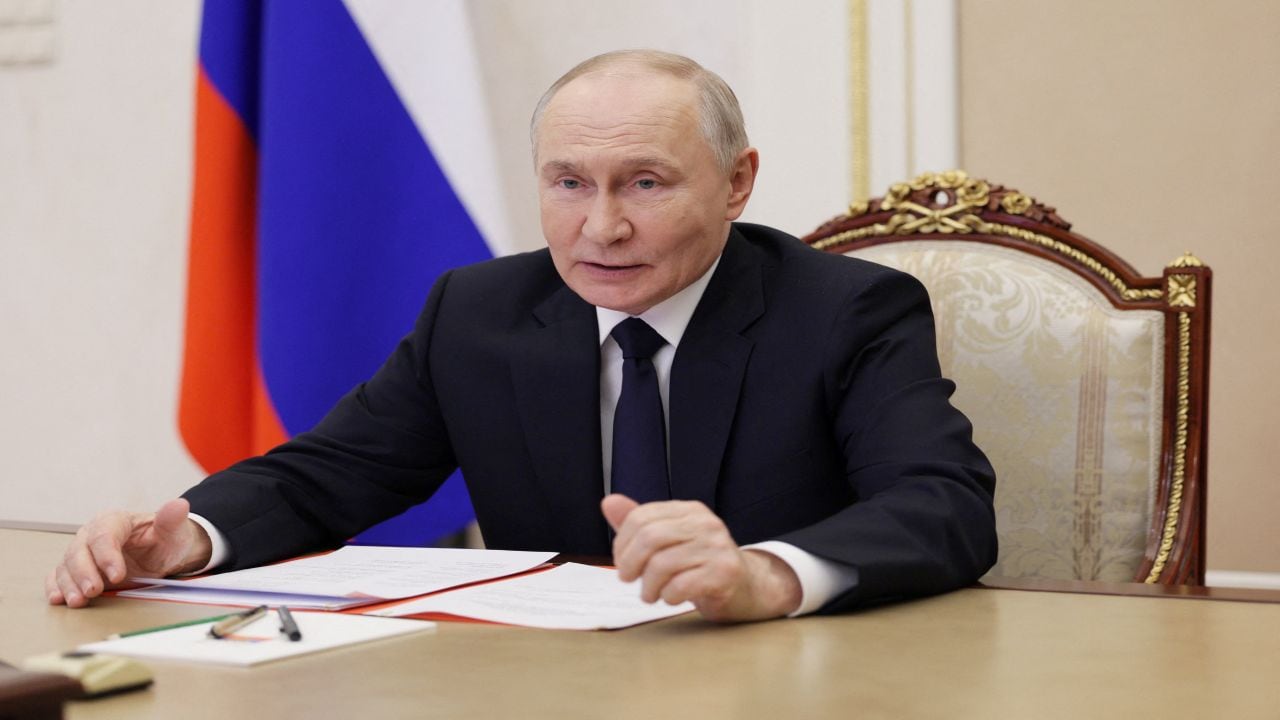
Vladimir Putin didn’t just give a speech about redirecting energy; he signaled the end of a fifty-year marriage. It was a divorce finalized not in a courtroom, but in the shivering reality of a geopolitical shift that moved the very center of gravity for the global energy market. The West was walking away, and the East was waiting with an open checkbook and a thirst for power that Europe, in its transition toward green dreams, could no longer match.
The Man at the Pumping Station
To understand the macroeconomics of a superpower shifting its entire trade infrastructure, you have to look at someone like "Yuri." Yuri is a hypothetical technician—a composite of the thousands of engineers who maintain the sprawling pipelines of the Siberian tundra. For twenty years, Yuri’s job was simple: keep the pressure steady for the "Blue Stream" or the "Nord Stream." He knew that if he did his job, a grandmother in Dresden stayed warm.
Now, Yuri looks at maps that don’t feature Berlin or Brussels. Instead, his eyes trace a path toward the Altai Mountains and the Amur River. He is learning the names of Chinese provinces he can barely pronounce. The steel he maintains is being re-routed. The pressure is being pushed toward Beijing, New Delhi, and Karachi.
This isn't just a change in shipping manifests. It is a psychological reorientation. For a century, Russia looked toward the high-culture capitals of Europe for its validation and its gold. Now, the gaze has shifted. The Kremlin is betting that the future isn't found in the aging, regulated markets of the European Union, but in the raw, chaotic, and explosive growth of the Global South.
The Arithmetic of Survival
The critics said it couldn't be done. They pointed to the lack of infrastructure. They noted that you can’t simply "turn" a pipe that was buried in the 1970s to face a different direction. They were right, of course. You can't.
But you can build new ones.
The Power of Siberia 2 isn't just a pipeline; it’s a 1,600-mile statement of intent. It is the physical manifestation of a "no-limits" partnership between Moscow and Beijing. While European leaders spent months debating price caps and moral imperatives, the engineers in the East were calculating flow rates.
Consider the sheer scale of the appetite. China’s energy consumption is a beast that never sleeps. India’s middle class is expanding by millions every year, and every one of those people wants a car, an air conditioner, and a reliable power grid. Russia isn't just looking for a new customer; they are looking for a customer that won't lecture them on carbon footprints or geopolitical boundaries.
The redirection of oil is even faster. Oil is liquid. It is mobile. It finds the path of least resistance. When the European ports closed, the "shadow fleet" emerged. Rusting tankers, often with obscured ownership and switched-off transponders, began a slow, silent dance across the world's oceans. They bypass the traditional insurance hubs of London and the financial gates of New York. They deliver Russian Urals crude to refineries in Gujarat, where it is processed and—ironically—often sold back to the West as "Indian" diesel.
The Cost of the Long Way Around
There is a hollow feeling in the belly of the Russian energy sector that no amount of Chinese yuan can immediately fill. Let's be honest about the stakes. Europe was the "premium" market. They paid in Euros. They paid on time. They had the most sophisticated technology for deep-sea drilling and liquefied natural gas (LNG) compression.
Redirecting supplies to Asia is a "fire sale" in slow motion.
When you lose your best customer, the new customer knows they have you over a barrel. China and India are savvy negotiators. They demand discounts. They want the "friendship price." This means that while Russia is moving the same volume of molecules, the profit margins are thinning. The state budget, which relies heavily on these revenues to fund everything from pensions to the ongoing military campaigns, is feeling the squeeze.
It’s a gamble on time. Putin is betting that the infrastructure will catch up before the treasury runs dry. He is betting that the "Great Pivot" will create a new economic bloc that is entirely insulated from Western sanctions.
The Invisible Stakes
Why does this matter to a person sitting in a coffee shop in London or a suburb in Chicago? Because the energy map is being redrawn, and once the ink dries, it stays that way for decades.
Energy is the fundamental currency of human civilization. Everything else—inflation, the price of bread, the stability of governments—is just a derivative of how much it costs to move heat and light. By forcing Russia to turn East, the West has inadvertently accelerated the creation of a parallel global economy.
We are witnessing the birth of a "Two-World System." One world uses the Dollar and the Euro, focuses on Renewables, and operates under Western legal frameworks. The other world uses the Yuan and the Rupee, runs on Russian hydrocarbons, and operates on "pragmatic" bilateral deals.
The invisible stake is the loss of leverage. For fifty years, the West used energy trade as a leash. They believed that if Russia was tied to the European market, they would behave. That leash has been cut. Now, the dragon and the bear are huddled over a flickering hearth, and the West is left standing outside in a very cold, very expensive wind.
The Ghost of the North Stream
Deep under the Baltic Sea, the Nord Stream pipelines lie like the ribcage of a dead leviathan. They are silent, filled with saltwater and the ghosts of a different era. They represent a lost future where Russia and Germany were the twin engines of a unified Eurasian economy.
That dream is gone.
In its place is a frantic, muddy construction site in the Russian Far East. It is loud. It is dirty. It is incredibly expensive. But it is happening. The redirection of supplies isn't just a policy shift; it is a migration. Millions of tons of energy are moving from the Atlantic sphere to the Pacific.
The valves are still groaning. They are being turned by hands that no longer care what London thinks or what Washington threatens. The oil is flowing toward the sunrise. It is finding new homes in the sprawling mega-cities of the East, fueling a world that is increasingly indifferent to the old guards of the West.
Russia isn't waiting for Europe to come back. They have burned the bridge and are using the heat from the fire to forge a new one. It is a dangerous, uncertain, and high-stakes journey. But for the men at the pumping stations and the planners in the Kremlin, there is no turning back. The pressure is building. The direction is set.
The sun rises in the East, and for the first time in centuries, Russia is making sure its pipes are pointed exactly toward it.
Would you like me to analyze the specific economic impact of the Power of Siberia 2 pipeline on European gas pricing?