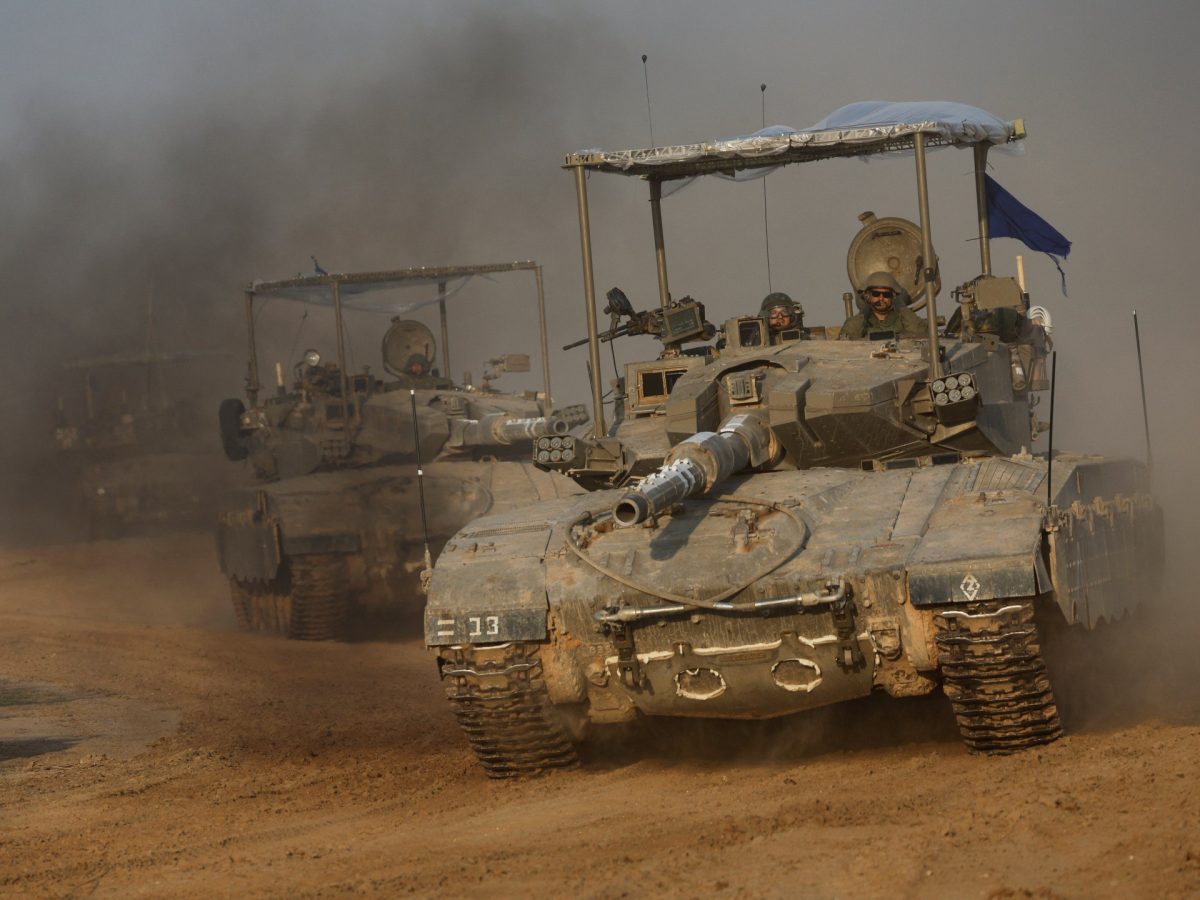
The Israel Defense Forces officially crossed the Blue Line into southern Lebanon last night. They're calling it "limited, localized, and targeted ground raids" against Hezbollah. We’ve heard this kind of language before. It’s meant to signal to the White House and the international community that this isn't a full-scale invasion like 1982 or 2006. But if you look at the troop buildup and the intensity of the preceding airstrikes, the reality on the ground feels much heavier than the press releases suggest.
Israel’s objective is straightforward on paper. They want to dismantle Hezbollah’s "conquer the Galilee" infrastructure. This means finding and destroying the tunnels, launch pads, and weapon caches tucked into the border villages like Maroun al-Ras and Yaroun. For the 60,000-plus Israelis displaced from the north, this isn't just military strategy. It’s the only way they’ll ever feel safe enough to go home.
But ground wars in Lebanon are notoriously easy to start and incredibly difficult to end.
Why a limited operation rarely stays that way
The IDF is currently focusing on villages within a few kilometers of the border. These are the high-ground positions Hezbollah uses to fire anti-tank missiles directly into Israeli homes. By clearing these "first-line" villages, the IDF creates a physical buffer. The problem is that Hezbollah doesn't fight like a traditional army. They don't hold a front line that you can just push back. They operate in small, mobile cells.
If the IDF enters a village and finds a massive tunnel network extending deeper into Lebanon, the mission creeps. You can't just leave a tunnel half-destroyed. You move to the next ridge to secure the first one. Then you move to the next to protect your flanks. Pretty soon, "limited" becomes a 20-kilometer deep zone, and you’re back in a 15-year occupation scenario.
The 98th Division, including paratroopers and commando units, is leading the charge. These are the same battle-hardened troops who spent months fighting in Gaza. They’re experienced, but they’re also tired. And Lebanon’s terrain is a nightmare compared to the flat, urban sprawl of Gaza. We're talking about rocky cliffs, deep valleys, and thick vegetation. It’s a defender’s dream.
Hezbollah's strategy of staying silent
While the IDF is moving, Hezbollah has been relatively quiet about the specifics of the ground encounters. Their media office denied that any direct clashes had occurred in the very first hours, even as Israeli tanks were spotted. This is a classic psychological play. They want to draw Israeli forces deeper into prepared "kill zones" where the terrain negates Israel’s advantage in tank armor and air power.
Hezbollah’s leadership has been decimated over the last two weeks. Nasrallah is gone. Most of the senior military command is gone. But the local commanders in the south—the guys who have lived in these villages their whole lives—still know exactly where every mine is buried and every Kornet missile is hidden. They don't need a central command to tell them to fire when a tank rolls past their basement.
The risk for Israel is that the further they go, the more they lose their technological edge. In a valley in southern Lebanon, a $20,000 Iranian-made missile can take out a $5 million Merkava tank. It’s a war of attrition that Hezbollah is perfectly comfortable fighting for months or years.
The international pressure cooker
The Biden administration has been trying to prevent this for a year. They failed. Now, the U.S. is in a position where it has to support Israel’s right to defend itself while simultaneously begging for a ceasefire that doesn't exist yet. The Pentagon has moved more assets into the region, including fighter jet squadrons and an aircraft carrier group. This isn't just to help Israel; it's to tell Iran to stay out of it.
If Iran decides that Hezbollah—its most prized proxy—is in existential danger, the entire region goes up. We aren't just talking about border skirmishes anymore. We're talking about a multi-front war involving Yemen, Iraq, Syria, and direct strikes between Jerusalem and Tehran.
Lebanon’s government is essentially a bystander. The Lebanese Armed Forces (LAF) have pulled back from some border positions. They aren't going to fight the IDF, and they certainly can't control Hezbollah. The people in the middle are the Lebanese civilians. Over a million people have already been displaced. The humanitarian crisis is moving faster than the military's ability to manage the fallout.
What you should actually watch for
Don't get distracted by every single explosion reported on social media. If you want to know where this is going, look at two things.
First, look at the "depth" of the IDF's forward movement. Are they staying within three miles of the border, or are they pushing up toward the Litani River? That’s the red line for a full-scale war. Second, watch for Hezbollah's long-range missile fire. If they can still launch hundreds of rockets at Tel Aviv while the ground war is happening, then Israel's "limited" raid isn't working.
The IDF’s primary concern is to avoid being "bogged down." In 2006, they got stuck in village-to-village fights that didn't go anywhere. They're trying to move faster and hit harder this time. The goal is a quick "clean up" and then back to the border. But the Middle East rarely lets you leave that easily.
Keep your eyes on the 36th Division. If they move into Lebanon along with the 98th, that means the "limited" phase is over. It’s officially a major ground campaign.
Check the live maps and IDF briefings every morning to see if the Litani River is still the boundary. If that line is crossed, the conflict has just entered a whole new era of instability.