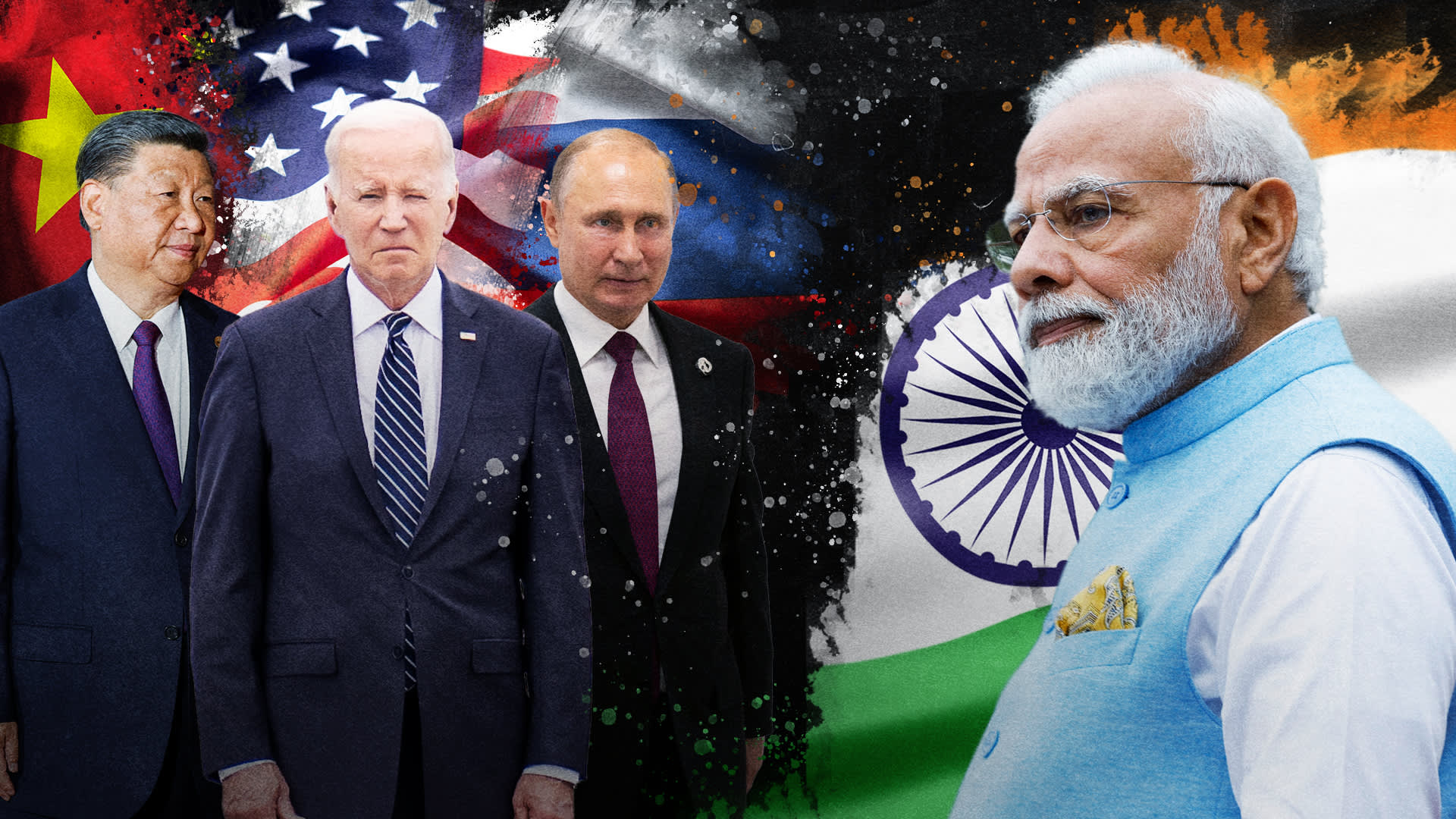
India’s global standing isn’t built on how many weapons it buys or how much oil it imports at a discount. It’s built on a reputation for being a principled, independent actor that doesn’t just follow the loudest voice in the room. For decades, "Strategic Autonomy" wasn’t just a buzzword; it was a shield. It allowed New Delhi to talk to Moscow, Washington, Tehran, and Tel Aviv without looking like a puppet.
But lately, that shield is thinning.
The recent silence over the sinking of the Iranian ship IRIS Dena—torpedoed by a US submarine just 40 miles off the coast of Sri Lanka—is a glaring example of a foreign policy that has lost its internal compass. This wasn’t some distant skirmish. The ship was returning from the Milan naval exercises, an event hosted by India itself. By failing to forcefully condemn an attack on a guest in its own backyard, India didn't look "restrained." It looked weak.
When you stop defending the very international laws you claim to champion, you don’t gain friends. You just lose your bargaining power.
The Myth of Responsible Silence
There’s a dangerous idea floating around the South Block that staying quiet is a form of sophisticated "both-sides-ism." The logic goes like this: if we don't pick a side in the US-Iran friction or the Israel-Gaza slaughter, we stay in everyone’s good books.
It’s a fantasy.
Real-world diplomacy doesn't reward the quietest person; it rewards the most consistent one. Look at the Bucha massacre in 2022. Back then, voices within India’s own diplomatic circles warned that "wishy-washy" stances would haunt us. They were right. Fast forward to 2026, and we see India struggling to justify its selective application of principles. We condemn violence when it suits our trade deals but look the other way when it involves a strategic partner like the US or Israel.
This isn’t strategy. It’s reactive damage control. If India wants a permanent seat at the UN Security Council, it has to act like a power that actually cares about the "rules-based order" it constantly mentions in press releases. You can't claim to be the "Voice of the Global South" while staying mum when a fellow member of that South gets hit in your own neighborhood.
Neighbourhood First or Neighbourhood Forgotten
While New Delhi is busy trying to balance the Great Powers, its own backyard is catching fire. The "Neighbourhood First" policy is effectively on life support.
- Bangladesh: The post-Hasina era has been a disaster for Indian influence. As the interim government pivots toward China and Pakistan, India is left watching from the sidelines.
- Nepal and Maldives: These nations are no longer looking to Delhi as the sole regional anchor. China’s "investment-led diplomacy" is winning because it offers concrete infrastructure while India offers "historical ties."
- Iran: By leaning so heavily toward the US-Israel axis, India is alienating a crucial energy and transit partner. The International North-South Transport Corridor (INSTC) depends on a stable relationship with Tehran.
If your neighbors don't trust you to stand up for basic maritime norms, they’ll find someone else who will. China is more than happy to step into that vacuum.
The Cost of Abandoning the Goalposts
India’s original goalpost was simple: Strategic Autonomy. This meant having the agency to make decisions based on Indian interests and international law, not external pressure.
Now, we’re seeing "Selective Alignment." The US Commerce Secretary recently noted that India was "permitted" to buy Russian oil. Think about that. A sovereign nation’s energy policy is being discussed in terms of "permission" from Washington. That’s the price of abandoning your own goalposts. When you stop being a principled actor, you become a subordinate one.
Why this matters for the average Indian
- Energy Security: If we lose our leverage with Iran and Russia, your fuel prices are at the mercy of Western sanctions.
- Diaspora Safety: Over 10 million Indians live in the Gulf. A lopsided West Asia policy puts their security—and the $80 billion they send home—at risk.
- Regional Safety: If the Indian Ocean becomes a free-for-all for foreign navies to sink ships near our coast, our own maritime trade is never safe.
Stop Playing the Subordinate
India doesn't need to be anti-Western, but it must stop being "not-quite-independent." The world is moving toward a fluid multipolarity. In this environment, the most valuable currency is credibility.
We need to stop treating foreign policy like a series of isolated transactions. It’s a long game. If we continue to sacrifice international law for short-term economic or political gains, we won’t end up as a Global Power. We’ll end up as a "secondary player" that everyone takes for granted.
It’s time to move back to the center of the pitch. That means calling out violations of sovereignty regardless of who the aggressor is. It means rebuilding the "Neighbourhood First" policy with actual investment and respect, not just rhetoric.
Start by demanding a clear international investigation into the IRIS Dena sinking. Show the world that the Indian Ocean isn't a playground for foreign submarines. If we don't defend our own backyard and our own principles, nobody else will.
Evaluate the current trade-offs in our West Asia policy and ask: is the "strategic embrace" of one or two partners worth the systemic erosion of our global agency? The answer, honestly, is usually no.