The pre-dawn decapitation of the Iranian leadership on February 28 was not the surgical strike many expected but the opening salvo of a messy, multi-front war that has now entered its third day. Operation Lion’s Roar, as termed by Israeli officials, has succeeded in one grim metric: the removal of Supreme Leader Ali Khamenei and dozens of his top commanders. Yet, as smoke rises from the ruins of the Tehran Revolutionary Court and the Milad Tower, the strategic "victory" claimed by Washington and Jerusalem is colliding with a brutal reality on the ground. Iran has not folded. Instead, it has pivoted to a scorched-earth regional retaliation that is systematically dismantling the stability of the Persian Gulf.
Within the first 72 hours, the conflict has expanded from a targeted aerial campaign to a regional conflagration. Iran has launched hundreds of missiles and drones, not just at Israel, but at U.S. bases and civilian infrastructure in Kuwait, Qatar, the UAE, and Bahrain. For the first time in decades, the global energy supply is under direct, sustained fire, with Saudi Arabia’s Ras Tanura refinery halting operations and QatarEnergy suspending LNG production. The primary objective of the U.S.-Israeli coalition was to neutralize Iran’s nuclear and ballistic capabilities. While the IDF claims air superiority over Tehran and the destruction of over 2,000 targets, the "how" of this operation reveals a high-stakes gamble on a regime collapse that has yet to materialize.
The Decapitation Strategy and the Power Vacuum
The initial strikes were remarkably precise, targeting the secure compounds and private residences of the clerical and military elite. This was intelligence-led warfare at its most lethal. By Saturday afternoon, the deaths of Khamenei, Defense Minister Aziz Nasirzadeh, and IRGC Commander Mohammad Pakpour were confirmed. The intent was clear: trigger a spontaneous uprising by the Iranian public, who had already been protesting a failing economy and systemic corruption throughout early 2026.
However, the assumption that killing the "head" would kill the "body" ignored the multi-layered structure of the Islamic Revolutionary Guard Corps (IRGC). While the official government in Tehran is in shambles, the IRGC’s regional commands have operated with autonomy. Ali Larijani has emerged as the head of a "temporary leadership council," and his rhetoric is anything but conciliatory. He has already rejected President Trump’s offer of renewed talks, branding the U.S. and Israel as "architects of chaos."
The vacuum left by the senior leadership is being filled by mid-level IRGC commanders who have spent their careers preparing for this exact scenario. These are the men who have spent years perfecting "asymmetric" warfare. They are not fighting for a seat at the negotiating table; they are fighting for survival, and they are doing so by targeting the global economy’s jugular.
The Strait of Hormuz and the Energy Chokehold
The most significant development of day three is the functional closure of the Strait of Hormuz. While the U.S. Navy has reportedly destroyed several Iranian naval vessels, the IRGC has utilized shore-based anti-ship missiles and "swarm" drone tactics to make the waterway impassable for commercial shipping. This is not a formal blockade in the traditional sense, but a lethal threat environment that has forced insurers to withdraw coverage.
- Oil Prices: Crude prices jumped 8% in a single trading session, with analysts predicting triple digits if the stalemate continues.
- Global Logistics: Shipping traffic through the Gulf has slowed to a near halt, stranding tens of thousands of passengers and billions in cargo.
- Regional Fallout: The targeting of civilian infrastructure in Dubai and Doha suggests that Iran’s new leadership has abandoned any pretense of respecting Gulf neutrality.
The destruction of the "General Staff of the internal security forces" was intended to empower protesters. Instead, the strikes have created a rally-around-the-flag effect in some quarters, while others are simply too busy surviving the mounting civilian casualties—now estimated at over 555 by the Iranian Red Crescent—to take to the streets. The strike on a school in Minab, which killed 148, has become a potent propaganda tool for the remnants of the regime.
Friendly Fire and the Fragility of Coalitions
The chaos of the air campaign was highlighted by a disastrous "friendly fire" incident in Kuwait. Three U.S. F-15E Strike Eagles were shot down by Kuwaiti air defenses during an Iranian missile wave. While the pilots survived, the incident underscores the extreme difficulty of coordinating air defense in one of the most crowded and contested airspaces on earth.
Kuwait’s accidental engagement of its own protectors reveals a deeper anxiety among Gulf allies. They are the ones bearing the brunt of Iran’s conventional retaliation. While the U.S. and Israel can strike from a distance, cities like Dubai and Manama are within range of Iran’s shorter-range, harder-to-intercept ballistic missiles. The "ironclad" partnership between the U.S. and its Gulf partners is being tested by the reality that the U.S. offensive has turned their sovereign territory into a battlefield.
The Nuclear Question
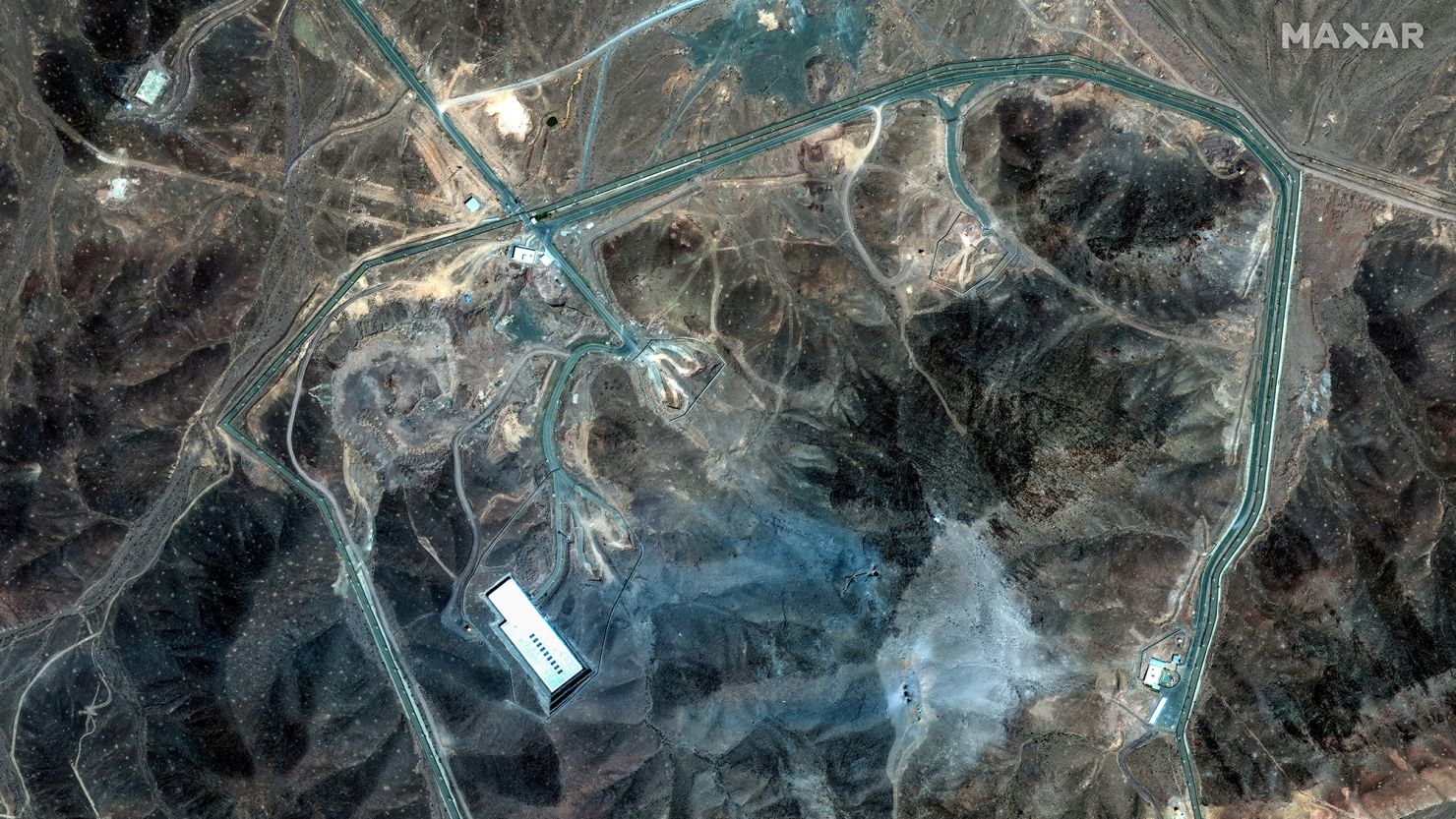
Despite the intensity of the bombing, the International Atomic Energy Agency (IAEA) reported as of March 2 that it had "no indication" that nuclear installations had been successfully compromised. This contradicts Israeli claims that they are "systematically dismantling" the nuclear infrastructure. The discrepancy points to the difficulty of destroying hardened, underground facilities like Fordow and Natanz without a ground invasion—a move President Trump has not ruled out but one that would carry astronomical costs.
If the air campaign fails to permanently set back the nuclear program, the U.S. and Israel may find themselves in a worst-case scenario: a regional war with an adversary that still possesses the blueprints and material to go nuclear, now with the added motivation of total regime survival.
The military operation is moving "ahead of schedule" in terms of kinetic damage, but the political endgame remains invisible. To understand the gravity of the current moment, one must look past the destroyed fighter jets and the "decapitated" leadership. The real story is the fracturing of a regional order that was already under immense strain. The next phase of this conflict will not be decided by who has the better stealth technology, but by who can endure the economic and social collapse that is now radiating outward from Tehran.


