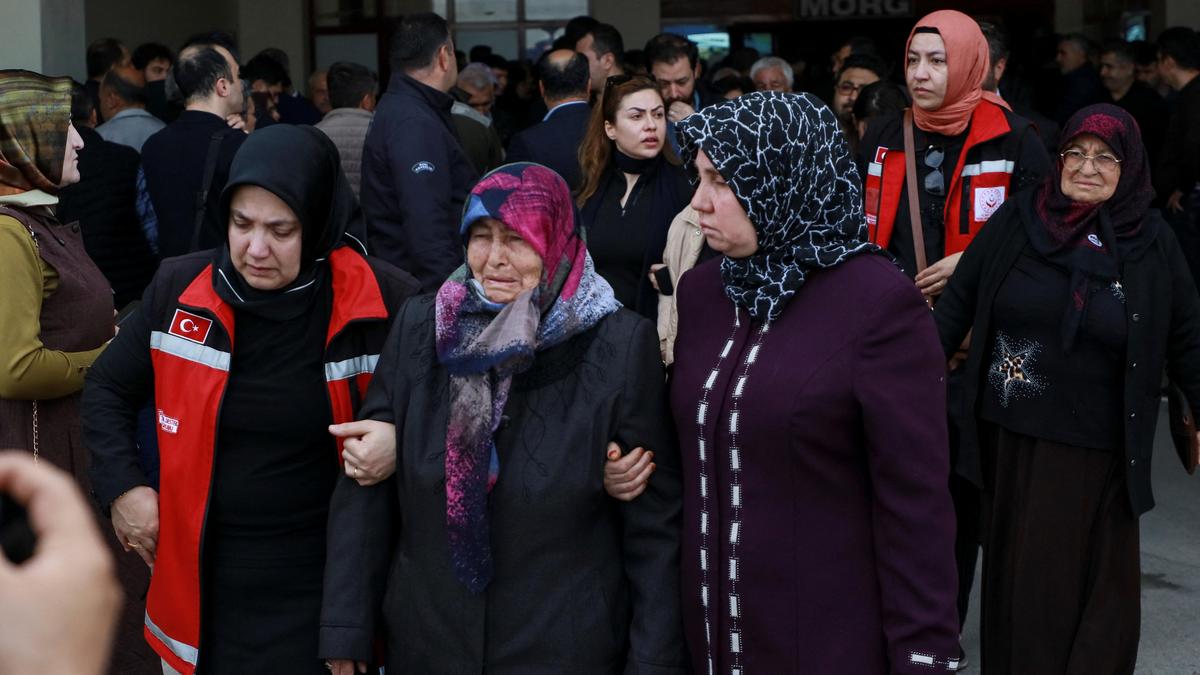
The mourning rituals beginning today in Kahramanmaraş for ten victims of Turkey’s deadliest school shooting are not just a local tragedy; they represent a catastrophic failure of national security and digital oversight. While the world watched the funerals of eight children and their teacher, Ayla Kara, the investigation into 14-year-old İsa Aras Mersinli reveals a much darker reality. This was not a random act of violence but the culmination of a 48-hour contagion of violence that the Turkish state, despite its iron-fisted control over information, failed to prevent.
The immediate question is how a teenager accessed five 9mm pistols and seven magazines. The answer is a grim indictment of the "hero culture" surrounding Turkey’s security apparatus. The perpetrator’s father, Uğur Mersinli, was a police officer who reportedly took his son to a shooting range just two days before the massacre to teach him how to use the very weapons that would end ten lives. This is not merely negligence. It is a fundamental breakdown of the protocols governing the millions of service weapons circulating in Turkish households.
The Incel Contagion and the Digital Blind Spot
While the Turkish government was quick to impose a broadcast ban and scrub "traumatic images" from the web, they missed the digital breadcrumbs leading to this moment. Mersinli’s WhatsApp profile featured Elliot Rodger, the American "incel" icon who sparked a global subculture of misogynistic violence in 2014.
This isn't an isolated obsession. The shooting at Ayser Çalık Secondary School occurred only 28 hours after a similar attack in Siverek, Şanlıurfa. We are seeing the rapid "Westernization" of Turkish domestic violence—where local grievances are now being channeled through the aesthetic and tactical templates of American mass shooters. The Turkish authorities, focused heavily on traditional anti-terror surveillance, have seemingly ignored the radicalization happening in the corners of the Turkish-language internet where "incel" ideology is gaining traction.
- 14 April 2026: 16 wounded in Siverek, Şanlıurfa.
- 15 April 2026: 10 killed, 13 injured in Kahramanmaraş.
- 15 April 2026: Attempted shooting in Gaziantep; student arrested with a gun in Tarsus.
The timeline suggests a "copycat" phenomenon that moved faster than the state's ability to react. By the time the Ministry of Education held its emergency meeting in Ankara, the damage was done.
The Myth of Strict Gun Control
Turkey prides itself on Law No. 6136, a statute that frames firearm ownership as a "licensed privilege" rather than a right. On paper, the requirements are exhaustive: mental health checks, criminal background screenings, and discretionary police approval. However, these laws have a massive loophole: the families of the police and gendarmerie.
In a country where the state and the security forces are deeply intertwined, a service weapon is often viewed as a household fixture rather than a lethal tool requiring high-security storage. The fact that Mersinli could pack five handguns into a backpack and walk into a mathematics classroom highlights the total absence of physical security at school entrances. Metal detectors and bag checks, common in many private institutions, are virtually non-existent in the public secondary schools of the Anatolian heartland.
Educators as the Unwilling Front Line
The response from the streets has been swifter than the response from the palace. Teachers' unions, including Eğitim-İş and Eğitim-Sen, have initiated a nationwide strike. Their grievance is simple: they are being asked to provide "psychosocial support" and education in environments that have become soft targets.
Ayla Kara died trying to shield her students. She was a mathematics teacher, not a combatant. The government's current strategy of classifying schools by "risk category" is a reactive measure that does nothing to address the radicalization of the students already inside those walls. If a 14-year-old can plan a massacre on his computer on April 11 and carry it out four days later—all while his father is a law enforcement officer—the system isn't just broken; it is obsolete.
The Failure of the Information Ban
The Turkish Justice Ministry's immediate instinct was to hide the reality. By silencing the media, the state believes it can prevent panic. In reality, it creates a vacuum filled by the very digital platforms where the perpetrator found his inspiration. The ban prevents a national conversation about mental health, the cult of the gun, and the specific pressures facing young men in modern Turkey.
We are witnessing a shift. The threat to Turkish schools no longer comes exclusively from the traditional political or "terrorist" actors the state is trained to fight. The new threat is internal, digital, and fueled by a globalized culture of resentment.
The funerals in Kahramanmaraş will end, the graves will be closed, and the government will likely announce "new safety protocols." But unless the state confronts the reality of its own security forces' negligence and the toxic digital landscape its youth are navigating, these ceremonies will become a recurring feature of the Turkish spring. The focus must move from the funerals of the victims to the radicalization of the survivors.
Hold the security apparatus accountable for the weapons they bring home. Period.