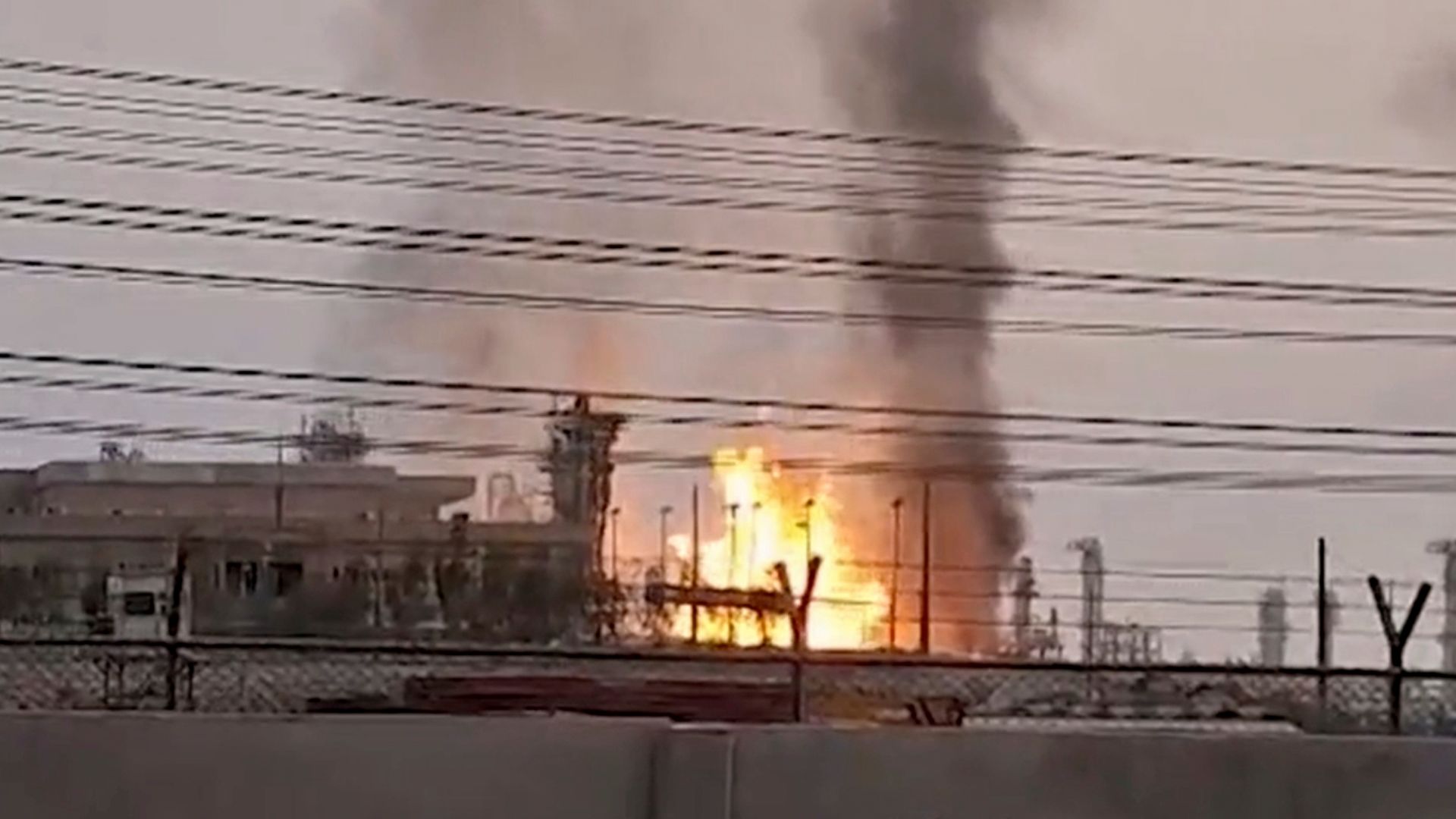
Energy security is a fragile illusion maintained by geographic distance and high-tensile steel. When the world’s largest natural gas field, the North Dome/South Pars structure, faces physical or digital disruption, the consequences bypass local politics and hit the global balance sheet within minutes. This massive geological reservoir, shared by Qatar and Iran, holds an estimated 1,800 trillion cubic feet of gas. It is the beating heart of the global energy transition. Any threat to its output isn't just a regional skirmish; it is an attack on the power grid of every nation trying to move away from coal.
The recent escalation in kinetic and cyber activity around this field reveals a terrifying reality. We are no longer dealing with isolated incidents of sabotage. We are witnessing a calculated effort to manipulate global prices and test the structural integrity of the liquefied natural gas (LNG) supply chain. If this field stops breathing, the lights go out in places far removed from the Persian Gulf.
The Geopolitics of a Shared Reservoir
The North Dome/South Pars field is a singular entity split by a maritime border. Qatar’s portion, the North Dome, has turned the tiny peninsula into one of the wealthiest nations on Earth through a massive fleet of LNG carriers. Iran’s side, South Pars, remains crippled by years of underinvestment and sanctions, yet it provides the majority of the domestic heating and industrial power for the Islamic Republic.
This shared custody creates a volatile dynamic. Because natural gas is a fluid, if one side pumps faster than the other, the pressure differential can cause the gas to migrate across the border. This "competitive drainage" means both nations are locked in a race to extract as much as possible, as quickly as possible. When a platform is attacked or a pipeline is breached, it doesn't just halt production; it shifts the subterranean math of the entire field.
Recent strikes against infrastructure in this zone aren't about territory. They are about leverage. By targeting the processing hubs or the undersea pipelines, actors can create immediate spikes in the European and Asian spot markets. This is financial warfare disguised as regional conflict.
Why the LNG Bottleneck is a Target
For decades, the primary threat to energy was the closure of a physical strait, like Hormuz. Today, the vulnerability has moved to the liquefaction plants. Natural gas is useless for global trade unless it is cooled to -162°C and turned into a liquid. Qatar’s massive investment in these facilities has made it the world's most vital energy supplier, but it has also created a centralized target.
- Centralization of Risk: Unlike oil, which can be trucked or shipped from various ports, LNG depends on massive, multibillion-dollar cooling trains.
- Technological Sophistication: These plants rely on high-end industrial control systems. A cyberattack that knocks out the cooling sensors is just as effective as a missile.
- The Maritime Chain: Once the gas is on a ship, it is a floating bomb that must navigate narrow channels.
The sophistication of recent attempts to disrupt these facilities suggests state-level planning. We are seeing drones designed to bypass traditional radar by hugging the wave tops, and malware specifically coded to target the proprietary software used in gas compression. This isn't the work of disorganized groups; it is the work of entities that understand the exact pressure points of the global economy.
The European Vulnerability
Europe’s pivot away from Russian pipeline gas has made it dangerously dependent on the North Dome. Every time a shadow falls over the Persian Gulf, the price of electricity in Berlin and Madrid fluctuates. The continent has traded a dependency on a neighbor for a dependency on a distant, volatile maritime route.
The math is simple and brutal. If North Dome output drops by even 10% due to a successful strike, the global LNG market goes into a deficit that cannot be filled by the United States or Australia. There is no spare capacity of that magnitude anywhere else. This makes the field the ultimate "choke point" for the Western world’s economy.
The Cyber Frontier of Energy Sabotage
While physical explosions make for better headlines, the silent war happening in the code of the SCADA (Supervisory Control and Data Acquisition) systems is far more dangerous. The North Dome/South Pars operations are almost entirely automated.
We have seen evidence of "logic bombs" planted in the software of gas turbines. These are dormant pieces of code that, when triggered, can cause the machinery to vibrate at a frequency that leads to catastrophic structural failure. This allows an attacker to destroy a facility without ever firing a shot. It also provides plausible deniability. Was it a mechanical failure or a foreign intelligence agency? In the time it takes to forensic the damage, the market has already moved, and the damage is done.
The Shift to Asymmetric Warfare
The era of large-scale naval battles to protect energy assets is fading. It is being replaced by cheap, disposable technology. A $50,000 drone can take out a $500 million processing unit. This asymmetry is the greatest challenge facing the security forces tasked with protecting the field.
- Saturation Attacks: Using hundreds of low-cost drones to overwhelm the sophisticated air defenses around the Qatari and Iranian coastlines.
- Acoustic Sabotage: Using underwater submersibles to plant devices that mimic the sound of a leak, forcing an automatic shutdown of the entire system.
- Supply Chain Interdiction: Intercepting the specialized parts needed to maintain the liquefaction plants, ensuring that when a breakdown happens, it lasts for months instead of days.
The Price of Instability
Markets hate uncertainty, but they love volatility when it can be exploited. The attacks on the gas field serve as a "risk premium" that is tacked onto every energy bill in the world. When a tanker is harassed or a terminal is threatened, traders immediately price in the "worst-case scenario."
This creates a perverse incentive. For certain actors, the goal isn't to stop the flow of gas entirely, but to keep the threat level high enough to maintain elevated prices. It is a slow-motion strangulation of the global economy. The ripple effects extend to fertilizer production, which relies heavily on natural gas, meaning these attacks eventually hit the price of food on the other side of the planet.
The Failure of Current Security Paradigms
Traditional military protection is failing because it is designed for a different age. You cannot stop a cyberattack with a destroyer. You cannot stop a swarm of drones with a single surface-to-air missile battery. The defense of the North Dome requires a total rethink of industrial security.
We need a move toward decentralized processing. If the gas were processed at smaller, more numerous sites, the loss of one wouldn't be a systemic threat. However, the economics of LNG demand massive scale, which forces companies to build these "all-eggs-in-one-basket" facilities. We have optimized for efficiency at the cost of resilience.
The tech required to protect these sites is currently lagging behind the tech used to attack them. While we develop better jamming and interceptor technology, the attackers are already moving toward AI-driven autonomous systems that don't rely on a radio link that can be jammed.
The Subsurface Stakes
The world often forgets that the North Dome/South Pars field is a giant pressurized balloon. If the pressure isn't managed correctly due to constant operational interruptions, the long-term health of the reservoir can be compromised. Water can seep into the gas-producing layers, permanently reducing the amount of gas that can be recovered.
This means that today's attacks aren't just stealing today's energy; they are potentially destroying the energy of the next generation. The environmental cost of a major breach is equally staggering. A massive release of unburned methane—a greenhouse gas far more potent than carbon dioxide—would be a climate catastrophe of unprecedented proportions.
Hardening the Heart of the World
If we are to survive the current energy transition, the protection of the North Dome must become a global priority, not just a regional concern. This requires an international treaty on the "inviolability of energy infrastructure," similar to the protections given to hospitals during wartime.
However, treaties are often ignored by those who feel they have nothing to lose. The only real solution is a massive, rapid diversification of energy sources that reduces the strategic value of any single field. Until that happens, the North Dome remains the world's most dangerous single point of failure.
Companies operating in this sector must move beyond standard firewalls and physical guards. They need to implement "zero-trust" architectures for their industrial hardware, where every sensor and valve must constantly verify its state and commands. This is an expensive, grueling process, but the alternative is a global blackout orchestrated from a laptop thousands of miles away.
The next time you see a news report about a "minor incident" in the Persian Gulf, look past the smoke. Look at the shipping routes, look at the gas spot prices in East Asia, and realize that the conflict is already at your front door. The war for the world’s largest gas field is already being fought, and so far, the defenders are behind the curve.
Audit your supply chain for single points of failure before the next disruption makes the choice for you.