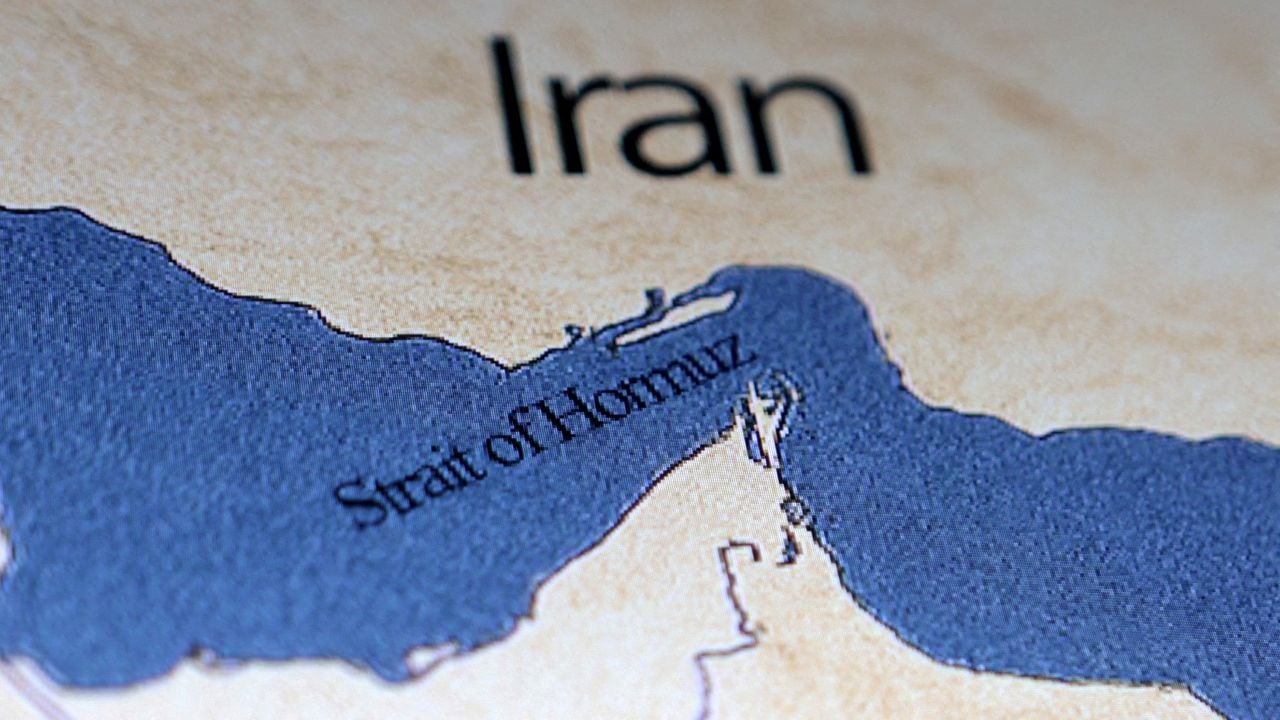
The global maritime community is currently hyperventilating over a suggestion from Tehran that sounds like heresy to the Church of Free Trade: charging transit fees for ships passing through the Strait of Hormuz.
Mainstream analysts are already churning out the same tired scripts. They call it a "violation of international law," a "desperate cash grab by a sanctioned regime," or a "precursor to total naval blockade." They are wrong. They are looking at a 21st-century geopolitical chess move through a 19th-century colonial lens.
If you think the "freedom of navigation" is a static, divinely ordained right that costs nothing to maintain, you aren't paying attention to the math. The era of the "free lunch" in the Persian Gulf is dying, and honestly, it’s about time someone sent the bill.
The Myth of the Sovereign Commons
Let’s dismantle the biggest lie in maritime logistics: that the Strait of Hormuz is a "neutral international highway."
Technically, the strait consists of the territorial waters of Iran and Oman. Under the 1982 United Nations Convention on the Law of the Sea (UNCLOS), ships enjoy the right of transit passage. But here is the catch that the "experts" ignore: Iran never ratified UNCLOS. From Tehran’s perspective, they are bound by the older 1958 Convention, which grants innocent passage.
What’s the difference? Everything.
Innocent passage is a privilege, not an absolute right. It can be suspended if the coastal state deems the transit prejudicial to its peace, good order, or security. For decades, the West has enjoyed the security provided by local stability without paying a dime for the "maintenance" of that stability.
Imagine a scenario where you own a private road that leads to the world’s biggest gas station. Thousands of trucks thunder across your asphalt every day. They leak oil, they create noise, and they require you to keep a massive police force on standby to make sure they don't crash into each other. Then, the truck owners slap you with a lawsuit every time you try to fix a pothole.
That is Iran’s reality.
Security as a Service, Not a Right
The argument from the Iranian parliament isn't just about spite; it’s about internalizing externalities.
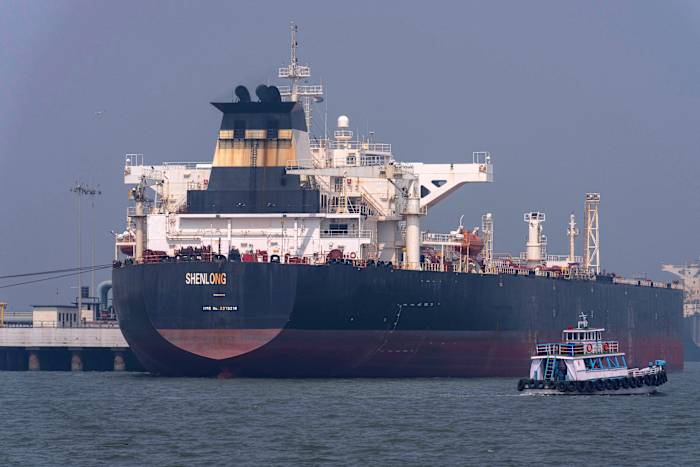
Every tanker that passes through those narrow 21-mile lanes represents a massive environmental and security risk for the Iranian coastline. If a VLCC (Very Large Crude Carrier) hits a mine or suffers a mechanical failure, it isn't the London insurance markets that have to deal with the blackened beaches of Bandar Abbas.
By proposing a transit fee, Iran is effectively attempting to pivot to a "Security as a Service" (SaaS) model. They are arguing that if the world wants a guaranteed, safe passage for 20% of the world's petroleum, the world should contribute to the overhead.
Is it provocative? Yes. Is it logically consistent with how we handle almost every other piece of critical infrastructure on the planet? Absolutely.
We pay tolls for the Suez Canal. We pay $500,000 or more to slide a ship through the Panama Canal. Why? Because those nations built the infrastructure. The contrarian take is that the "infrastructure" of the Strait of Hormuz isn't concrete and locks; it’s the military and environmental monitoring required to keep the world’s energy artery from flatlining.
The Cowardice of Global Shipping Insurance
If you want to see where the real power lies, look at the Lloyd’s Market Association Joint War Committee.
Whenever a shadow falls over the Strait, insurance premiums for tankers skyrocket. This is "private taxation." Shipping companies are already paying "transit fees"—they just happen to be paying them to bankers in London and Zurich rather than the country actually managing the waters.
I have watched logistics firms burn through millions in "war risk" surcharges that do absolutely nothing to actually lower the risk on the water. It is a protection racket where the protector lives 3,000 miles away.
If Iran were to formalize a transit fee in exchange for guaranteed security—essentially a sovereign insurance bond—it would disrupt the entire maritime insurance industry. The West hates this proposal not because it’s "illegal," but because it threatens the monopoly on global risk management.
The Law of Unintended Consequences: A Stress Test
Critics say this move would crash the global economy. Let’s look at the numbers.
Roughly 20 million barrels of oil pass through the Strait daily. Even a "hefty" fee of $1 per barrel—which would be an astronomical revenue generator for Iran—would represent a negligible increase at the pump for the end consumer. We see larger price swings based on a single tweet from an OPEC+ minister.
The real "danger" isn't the cost; it’s the precedent.
If Iran successfully levies a fee, what stops Yemen from doing the same at Bab el-Mandeb? What stops Indonesia and Malaysia from tolling the Malacca Strait?
The "Lazy Consensus" view is that this leads to chaos. The contrarian view? It leads to accountability.
For too long, the global economy has been built on the assumption of "free" geography. We have offshored our manufacturing and centralized our energy sources because we assumed the U.S. Navy would forever subsidize the security of global trade routes for free.
Iran’s proposal is a brutal reminder that geography has a price. If the world has to start paying to use these chokepoints, it will finally force a long-overdue diversification of energy routes and a move toward localized production.
The "Illegal" Argument is a Paper Tiger
Whenever a country challenges the status quo, the first move of the hegemon is to hide behind "International Law."
But international law is a menu, not a bible. The United States frequently invokes "freedom of navigation" while simultaneously refusing to ratify the very treaties (UNCLOS) it uses to lecture others.
If Iran moves forward with this, they aren't "breaking" the law so much as they are rewriting the contract of the global commons. They are pointing out that the current "rules-based order" is actually just a "Western-subsidized order" that no longer reflects the balance of power on the ground.
Stop Asking "Is It Legal?" Start Asking "Is It Sustainable?"
People also ask: "Can the U.S. Navy stop them?"
That is the wrong question. Of course, the U.S. could physically prevent the collection of fees in the short term. But at what cost? A permanent hot war in the Gulf to save a few cents on a gallon of gas?
The real question is: Why is the global economy so fragile that a lawmaker’s suggestion of a transit fee causes a panic?
The fragility is the point. We have built a world of "just-in-time" delivery that relies on the silence and compliance of the nations that sit on the world's chokepoints. Iran is simply the first to realize that silence is an undervalued asset.
The Hard Truth for the West
We are moving into a multipolar world where "toll-booth diplomacy" will become the norm.
Instead of feigning moral outrage, the shipping industry needs to prepare for a world where the sea is no longer a free-for-all. This isn't about Iran being "evil" or "desperate." It's about the commodification of geographic leverage.
If you sit on a gold mine, you charge for the gold. If you sit on the world’s most important waterway, you charge for the water.
The Western era of global trade was predicated on the idea that the "rest of the world" would provide the resources and the pathways, while the West provided the "rules." Those rules were designed to keep the pathways free and the resources cheap.
That contract is being shredded in real-time. Iran isn't just asking for money; they are declaring that the Western subsidy of the Persian Gulf is over. You want the oil? Pay the toll. You want the security? Fund it.
You can call it piracy, or you can call it the new cost of doing business. Just don't call it a surprise.
The Strait of Hormuz is a commercial asset. It’s time we stopped pretending it’s a public park.
Ships will pay. They always do. The only question is whether they pay in dollars now or in debris later.