The conventional wisdom on a hot war with Iran is a predictable mix of 1970s oil-shock PTSD and outdated geopolitical maps. Analysts at the big consultancies are already dusting off their "Resilience Playbooks," warning you about $150 barrels of crude and the total collapse of the Strait of Hormuz. They want you to hedge, hunker down, and hike prices.
They are wrong.
The "lazy consensus" assumes we are still living in the era of the Carter administration. It ignores the reality of shale, the shift in global manufacturing hubs, and the fact that Iran’s primary weapon isn’t a missile—it’s the psychological grip it holds over risk-averse CEOs. If you are pivoting your entire 2026 strategy based on a map of the Persian Gulf, you aren’t being "prepared." You’re being played.
The Crude Myth of the Energy Apocalypse
The most common "expert" take is that an Iran war sends oil into a vertical climb that chokes global industry. This is a linear projection that fails to account for the structural decoupling of the West from Middle Eastern energy.
In 2023 and 2024, the United States produced more crude oil than any country in history—ever. The Permian Basin is a better hedge against Tehran than any diplomatic treaty or naval carrier group. When the "experts" scream about the Strait of Hormuz, they forget that a price spike triggers an immediate, aggressive supply response from non-OPEC+ producers.
Furthermore, China—the primary customer for Iranian oil—has the most to lose. If the flow stops, Beijing doesn’t just sit there; they lean into their massive strategic reserves and accelerate their transition to non-fossil infrastructure. The "global business" impact isn't a permanent shift to high costs; it’s a temporary volatility event that punishes the panicked and rewards the liquid.
I’ve seen boards freeze $500 million in CapEx because of "regional instability" that never materialized into a bottom-line hit. While you’re waiting for the smoke to clear, your leaner competitors are buying the dip in market share.
The Strait of Hormuz is a Paper Tiger
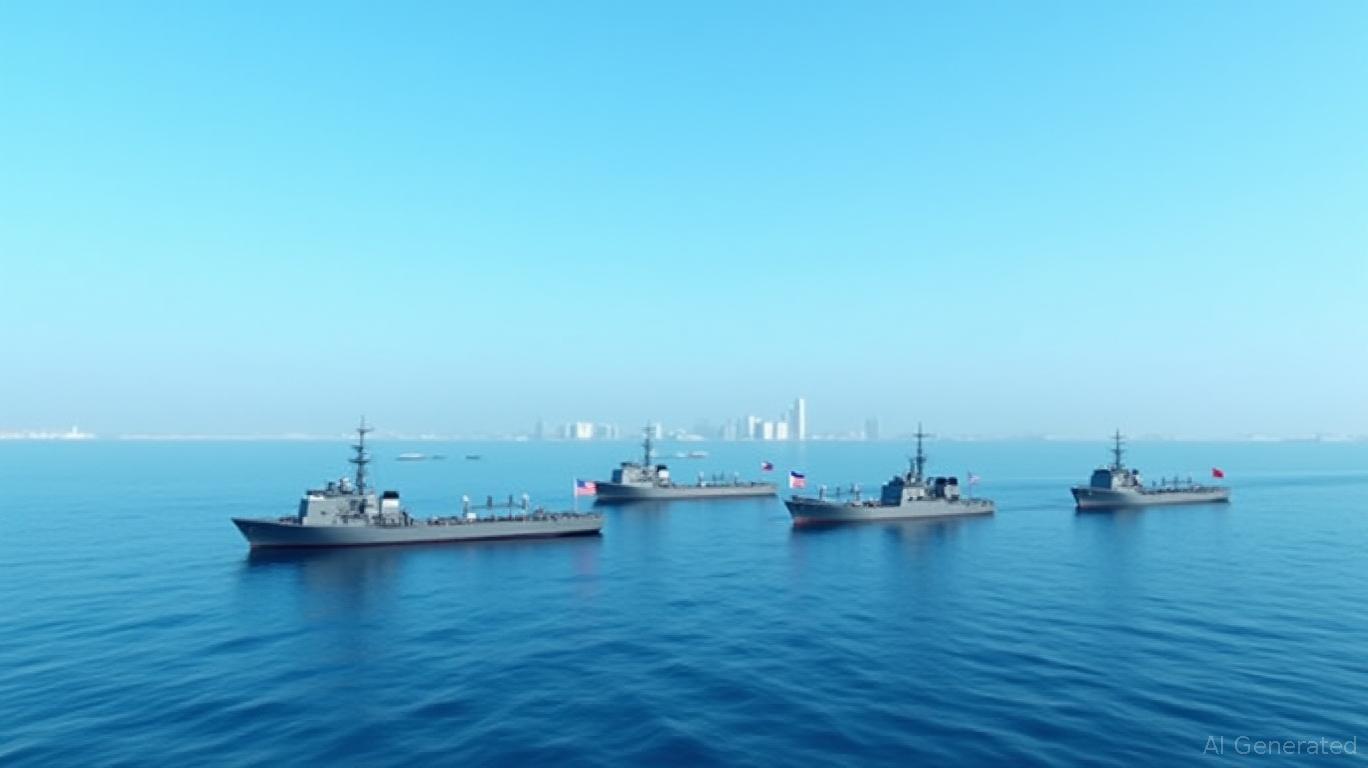
Every strategist loves to point at that narrow chink in the world’s armor. Yes, 20% of the world’s liquid petroleum passes through it. No, closing it is not a sustainable move for Iran.
Closure is a suicide pact. Iran’s economy, already strangled by sanctions, survives on the very maritime traffic they threaten to disrupt. A total blockade invites a multi-national kinetic response that Tehran cannot survive. The reality of modern warfare in the region isn't a "closed" strait; it’s a "taxed" strait.
Expect higher insurance premiums. Expect "war risk" surcharges from Maersk and MSC. But don't expect the end of global trade. If you’re a business leader, your problem isn’t that the ships will stop; it’s that your shipping department will use the news as an excuse for their own inefficiencies.
- The Nuance: The real disruption isn't the physical blockage; it's the "insurance-industrial complex."
- The Reality: Ships will still move. They’ll just be more expensive to verify.
If you haven't renegotiated your freight contracts to include "force majeure" clauses that specifically define "regional conflict" beyond vague "acts of war," you’ve already lost the battle.
The Pivot to "Fortress Geography" is a Trap
The competitor's narrative suggests this conflict will force a total retreat from globalism. They call it "friend-shoring" or "near-shoring." I call it an expensive retreat into mediocrity.
Moving your manufacturing to Mexico or Poland because of a flare-up in the Middle East is a reactionary move that ignores the long-term math. The labor arbitrage and infrastructure depth of Asia still win. A conflict with Iran doesn't change the fact that the technical talent in Shenzhen or the scaling capacity of Vietnam is light-years ahead of the alternatives.
Disrupting your entire logistics network for a geopolitical event with a half-life of eighteen months is the definition of "short-termism."
Imagine a scenario where a Tier 1 automotive supplier pulls out of a joint venture in the region, citing "security concerns," only to watch a Korean competitor move in three months later with a private security firm and a 20% lower cost basis. I’ve watched this happen in Iraq, in Libya, and in Eastern Europe. The "safe" move is often the most expensive mistake a C-suite can make.
Cyber: The Only War That Matters to Your P&L
While the talking heads are obsessed with tankers and drones, they are missing the actual theater of operations: your servers.
Iran knows it cannot win a conventional war against a Western coalition. It can, however, devastate the Western financial system with a keyboard. This isn't "thematic" risk; it's operational reality. If you are worried about the price of gas but haven't audited your SCADA systems or your third-party API vulnerabilities in the last six months, your priorities are backward.
State-sponsored actors don't want to blow up your factory; they want to encrypt your ERP system and demand 10,000 Bitcoin.
Why the "Risk Assessment" Questions are Wrong
People often ask: "How will an Iran war affect my shipping costs?"
The honest answer: It won't affect them as much as your lack of a diverse carrier base does.
People ask: "Should we pull out of Middle Eastern markets?"
The honest answer: Only if you want to hand the fastest-growing consumer segments of the next decade to your rivals on a silver platter.
Stop Managing the News and Start Managing the Spread
The elite contrarian play during a Middle Eastern conflict isn't to retreat—it’s to exploit the delta between perceived risk and actual disruption.
The "War" will change global business by weeding out the companies that lead with emotion. The companies that thrive will be those that treat the conflict as a data point, not a destiny. They will buy the distressed assets of the panicked. They will lock in long-term energy contracts when the spike hits its first plateau. They will realize that the "global instability" the media sells is actually a series of localized, manageable hurdles.
If you want to protect your business, stop reading the front page and start reading the balance sheets of the companies that actually operate in the "danger zone." They aren't leaving. Why are you?
The true cost of the Iran conflict isn't found in the price of a barrel of Brent crude. It’s found in the lost opportunity cost of every "safe" decision made by a terrified CEO.
Stop looking for a shelter and start looking for the exit—the one your competitors are running toward while you should be walking calmly in the opposite direction.
Review your "risk" budget. If it’s larger than your "innovation" budget because of a headline, you’re not a leader; you’re a spectator.
Go back to work. The Strait is still open.