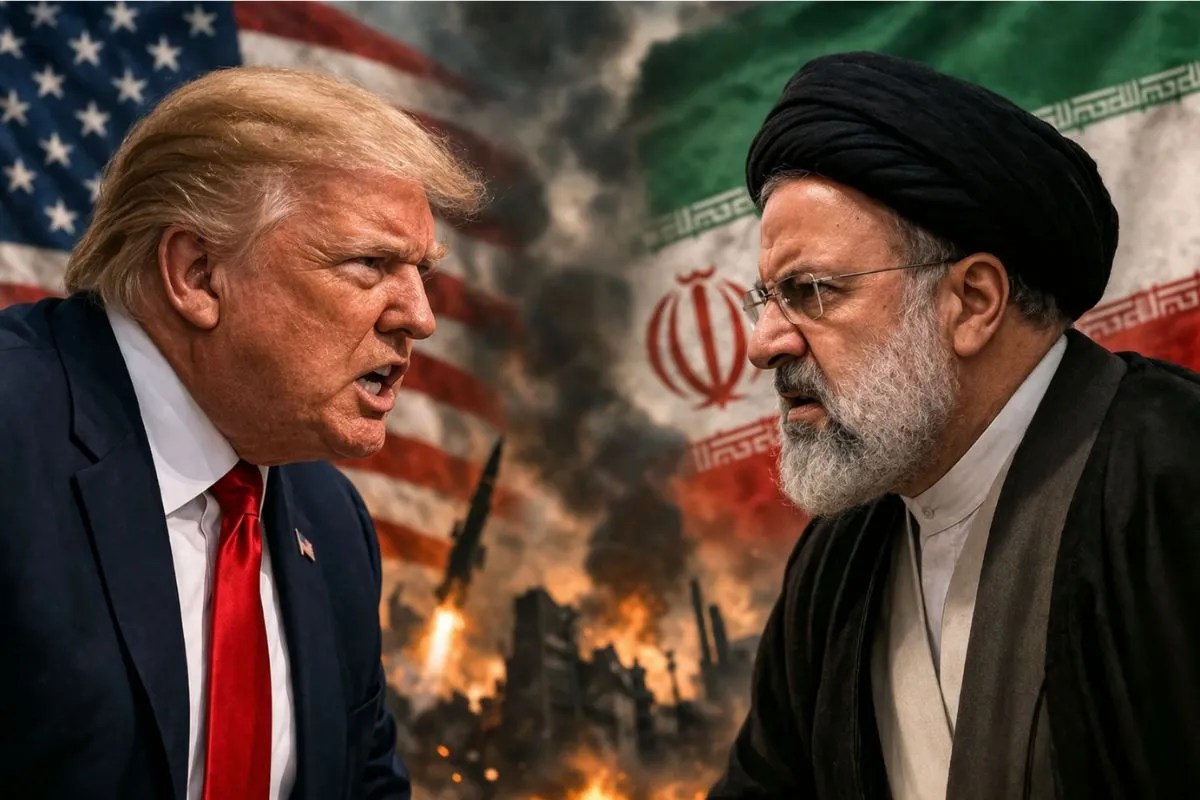
The rhetorical posturing from Tehran has shifted from standard geopolitical friction to a specific, high-stakes doctrine of "unpredictable retaliation." For decades, the Islamic Republic relied on a "strategic patience" model, using regional proxies to maintain plausible deniability while avoiding a direct confrontation that could jeopardize the regime's survival. That era is over. Recent escalations and the collapse of traditional diplomatic backchannels have forced Iran into a corner where its only remaining currency is the threat of an "unimagined strike." This isn't just a headline for state-run media; it is a fundamental recalibration of Middle Eastern warfare that threatens to pull global powers into a vacuum they have spent years trying to avoid.
The End of Strategic Patience
The shift in Iranian military strategy began as a response to a series of intelligence failures and high-profile assassinations on their own soil. When regional commanders are neutralized with impunity, the old playbook of using Lebanese or Yemeni intermediaries loses its deterrent value. Tehran has concluded that the only way to reset the balance of power is to demonstrate a willingness to strike directly, even if the consequences are catastrophic.
This new stance is characterized by a "maximum pressure" counter-strategy. If the Iranian economy is to be strangled by international sanctions, the logic in the IRGC (Islamic Revolutionary Guard Corps) command centers is that the global energy supply must share that vulnerability. The threat is no longer about a slow burn; it is about a flashpoint designed to be so sudden and so violent that the international community has no time to coordinate a measured response.
The Mechanics of Unpredictable Warfare
What does an "unimagined" strike actually look like? Military analysts point to a multi-vector approach that bypasses traditional missile defense systems. Iran has invested heavily in "swarming" technology—deploying hundreds of low-cost drones simultaneously to overwhelm expensive radar arrays.
- Asymmetric Maritime Attacks: Closing the Strait of Hormuz is the "nuclear option" of global trade. By using fast-attack boats and sophisticated sea mines, Iran can effectively halt 20% of the world’s petroleum liquids without ever firing a long-range ballistic missile.
- Infrastructure Sabotage: Beyond kinetic weapons, the threat of cyber warfare against regional desalination plants and power grids represents a quiet but deadly front.
- Deep-Strike Capabilities: The development of solid-fuel missiles has reduced the launch window, making it nearly impossible for satellite surveillance to provide early warning to targeted cities.
The Proxy Dilemma
The "Axis of Resistance" remains Iran’s primary tool, but the leash has been lengthened. In the past, Tehran exercised tight control over the timing of proxy strikes. Today, groups like Hezbollah and the Houthis are increasingly autonomous, acting in a synchronized but decentralized manner. This creates a "gray zone" of conflict where a single miscalculation by a local commander could trigger a full-scale regional war that neither Washington nor Tehran originally intended.
The danger of this decentralized model is the lack of an off-ramp. When an "unimagined" strike occurs, the target nation is forced to respond with overwhelming force to maintain its own deterrence. This creates a feedback loop of escalation. Iran’s current rhetoric suggests they are comfortable with this loop, betting that their domestic resilience is higher than the political will of Western democracies to endure a prolonged conflict.
The Nuclear Shadow
Underpinning every threat of "lethal consequences" is the accelerating Iranian nuclear program. By pushing enrichment levels closer to weapons-grade material, Tehran has shortened its "breakout time" to a matter of weeks. This serves as the ultimate insurance policy. Even if a conventional war begins, the threat of a nuclear-armed Iran prevents the total mobilization of foreign forces against the regime.
Intelligence reports suggest that the Iranian leadership is no longer interested in returning to the status quo of the 2015 nuclear deal. They are looking for a new security architecture that recognizes their regional hegemony. The "unimagined" strike is the lever they intend to use to force that recognition. It is a gamble of historic proportions.
The Economic Fallout of Miscalculation
If the rhetoric turns into reality, the global economy faces a shock not seen since the 1970s. The interconnectedness of global markets means that a localized conflict in the Persian Gulf results in immediate price spikes at gas pumps in London and food shortages in Cairo. Iran knows this. They are using the global economy as a hostage, betting that the fear of a worldwide recession will prevent their adversaries from taking decisive military action.
However, this strategy assumes the other side will act rationally. History is littered with "rational actors" who stumbled into wars because they misread the resolve of their opponents. Tehran’s current confidence may be its greatest weakness. If they believe their own propaganda about a weakened West, they may overplay their hand and trigger the very regime-ending conflict they seek to avoid.
Intelligence Gaps and Silent Fronts
The most concerning aspect of the current tension is the "known unknowns." Western intelligence agencies have struggled to penetrate the inner circle of the IRGC’s Quds Force since the 2020 assassination of Qasem Soleimani. There is a lack of clarity regarding the current command-and-control structure, leading to fears that a "lethal consequence" strike could be initiated by a hardline faction without the full consensus of the Supreme Leader.
Furthermore, the role of Russia and China cannot be ignored. Both nations have deepened their strategic ties with Tehran, providing a diplomatic and economic safety net that didn't exist a decade ago. This "Eurasian Pivot" gives Iran the confidence to issue threats that would have been suicidal in a unipolar world. They now believe they have the backing of a bloc that is equally interested in challenging the existing international order.
The High Cost of Misreading the Room
Iran's warning that "the enemy would never have thought" of such a strike is a psychological operation intended to create paralysis. It targets the risk-aversion of democratic leaders. By projecting an image of total unpredictability, Iran seeks to dictate the terms of engagement before a single shot is fired.
This isn't just about military hardware. It is about the will to endure. The Iranian leadership is prepared for a "war of poverty," believing their population is more accustomed to hardship than the populations of their adversaries. This asymmetrical tolerance for pain is the foundation of their current bravado.
The Reality of a Multi-Front War
If a conflict begins, it will not be contained to the borders of Iran. It will be a theater-wide conflagration stretching from the Mediterranean to the Arabian Sea.
- Levant Front: Hezbollah possesses an arsenal of over 150,000 rockets aimed at civilian centers.
- Red Sea Front: Houthi rebels have demonstrated the ability to disrupt the Suez Canal corridor, a vital artery for European trade.
- Mesopotamian Front: Militia groups in Iraq and Syria provide a land bridge for Iranian supplies and personnel.
This "Ring of Fire" strategy ensures that any attack on Iran results in simultaneous chaos across multiple borders. It is a defensive mechanism designed to make the cost of intervention prohibitively high. The question is no longer if Iran has the capability to strike back, but rather if the international community has the stomach to withstand the fallout.
The time for diplomatic pleasantries has passed. The rhetoric coming out of Tehran is a clear signal of a shift in the tectonic plates of Middle Eastern security. We are entering a phase where the "unimagined" becomes the baseline for military planning. Whether this leads to a new, cold peace or a hot, regional war depends entirely on whose bluff is called first.
Watch the shadows, but prepare for the light.