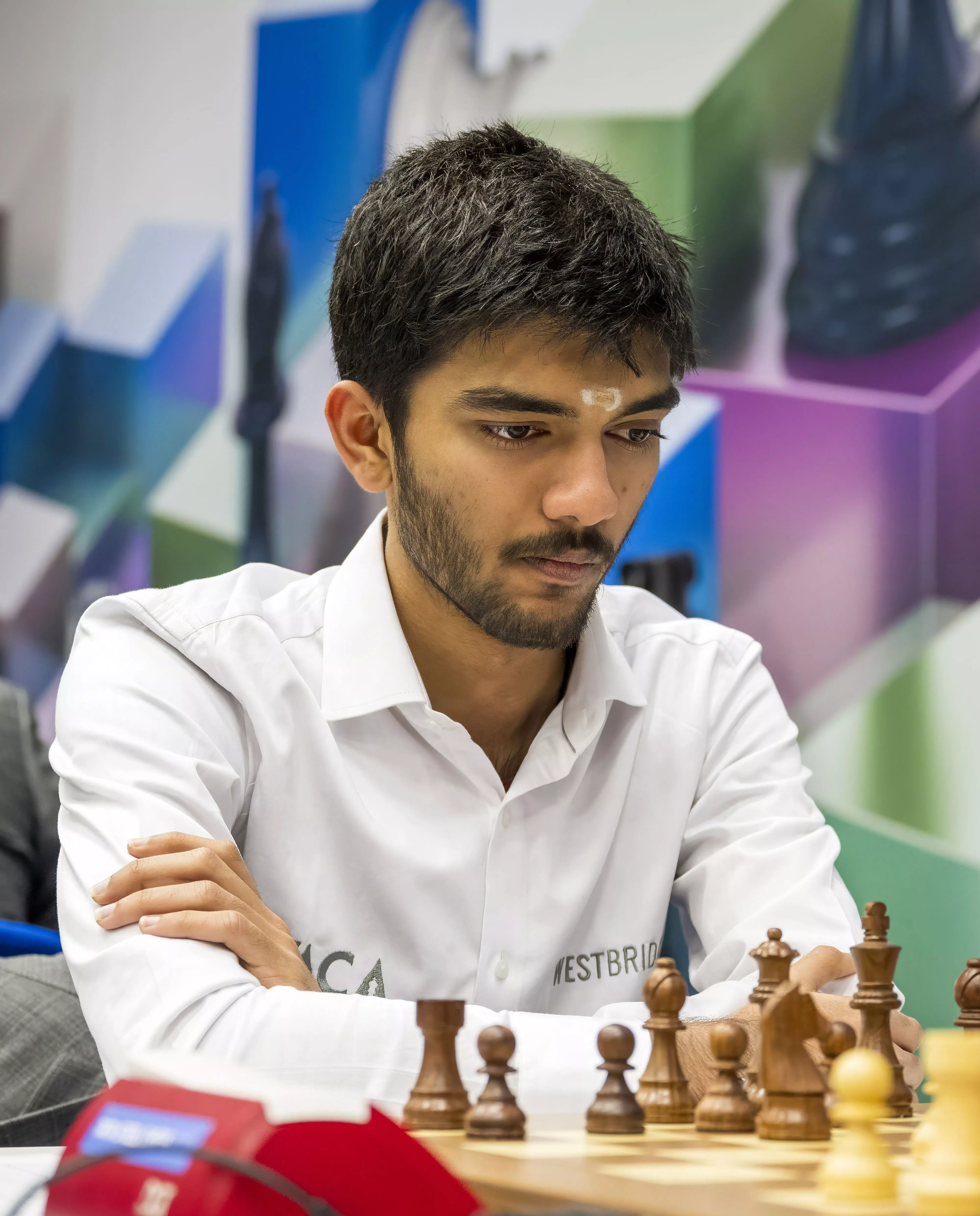
The chess world just got the shake-up it desperately needed. For years, the narrative revolved around whether anyone could actually bother Magnus Carlsen enough to make him care about the world title again. We've moved past that. The new guard isn't just knocking on the door; they've kicked it off the hinges. Javokhir Sindarov has officially set up a world title clash with Gukesh Dommaraju, and if you aren't paying attention to the "Uzbek School" of chess, you're already behind the curve.
This isn't just another tournament match. It's a collision between two of the most aggressive, fearless prodigies the game has seen since the early 90s. Sindarov, the pride of Tashkent, has been a ticking time bomb in the elite rankings for months. His path to this title match wasn't some fluke of the bracket. He earned it by dismantled opponents with a brand of tactical precision that feels almost insulting to older grandmasters.
On the other side stands Gukesh. He’s already proven he can handle the suffocating pressure of the biggest stages. But Sindarov brings a different kind of chaos. This match-up represents the first time in history we’re seeing two players of this specific generation—unburdened by the dogmas of the 2000s—fighting for the absolute peak of the sport.
The Tashkent Terror vs the Chennai Chill
If you watch Sindarov play, you’ll notice he doesn't play for draws. Even with the black pieces, he looks for imbalances immediately. It’s a trait shared by the entire Uzbek national team, which famously took gold at the 2022 Olympiad. They play "street chess" at a 2700 ELO level. It’s gritty. It’s fast.
Sindarov’s qualification for this match didn't happen in a vacuum. His recent performance metrics show a massive jump in "accuracy under pressure." While many players crumble when the clock dips below two minutes, Sindarov seems to get faster. He relies on a deep intuition developed from thousands of hours of blitz, but he backs it up with engine-verified preparation that would make a supercomputer sweat.
Gukesh is arguably the more "polished" player, but polish doesn't always win world titles. Grit does. We saw Gukesh handle the Candidates with a maturity that was frankly terrifying for a teenager. He’s cold. He doesn't twitch. But Sindarov is the type of player who will force Gukesh into "ugly" positions where theory ends and pure calculation begins.
Why this match breaks the old world order
For decades, chess was dominated by a specific pipeline. You studied the Soviet classics, you mastered the Berlin Defense, and you hoped to grind out a win in a six-hour endgame. That era is dead.
The Sindarov-Gukesh match is going to be a high-speed car crash in the best way possible. Both players grew up in the era of high-power engines like Stockfish 16 and Leela Chess Zero. They don't respect "traditional" positional rules if the computer says a move works. This leads to games that look like madness to the untrained eye but are actually masterpieces of concrete calculation.
- Opening Novelties: Expect both camps to bring "refutations" of lines we thought were solid for twenty years.
- Psychological Warfare: Sindarov is known for his poker face, but his moves are aggressive. Gukesh is a zen master.
- National Pride: Uzbekistan has invested millions into chess infrastructure. This isn't just Sindarov; it's an entire government-backed machine aiming for the crown.
The technical depth here is staggering. In their previous encounters, the average "Centipawn Loss" (a measure of how many mistakes a player makes) has been incredibly low, even in wild, tactical scrambles. This tells us that neither player is winning because the other is "bad." They're winning because they're finding moves that are humanly impossible to find under pressure. Except they find them.
Tactical patterns to watch for
Sindarov has a specific fondness for the Sicilian Defense when he wants to win with Black. He doesn't just aim for a "playable" position. He goes for the throat. Analysts have pointed out his ability to use his knights in closed positions better than almost anyone in the top ten.
Gukesh, conversely, is a monster with the bishop pair. If the position opens up, he’s favored. The match will likely be decided by who can dictate the "terrain" of the board. If Sindarov keeps it murky and cramped, he has the edge. If Gukesh can simplify into an open endgame, his technical prowess usually carries the day.
Dealing with the pressure of the big stage
Let’s talk about the mental game because that’s where world titles are actually won or lost. Sindarov has been a Grandmaster since he was 12. He’s been a professional for nearly his entire life. But playing for a world title is a different beast than winning a Swiss-system open or an Olympiad game.
The format of a match—playing the same person day after day—is grueling. You can't just have one good idea. You need a team of "seconds" (high-level GMs who help you prepare) working 24/7 to find holes in your opponent's armor.
- Preparation: Who has the better team? Gukesh has the Indian chess machine behind him. Sindarov has the legendary Uzbek veterans.
- Stamina: These matches last weeks. Burnout is real.
- Adaptability: If Sindarov loses game one, does he double down or change his style?
Honestly, the "Gukesh is the favorite" talk is a bit lazy. People said the same thing during the Candidates, and while he won, it wasn't a blowout. Sindarov is the ultimate disruptor. He’s the guy who enters a room and doesn't care about the trophies on your shelf. He wants the win right now.
The engine era impact
You can't discuss modern chess without the silicon monsters in the room. Both these players use AI to sharpen their claws. They aren't just memorizing moves; they’re understanding why certain "human" moves are actually blunders. This has led to a much more violent style of chess. We’re seeing more decisive games and fewer boring draws.
Sindarov’s prep is notoriously difficult to predict. He’s willing to play "sub-optimal" moves that lead to incredibly complex positions where the engine might say "0.00" (equal), but a human has a 90% chance of messing up. It’s a brilliant strategy. It turns the game into a test of nerves rather than a memory contest.
What you should do now
If you’ve been a casual fan, this is the moment to dive in. Don't wait for the highlight reels.
- Watch the live streams: Follow the move-by-move analysis. The tension in a match like this is palpable, even through a screen.
- Study Sindarov’s games: Specifically, look at his wins in the 2023 World Cup. They’re a blueprint for how to beat elite defense.
- Track the ELO: The live ratings will fluctuate wildly. This match will likely decide who stays in the world top 5 for the next decade.
The era of the "Old Guard" is over. Whether Sindarov takes the crown or Gukesh defends his status as the chosen one, the game is changing. It's faster, it's more tactical, and it's infinitely more exciting. Get your board out. This is going to be a masterclass in modern warfare.
The match dates are locked. The preparation is happening in secret rooms from Tashkent to Chennai. When these two sit down across from each other, the clock won't just be ticking for them; it’ll be ticking for the history books. Don't blink.