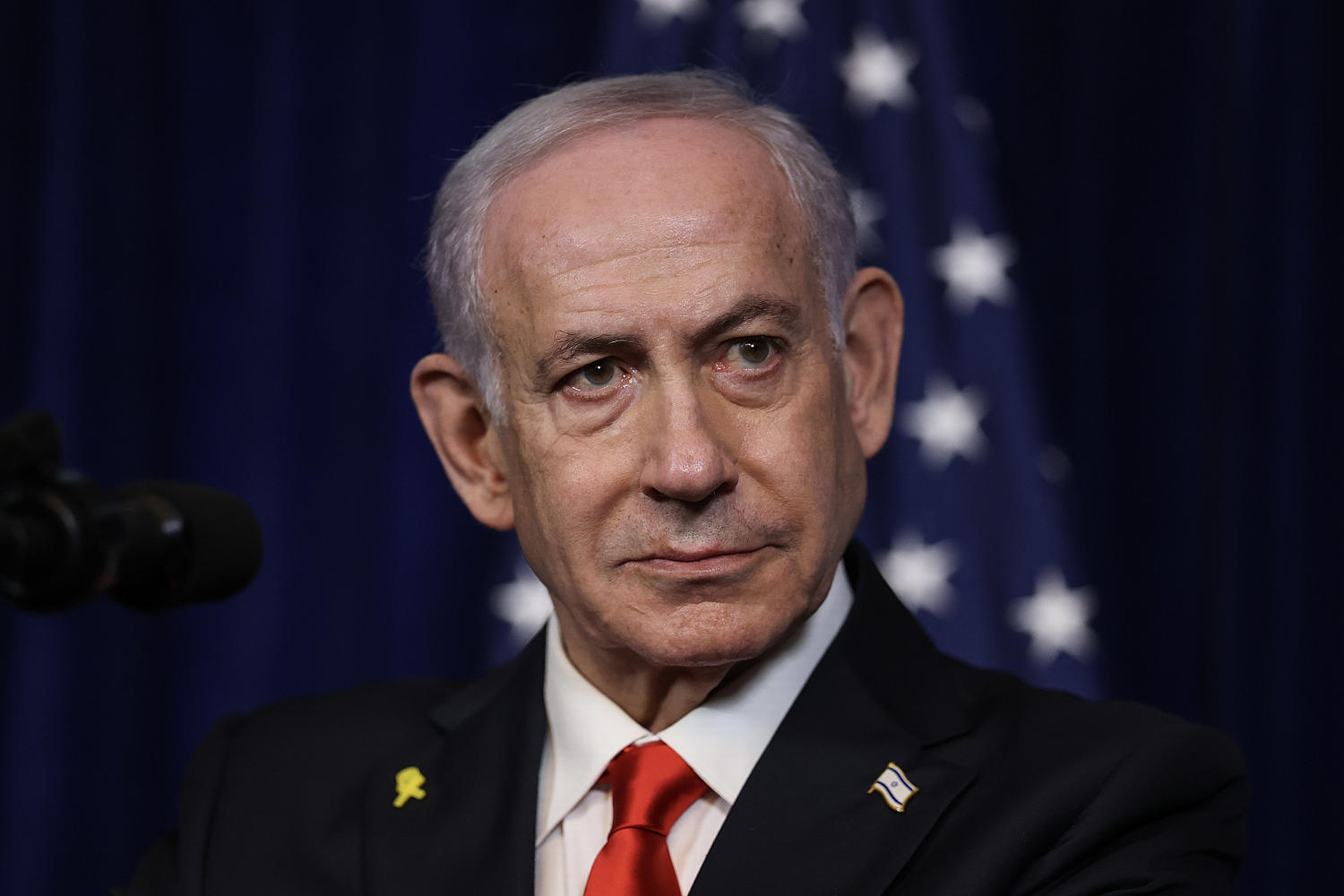
The confrontation between Senators Rand Paul and Markwayne Mullin represents more than a personal grievance; it serves as a high-fidelity case study in the collapse of the "Senatorial Courtesy" model and the rise of performative physicalism in American deliberative bodies. When Paul accused Mullin of being "someone who applauds violence" against political opponents, he was not merely hurling an insult—he was identifying a fundamental shift in the cost-benefit analysis of legislative behavior. The transition from procedural friction to the threat of physical force signals a breakdown in the institutional guardrails that historically filtered raw populist energy into structured policy debate.
The Feedback Loop of Political Combat
Legislative stability relies on a Nash Equilibrium where all participants agree that the long-term benefits of a functional system outweigh the short-term gains of total obstruction or physical intimidation. This equilibrium is currently failing due to three specific systemic pressures:
- The Incentivization of High-Arousal Content: Modern political communication cycles prioritize "viral" moments over policy wins. A physical altercation or a direct accusation of violent intent generates a higher volume of engagement than a floor speech on fiscal policy.
- The Erosion of Shared Reality: When legislators perceive their opponents not as ideological rivals but as existential threats to the republic, the moral justification for violating norms increases proportionally.
- The Primary Market Divergence: Candidates are increasingly responsive to a narrow base of primary voters who value "strength" (often defined as aggression) over "compromise" (often defined as weakness).
The Framework of Violent Rhetoric and Institutional Decay
The exchange between Paul and Mullin can be mapped using a Normalcy Degradation Scale. This scale measures how quickly fringe behaviors become codified as acceptable political strategy. Paul’s critique targets Mullin’s previous willingness to engage in physical challenges—notably his near-altercation with a union leader in a committee hearing—suggesting that this behavior creates a "contagion effect" within the chamber.
If the Senate moves from a "Rule of Law" environment to a "Might Makes Right" environment, the legislative output shifts from complex, multi-lateral agreements to zero-sum power plays. This shift is characterized by a specific set of operational failures:
- Information Asymmetry: As trust evaporates, the exchange of accurate data between offices ceases, leading to poorly drafted legislation that fails to account for technical externalities.
- Procedural Sabotage: The use of holds and filibusters moves from a strategic tool to a default setting, ensuring that only the most polarized issues reach the floor.
- Physical Deterrence: While actual violence remains rare, the threat or implication of physical prowess acts as a psychological weight, chilling dissent among more moderate members who lack a pugilistic public persona.
The Cost Function of Political Polarization
To quantify the impact of this degradation, we must look at the legislative efficiency ratio. This is defined as the volume of passed, substantive legislation divided by the total hours of floor debate and committee activity.
$$E = \frac{L_{s}}{T_{d}}$$
In this equation, $L_{s}$ represents substantive laws (excluding post office namings and commemorations), and $T_{d}$ represents total deliberative time. As performative conflict increases, $T_{d}$ stays constant or increases while $L_{s}$ drops toward zero. The "confrontation" serves as a multiplier for $T_{d}$ that yields no increase in $L_{s}$.
The mechanism at play here is Negative Partisanship. This psychological driver ensures that voters are motivated more by the fear of the opposing party than by the accomplishments of their own. For Mullin, the "tough guy" brand serves as a defensive wall against primary challenges. For Paul, the "constitutionalist" brand necessitates calling out what he views as authoritarian or thuggish behavior. Both actors are behaving rationally within their respective political silos, even as their collective actions render the institution irrational.
The Rhetorical Pivot: From Debate to Defamation
Paul’s specific phrasing—accusing a colleague of "applauding violence"—is a strategic attempt to reframe the debate from a policy disagreement to a character indictment. This tactic relies on the Logic of Inevitability: if your opponent is fundamentally violent, then any attempt at negotiation is a form of appeasement.
This creates a bottleneck in the legislative process. When the character of the legislator becomes the primary subject of discussion, the actual policy under consideration (in this case, foreign aid and border security measures) becomes secondary. The legislative body ceases to function as a machine for solving collective action problems and begins to function as a stage for a morality play.
The Structural Impediments to De-escalation
Reversing this trend is not a matter of "better manners" or "civility." It is a structural problem that requires structural solutions. The current environment is reinforced by:
- Gerrymandered Districts and Safe Seats: In most cases, the only threat a Senator faces is from the flank of their own party. This creates a race to the ideological extremes.
- The Democratization of Outrage: Social media platforms act as a force multiplier for conflict. A heated exchange in a Senate hallway is clipped, edited, and distributed to millions of people within minutes, rewarding the participants with immediate social capital.
- The Decline of Inter-party Socialization: Historically, Senators spent more time in Washington, lived in the same neighborhoods, and formed personal bonds that mitigated professional friction. The "commuter Senate" model has eliminated these informal cooling mechanisms.
Mapping the Future of Legislative Conflict
The Paul-Mullin exchange is a precursor to a more volatile era of governance. We are entering a phase where the "theatrics of the fight" are indistinguishable from the "act of governing." The strategic play for observers and stakeholders is to discount the rhetoric and focus on the underlying shift in institutional power.
The real danger is not a single heated argument, but the normalization of the argument as the primary mode of interaction. This leads to a Legislative Liquidity Trap, where no amount of negotiation or compromise can stimulate the production of meaningful law because the "price" of compromise (political suicide in a primary) is too high.
To navigate this, analysts must track the following variables:
- The frequency of physical threats vs. procedural threats.
- The correlation between "viral" moments and fundraising spikes for individual members.
- The success rate of primary challengers who use "aggression" as their primary campaign pillar.
The path forward for the Senate depends on whether its members realize that the institutional prestige they enjoy is being liquidated to pay for temporary spikes in personal notoriety. Without a re-alignment of incentives—such as primary reform or a radical change in campaign finance—the chamber will continue its slide toward a high-stakes version of professional wrestling, where the outcomes are predetermined by tribal loyalty and the "match" is merely a performance for the cameras.
The strategic priority for the next legislative cycle must be the isolation of performative actors through the strengthening of committee-level procedural rules. By shifting power back to the technical sub-committees and away from the televised floor sessions, the institution can create "quiet zones" where policy work can resume without the distortion of the 24-hour news cycle. Failure to do so will ensure that the Senate remains a theater of the absurd, where the only currency is the volume of one's voice and the perceived threat of one's fists.