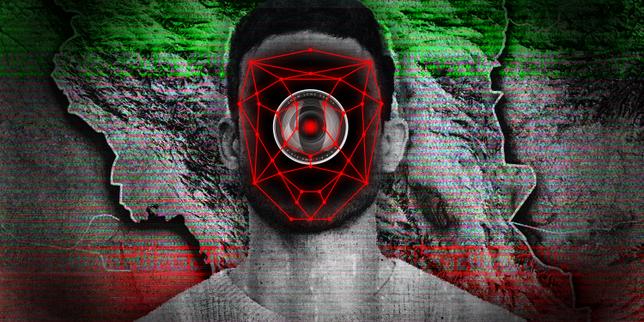
The Iranian government has successfully deployed a sprawling, nationwide facial recognition infrastructure by bypassing Western sanctions through a strategic partnership with Russian surveillance firms. This isn't a future threat. It is an active, functioning reality used to enforce hijab laws, identify dissidents in crowds, and automate the "social credit" style policing of the Iranian population. While the world focused on nuclear centrifuges, Tehran quietly imported the algorithms and hardware necessary to turn every street corner into a digital checkpoint.
The core of this system relies on the integration of Russian-made biometric software with a pre-existing network of millions of Chinese and European cameras. This isn't just about catching criminals. It’s about the total automation of state control.
The Russian Algorithm at the Heart of the Hijab Law
For years, the Iranian morality police relied on physical patrols and white vans to enforce dress codes. That changed after the 2022 protests. The state needed a way to punish thousands of women without sparking a riot on every street corner. They found their answer in Moscow.
Russian firms, specifically those linked to the "Safe City" projects in Moscow and St. Petersburg, provided the high-speed biometric matching engines that can scan a grainy feed from a public square and link it to a national ID database in seconds. These systems are designed to operate under stress. They don't need a studio-quality headshot. They can identify a target from a profile view or a partially obscured face.
The transaction was simple. Russia needed a market for its tech as Western firms exited, and Iran needed a way to see through the crowds. By utilizing Russian software like NtechLab or Tevian—which have denied direct contracts but operate through a murky web of third-party resellers in Dubai and Turkey—Iran bypassed the "human rights" clauses that usually prevent Western tech exports.
How the Hardware Hijack Works
It is a common mistake to assume Iran built this from scratch. They didn't. They hijacked a "smart city" infrastructure that was originally sold to them for traffic management.
Most of the cameras currently identifying protesters in Tehran are Hikvision or Dahua models from China. However, a significant portion of the older backbone consists of Bosch and Axis cameras purchased a decade ago. The Iranian genius—if you can call it that—was in the middleware. They used Russian back-end servers to "skin" these cameras, giving old hardware new, predatory eyes.
The process follows a brutal logic:
- Capture: A Chinese-made camera on a Tehran metro platform records a woman without a headscarf.
- Transmission: The footage is sent via a fiber-optic network built by Iranian state-owned telecommunications firms.
- Analysis: The Russian algorithm compares the face against the Sabte Ahval (National Organization for Civil Registration) database.
- Enforcement: Within minutes, a text message is sent to the woman’s phone, informing her of a fine or a summons to court. Her bank account may be frozen automatically.
This is the "frictionless" authoritarianism that the Kremlin perfected and exported.
The Ghost Resellers of Dubai
Tracing the money reveals the true scale of the operation. Russian tech doesn't ship directly from Moscow to Tehran in most cases. It moves through "front" companies in the United Arab Emirates. These entities act as a technical laundry. They buy the software licenses in bulk, ostensibly for "commercial security" in malls or hotels, and then "re-sell" the integration services to Iranian government contractors like the Rayan Nik Afzar company.
This provides the Russian firms with plausible deniability. They can claim they have no record of sales to the Iranian Ministry of Interior. Meanwhile, the code is already running on servers in the basement of the Evin prison complex.
The Failure of Western Export Controls
We must face the fact that Western sanctions are a sieve when it comes to software. You can stop a shipment of physical chips, but you cannot easily stop a digital license key or a remote server update. The Russian-Iranian axis has created a parallel tech ecosystem.
Western governments have tried to black-list individual Iranian officials, but they have been slow to target the specific Russian engineers who travel to Tehran to calibrate these systems. This is a specialized labor force. There are perhaps only a few hundred people globally with the expertise to integrate national-scale biometric databases with aging CCTV hardware. Many of them work out of glass towers in Moscow, far beyond the reach of a US Treasury subpoena.
The Psychological Toll of the Invisible Eye
The real power of this Russian-Iranian tech isn't in the number of arrests it makes. It is in the pervasive feeling of being watched. When a citizen knows that the camera on the lamppost isn't just recording but is actually recognizing them, their behavior changes. They stop speaking. They stop congregating.
This is the "Panopticon effect" applied to a 21st-century Islamic Republic. The Russian software provides the certainty of identification that the Iranian state previously lacked. In the past, you could disappear into a crowd. Now, the crowd is just a collection of data points waiting to be indexed.
Beyond the Hijab
While the media focuses on the enforcement of religious laws, the internal documents from Iranian tech contractors suggest a much broader application. This system is being tuned for "anomaly detection." This is a polite way of saying the software is trained to look for groups of people moving in patterns consistent with a protest.
If five people run in the same direction, the system triggers an alert to the nearest Basij paramilitary station. This is predictive policing in its most naked, violent form. The Russian developers have years of data from suppressing dissent in Moscow's Bolotnaya Square to feed into these models. They aren't just selling software; they are selling a proven methodology for regime survival.
The Infrastructure of No Return
Once a country installs a biometric backbone of this scale, it is almost impossible to dismantle. The data is permanent. A face cannot be changed as easily as a password. By the time the West realizes the extent of the Russian-Iranian surveillance pact, the database will be complete. Every Iranian citizen over the age of 15 will have a biometric signature mapped and stored, ready to be queried at the push of a button.
The partnership between Moscow's coders and Tehran's enforcers has created a blueprint. Other nations are already watching. From Southeast Asia to Sub-Saharan Africa, the "Moscow-Tehran Model" is the new gold standard for leaders who want the benefits of a modern economy without the "risk" of an empowered citizenry.
Direct your attention away from the rhetoric of diplomats and toward the server rooms. The most effective weapon in the Iranian arsenal isn't a drone or a missile—it is a Russian algorithm that knows exactly who you are.


