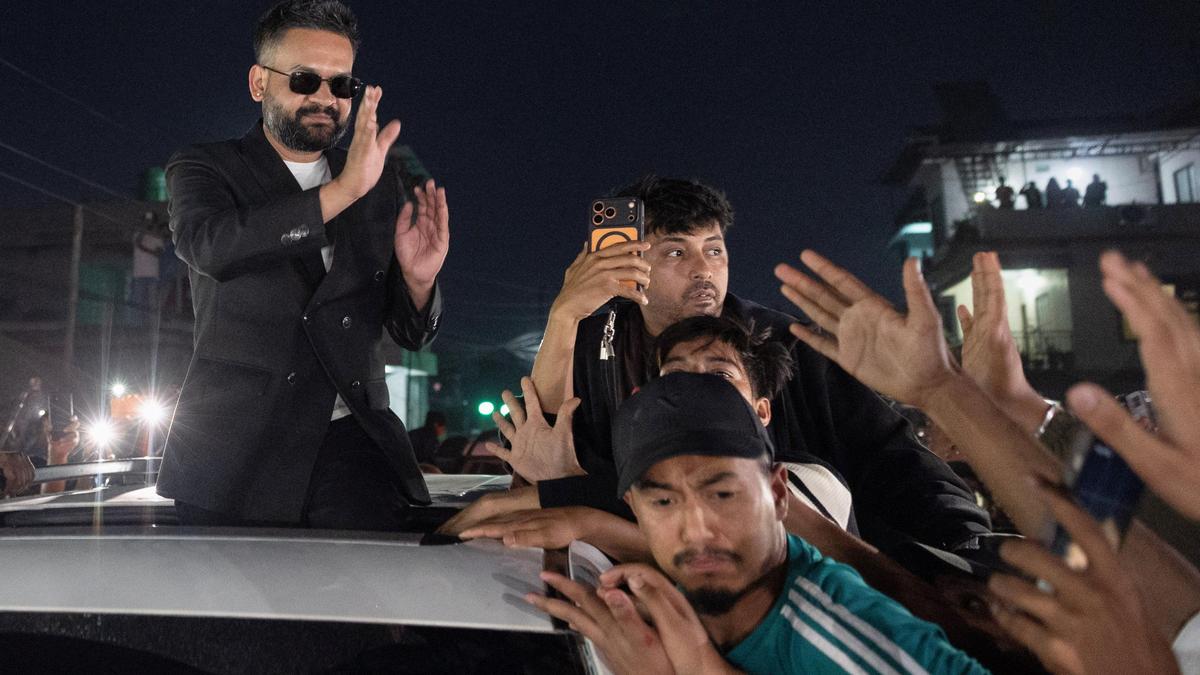
The traditional power brokers of Kathmandu have been evicted. In their place stands a generation that views the Himalayas not as a mystical barrier, but as a massive, untapped battery. The March 2026 landslide victory of the Rastriya Swatantra Party (RSP), led by the former rapper and structural engineer Balen Shah, has dismantled the decades-long "musical chairs" of coalition governance. For New Delhi, this is more than just a change in leadership; it is a fundamental shift in how the neighborhood works. The era of managing Nepal through aging revolutionary icons like Prachanda or K.P. Sharma Oli is over.
India now faces a "Nepal First" administration that is less interested in ideological kinship and more obsessed with bureaucratic efficiency and energy exports. This new government carries an unprecedented mandate from a youth-led movement that toppled the old guard in late 2025. While the strategic window for India is wider than ever, the terms of engagement have turned clinical. If India wants to secure its northern frontier and its green energy future, it must move beyond cultural platitudes and deliver on "hard-wired" economic integration.
The End of the Coalition Circus
For nearly two decades, Nepal was defined by its instability. Since 2008, the country cycled through 14 governments, a pace that made long-term infrastructure planning nearly impossible. The 2026 election results changed the math entirely. The RSP secured 182 out of 275 seats in the House of Representatives, a feat no party has achieved since the 1990s.
This majority is the direct result of the Gen Z uprising in September 2025. Driven by anger over mass youth migration and systemic corruption, the protests didn't just demand a change in personnel; they demanded a change in the state's operating system. The old parties—the Nepali Congress and the various Communist factions—saw their worst electoral defeats in history. Former Prime Minister K.P. Sharma Oli even lost his own constituency.
The new leadership brings a technocratic edge. Balen Shah’s background in structural engineering is not a footnote; it is his primary lens for governance. He views the 10,000 MW power trade agreement signed with India in 2024 not as a diplomatic gift, but as a commercial contract that requires strict transparency and rapid execution.
The Hydropower Battery
Nepal's untapped hydropower potential is estimated at over 40,000 MW. For decades, this was a theoretical treasure. Today, it is becoming a reality that binds the two nations. India is currently the only viable market for this surplus power, creating a natural economic tether.
The recent signing of joint venture agreements to build two 400 kV cross-border transmission lines—Inaruwa-New Purnea and Lamki-Bareilly—serves as the physical manifestation of this link. These lines are designed to move thousands of megawatts from the Himalayan rivers to the power-hungry grids of Uttar Pradesh and Bihar.
- Arun-III and Arun-4: These projects, totaling nearly 1,400 MW, are the crown jewels of Indian investment.
- Pancheshwar Multipurpose Project: After thirty years of stalled talks, a revised benefit-sharing formula was reached in 2024, focusing on equitable distribution of irrigation and flood control benefits.
- 10-Year Trade Deal: The commitment to export 10,000 MW to India by 2034 provides the revenue stability the new RSP government needs to fund its domestic social reforms.
However, the "Nepal First" ideology means New Delhi will face tougher negotiations. The new cabinet, which includes technocrats like Energy Minister Kulman Ghising, is unlikely to overlook delays. They will demand that Indian firms meet deadlines that were routinely ignored in the past.
Countering the Northern Influence
While India has structural advantages—geography, an open border, and the "Roti-Beti" (bread and daughter) cultural connection—China is not sitting idle. Beijing’s strategy has shifted from high-level political meddling to "economic statecraft" via the Belt and Road Initiative (BRI).
The competition is now visible in the details of electoral support. While India provided 650 vehicles and logistical gear for the 2026 polls, China extended a $4 million grant. But the tide is turning against opaque Chinese projects. On the eve of the new government’s inauguration, Nepal's anti-corruption body, the CIAA, filed a massive graft case involving the China-funded Pokhara International Airport. The allegations of misappropriated funds and contract manipulation have soured the public mood toward "debt-trap" diplomacy.
The RSP government is likely to use this sentiment to pivot. They aren't looking to swap one master for another; they are looking for the best ROI. For India, this means the focus must stay on projects that benefit the ordinary Nepali citizen—digital payments, petroleum pipelines, and high-speed rail.
The Digital Public Infrastructure Play
A subtle but powerful tool in India's new diplomatic kit is the expansion of Digital Public Infrastructure (DPI). By integrating Nepal into India’s digital payment and identity stacks, the two economies are being joined in ways that are nearly impossible to decouple.
This technocratic integration bypasses the friction of traditional bureaucracy. For the millions of Nepali migrant workers in India, the ability to send money home instantly via a unified digital corridor is more valuable than any political speech. It creates a user-centric ecosystem where the daily survival of citizens is tied to the seamless functioning of bilateral technology.
The Risk of Populism
Every silver lining has a cloud. Balen Shah’s rise is fueled by a populist nationalism that can, at times, turn inward. The RSP's mandate was built on the promise of protecting "Nepali sovereignty." While this is currently aimed at cleaning up domestic corruption, it can easily be redirected toward external "interference" if New Delhi is perceived as being too heavy-handed.
The 1950 Treaty of Peace and Friendship remains a sensitive point. Any attempt by India to exert the kind of traditional "Big Brother" influence seen in the 2015 blockade era would be catastrophic. The 2026 voter is digital, mobilized, and has no memory of the wars or treaties of the 20th century. They only care about job creation and the cost of electricity.
Re-engineering the Relationship
India’s strategic window is not just about the absence of a pro-China coalition in Kathmandu. It is about the presence of a rational, result-oriented government that shares India's interest in regional connectivity. To capitalize on this, India must treat Nepal as a sovereign equal and a commercial partner.
The focus must shift from the "Gorkha connection" and shared Hindu heritage—though both remain important—to the "Hydro-Digital connection." This involves:
- Accelerating Grid Connectivity: Ensuring the transmission lines are completed by the 2030 target.
- Transparency in Projects: Avoiding the corruption scandals that have plagued Chinese-led initiatives.
- Subnational Diplomacy: Engaging directly with border states to ensure the Terai region benefits from the economic corridor.
The 2026 election was a reset button for the Himalayas. The old guards are in the wilderness, and a new, uncompromising leadership has taken the wheel. India has the infrastructure, the proximity, and the agreements ready to go. The only question is whether the Indian bureaucracy can match the speed of a rapper-turned-engineer who has promised his people a future that doesn't involve leaving the country.
Would you like me to analyze the specific debt-to-equity ratios of the new 400 kV transmission line agreements to see how they impact Nepal’s sovereign debt?