The moon isn't just a glowing rock in the sky anymore. It’s a resource. It's a strategic high ground. If you think we’re just reliving the 1960s with better cameras, you’re missing the point. The first race was about bragging rights and proving a political system worked. This one is about permanent occupancy and economic dominance.
America and China are currently locked in a sprint to the lunar south pole. Why there? Because that’s where the water is. Frozen in permanently shadowed craters, that ice is the "oil" of the solar system. You can drink it, breathe it, or turn it into rocket fuel. Whoever controls the ice controls the gateway to the rest of the planets.
China isn't hiding its ambition. They've landed on the far side of the moon—something no one else has done. They’ve returned samples to Earth. They’re building a long-term base. Meanwhile, NASA is pushing the Artemis program, trying to get boots back on the ground for the first time in over fifty years. This isn't a friendly rivalry. It’s a contest for the future of human expansion.
The Lunar South Pole Strategy
The geography of the moon is the new map of geopolitics. We used to care about the Sea of Tranquility because it was flat and safe for landing. Now, everyone is staring at the Shackleton Crater.
The peaks around these craters enjoy "eternal light," meaning solar panels can run almost 100% of the time. Just a few miles away, the crater floors are in permanent darkness, acting as cold traps for water ice. It’s the ultimate real estate.
NASA's Artemis III mission aims to land humans near the south pole by 2026 or 2027. China plans to land their taikonauts by 2030. These dates feel far away until you realize how much hardware needs to work perfectly. I've watched these timelines shift for a decade. Space is hard. It's even harder when you're trying to build a gas station on a different world.
China’s International Lunar Research Station (ILRS) is their answer to Artemis. They aren't going alone, either. They’ve signed up partners like Russia, Pakistan, and the UAE. It’s a coalition-building exercise. If the US has the Artemis Accords—a set of rules for space behavior signed by over 40 nations—China is building a parallel system. We’re seeing a balkanization of the moon before we’ve even set up a tent.
Private Money and Public Power
The biggest difference between now and the Apollo era is the checkbook. Back then, it was 100% government cash. Today, the US relies on SpaceX and Blue Origin. China has its own growing "private" sector, though the line between "company" and "state" is much blurrier in Beijing.
SpaceX’s Starship is the elephant in the room. It’s designed to carry 100 tons to the lunar surface. For context, the Apollo Lunar Module was a tin can by comparison. If Starship works, the cost of moving mass drops so low that the economic argument for space changes overnight. China knows this. They are rapidly developing their own reusable heavy-lift rockets, like the Long March 9, to keep pace.
I’ve seen people argue that competition is bad for science. That’s nonsense. Competition is why things are moving so fast. Without the pressure of a rising Chinese space program, Artemis would likely be a victim of budget cuts and political apathy. Nothing motivates a Congressman like the idea of a different flag flying over the lunar ice.
The Threat of Orbital Debris and Conflict
Low Earth Orbit (LEO) is getting crowded. It’s not just about the moon. It’s about the infrastructure that runs your GPS, your bank transfers, and your military communications.
The US military now views space as a "war-fighting domain." This isn't science fiction. Both sides are testing "inspector" satellites that can cozy up to an opponent's hardware. They're testing lasers to blind sensors. If a conflict starts on Earth, the first shots might be silent flashes in orbit that take out the eyes and ears of the modern military.
There’s also the debris problem. Every time someone tests an anti-satellite weapon or two satellites collide, they create thousands of fragments. At orbital speeds, a paint fleck can hit with the force of a bullet. If we aren't careful, we’ll trap ourselves on Earth behind a wall of spinning trash. This is one area where the US and China actually need to talk, yet the Wolf Amendment largely bans NASA from cooperating with Chinese entities. It’s a dangerous diplomatic wall.
Why Mars Is the Real Finish Line
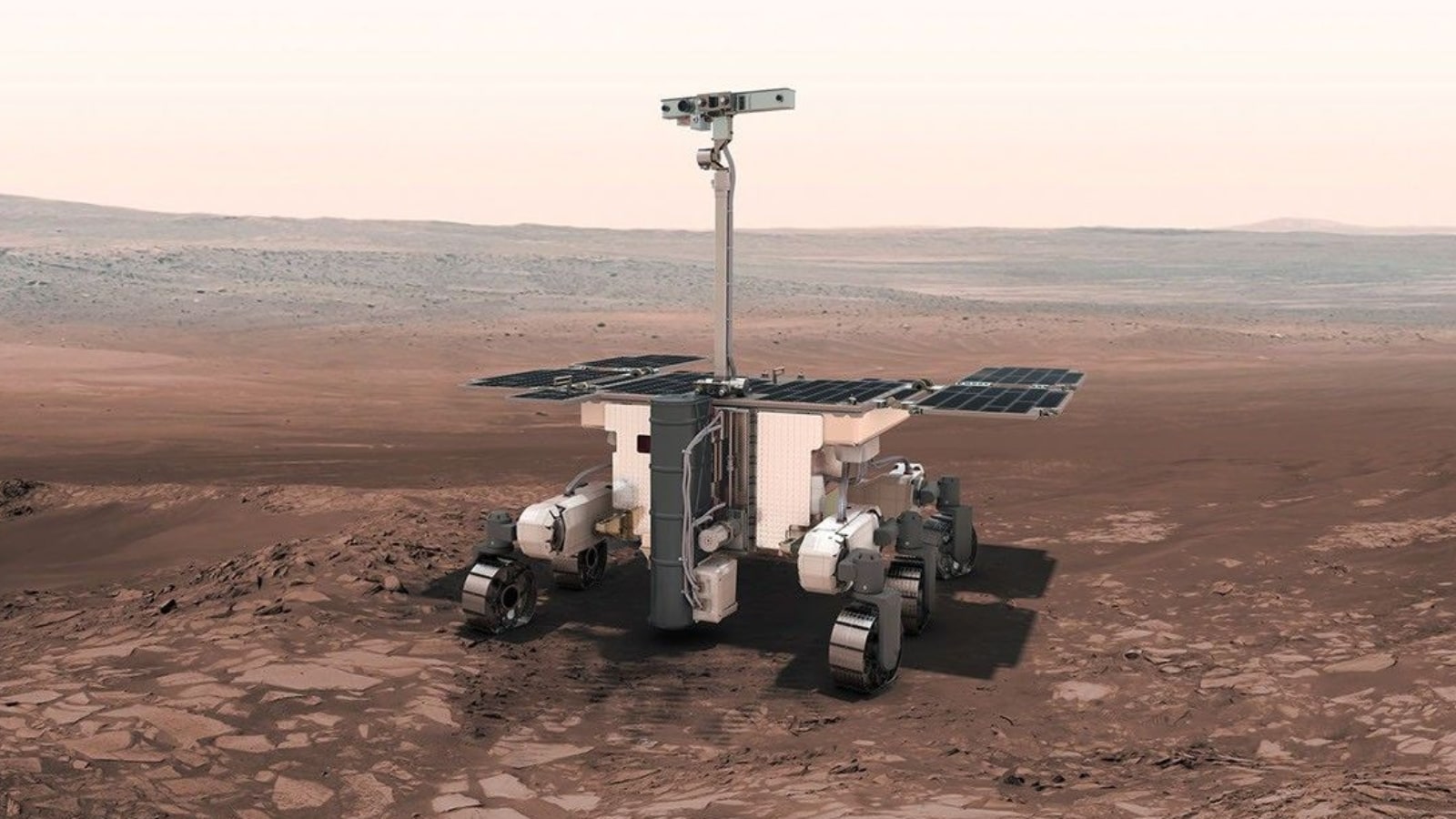
The moon is just the staging ground. The real prize, at least in the long-term imagination, is Mars. China has already successfully landed the Zhurong rover on the red planet. Their roadmap includes a crewed mission in the 2030s.
NASA’s "Moon to Mars" strategy is built on the idea that we use the moon to learn how to live off the land. We test habitats. We test life support. We figure out how radiation affects the human body over years, not just days.
If you think this is a waste of money, consider the tech we get back. Water purification, advanced medical imaging, and high-efficiency batteries all have roots in space tech. But beyond that, it’s about survival. A single-planet species is a species waiting for an extinction event.
The Economic Impact of the High Ground
Let's talk numbers. The global space economy is projected to hit $1.8 trillion by 2035, according to the World Economic Forum. That’s not just rockets. That’s data, connectivity, and resource extraction.
- Satellite Services: Expected to dominate the bulk of that revenue.
- Lunar Mining: Helium-3 for potential fusion energy is the "holy grail," though we're decades away from that being viable.
- Space Manufacturing: Making fiber optic cables or pharmaceuticals in microgravity can produce higher quality goods than on Earth.
China’s "Space Silk Road" is an extension of their Belt and Road Initiative. They want to provide the infrastructure for the rest of the world. If your country wants a weather satellite or a communications array, China will launch it, manage it, and integrate it into their ecosystem. The US is fighting to keep the "rules-based order" alive in orbit, but that requires being the dominant provider of tech and security.
What Happens When the First Base Is Built
The first permanent base will likely be a series of pressurized modules buried under lunar regolith (moon dust) to protect against radiation. It won’t be a glass dome. It will be a bunker.
The legal questions are a mess. The Outer Space Treaty of 1967 says no one can "own" the moon. But if you build a base over a specific ice-rich crater and declare a "safety zone" around it, you effectively own it. This is where the friction will happen. If a US rover gets too close to a Chinese mining site, who has jurisdiction? There are no space cops.
We’re moving into an era of "de facto" ownership. Whoever gets there first and stays there sets the rules. This is why the pace has reached a fever pitch.
Stop Waiting and Start Watching
If you want to understand where this is going, stop looking at the press releases and start looking at the launch manifests. Watch the development of the Starship HLS (Human Landing System) and the Chinese Long March 10. These are the vehicles that will decide the winner of this decade.
Don't expect a clean "finish line" like we had in 1969. There won't be a single moment where we say "it’s over." Instead, expect a slow, steady migration of hardware and people.
To stay informed, follow the updates from the Secure World Foundation for policy insights and NASA’s Artemis blog for technical milestones. The next five years will determine the power structure of the next hundred. The second space race is here, and it’s a lot more serious than the first one ever was. If we mess this up, we don't just lose a race; we might lose the chance to be a multi-planetary civilization without a war following us into the stars.