The Washington consensus is currently vibrating with the frantic energy of a freshman policy wonk who just discovered the concept of "energy chokepoints." Reports that the Trump administration is eyeing the seizure of Kharg Island—Iran's primary oil export terminal—are being treated as a masterstroke of economic warfare. The logic is seductive: cut the head off the snake, bankrupt the regime, and force a total collapse of the Islamic Republic’s regional ambitions.
It is a beautiful theory. It is also a catastrophic misunderstanding of how global energy markets, modern asymmetric warfare, and Iranian internal politics actually function.
Most analysts are looking at Kharg Island through the lens of 20th-century naval blockades. They see a static target. They see a "painless" way to exert maximum pressure without a full-scale ground war. They are wrong. Seizing Kharg Island isn't an alternative to a major conflict; it is the opening bell for a global economic depression that the West is singularly unprepared to fight.
The Myth of the Controlled Seizure
The lazy consensus suggests that the U.S. Navy can simply "park" a carrier group near Kharg, take over the facility, and turn off the tap. This assumes that Iran will play its role in a scripted drama. It won't.
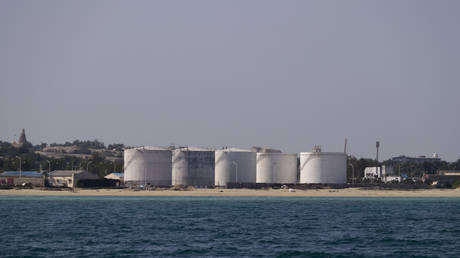
Kharg Island handles roughly 90% of Iran's crude exports. It is the jugular. If you touch the jugular, the body doesn't just go limp; it thrashes with everything it has. We are talking about a facility located just 25 miles off the Iranian coast. This is well within the range of Iran’s coastal defense cruise missiles (CDCMs), swarms of explosive-laden fast attack craft, and sophisticated drone arrays.
I have spent decades analyzing the intersection of maritime logistics and kinetic conflict. I’ve seen planners underestimate the "cost of entry" in every major Middle Eastern theater since 1991. You don't just "seize" an island in the Persian Gulf. You occupy it under a constant hail of fire.
The Mathematical Reality of the Strait of Hormuz
To hold Kharg, you must secure the entire Persian Gulf. You cannot protect a fixed asset like an oil terminal if the surrounding waters are a shooting gallery.
Consider the Strait of Hormuz. It’s the narrowest point in the Gulf, where 21 million barrels of oil pass daily. The moment a U.S. boot touches Kharg Island, the Strait becomes a dead zone. Insurance premiums for tankers would skyrocket to the point of being unpayable. We aren't just talking about Iranian oil leaving the market; we are talking about the potential loss of Saudi, Kuwaiti, and Emirati exports.
$$P_{oil} = \frac{D}{S - S_{lost}}$$
If $S_{lost}$ represents the 20% of global supply passing through Hormuz, the price of Brent crude doesn't just go to $100. It goes to a level where the global transportation industry simply stops.
Weaponizing the Iranian People (Against Us)
The "regime change" crowd argues that bankrupting Iran via Kharg will lead to a popular uprising. This ignores the most basic tenet of Iranian nationalism.
Even the most ardent anti-regime protesters in Tehran tend to be fiercely nationalistic. There is a massive difference between hating your government and supporting a foreign power seizing your sovereign soil and resources. A military move on Kharg would provide the IRGC (Islamic Revolutionary Guard Corps) with the ultimate "rally 'round the flag" moment.
It transforms a failing ideological regime into a defender of the motherland. It silences the domestic opposition. We saw this during the Iran-Iraq War; external aggression is the only thing that consistently glues the Iranian populace to the clerical establishment.
The China Factor: Our Debt, Their Oil
Washington likes to pretend it operates in a vacuum. It doesn't.
China is the primary customer for Iranian "teapot" refinery exports. They rely on this discounted oil to fuel their industrial base and manage their own internal economic cooling. If the U.S. seizes Kharg, we aren't just attacking Iran; we are effectively declaring an economic blockade against China.
Do we really think Beijing will sit idly by while we cut off their energy supply?
- Cyber Warfare: Expect immediate and devastating attacks on U.S. utility grids and financial clearinghouses.
- The Strait of Malacca: China could retaliate by harassing shipping lanes vital to U.S. allies like Japan and South Korea.
- Treasury Dumping: The threat of liquidating U.S. debt holdings becomes a live grenade.
Seizing an island in the Gulf is a local tactical move with global strategic consequences that the U.S. is currently unable to mitigate.
The Fragility of Oil Infrastructure
Let’s talk about the technical nightmare. Kharg Island is an aging, complex network of jetties, storage tanks, and pumping stations. It is not a light switch.
If Iran realizes they are losing the island, they won't leave it intact. They will sabotage the infrastructure. We are talking about scorched-earth tactics that would make the 1991 Kuwaiti oil fires look like a backyard barbecue.
The environmental disaster alone would shut down desalination plants across the Persian Gulf, depriving millions of people in the UAE, Qatar, and Saudi Arabia of drinking water. You don't "seize" a prize that has been turned into a pile of twisted, burning metal and a massive oil slick.
The "Invisible" War: Asymmetric Escalation
The biggest mistake in this "seize Kharg" fantasy is the belief that the conflict remains localized. Iran has spent 40 years building a "Ring of Fire" via proxies.
- Hezbollah has 150,000 rockets pointed at Israel.
- The Houthis can already shut down the Red Sea at will.
- Militias in Iraq can target U.S. bases with impunity.
If we take Kharg, Iran doesn't have to beat the U.S. Navy in a fair fight. They just have to burn the neighborhood down. The "cost-to-kill" ratio favors the asymmetric actor. A $20,000 Shahed drone can disable a multi-billion dollar facility. A $50,000 naval mine can cripple a destroyer.
Better Data, Harder Truths
Look at the numbers. The U.S. Strategic Petroleum Reserve (SPR) is at its lowest level in decades. We have no cushion.
| Metric | Status | Impact of Kharg Seizure |
|---|---|---|
| Global Spare Capacity | Minimal | Any disruption triggers immediate price spikes |
| U.S. SPR Levels | Critically Low | We cannot buffer the domestic market against $150 oil |
| Tanker Availability | Tight | Insurance hikes will freeze maritime trade |
| Regional Stability | Volatile | Guaranteed multi-front proxy war |
The "insider" view being whispered in DC is that this is a leverage play. A threat to force Iran to the table. But threats only work if the other side believes you are rational. Seizing Kharg Island is not the act of a rational superpower; it is the act of a desperate one.
The Logistics of Failure
To hold Kharg, you need an army of occupation. You need constant resupply through contested waters. You need to provide air cover 24/7 against an enemy that is only minutes away.
I’ve watched the U.S. military try to "secure" territory in the Middle East for a quarter-century. It always takes more men, more money, and more time than the PowerPoint decks suggest. Kharg is a stationary target in a sea of hidden threats. It is a liability, not an asset.
If the goal is to stop Iranian influence, seizing a piece of dirt is the least effective way to do it. It exhausts our treasury, enrages our allies, and gives our enemies a focused point of attack.
The people advocating for this move are the same ones who thought Iraq would be a "cakewalk" and that "maximum pressure" would have Tehran begging for a deal by 2019. They were wrong then, and they are dangerously wrong now.
You don't win a game of chess by knocking over the board and setting the table on fire. You win by outmaneuvering the opponent's pieces. Seizing Kharg is just lighting the match.
Stop looking for the "one weird trick" to solve the Middle East. It doesn't exist. There is no tactical shortcut to a strategic problem. Seizing the island doesn't end the threat; it feeds it.
Go ahead. Take the island. Just don't act surprised when the world burns down around you.