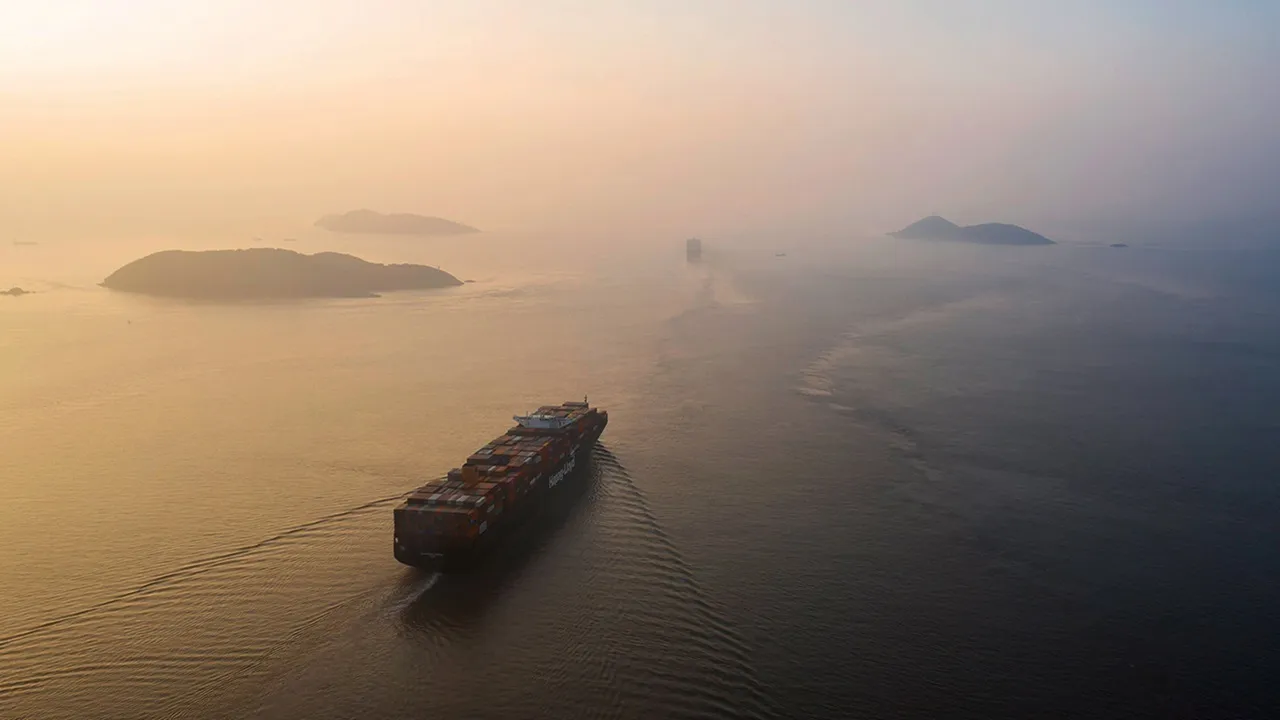
A single, jagged piece of rock sits in the turquoise shallows of the Persian Gulf. It is barely six kilometers long. From a bird’s-eye view, it looks like a teardrop or perhaps a seed. To the men who work the rusting valves and to the analysts in glass towers in Manhattan, it is simply Kharg Island. It is a place most people will never visit, yet it is the invisible heartbeat of your morning commute, your grocery bill, and the temperature of your living room.
If that heartbeat stops, the world catches a cold. If it is silenced by fire, the world enters a fever.
JP Morgan recently sharpened its pencils to calculate the cost of a nightmare. They weren't looking at spreadsheets in a vacuum; they were looking at the escalating shadow boxing between Israel and Iran. The math is cold, but the reality is sweating. Should a conflict lead to the seizure or destruction of Kharg Island, the global oil market wouldn't just fluctuate. It would fracture.
We are talking about a potential leap to $100 a barrel. Perhaps higher. But numbers like "one hundred dollars" have a way of sliding off the brain. They feel like abstract scores in a game played by billionaires. To understand the stakes, you have to look at the tankers.
The Bottleneck of the World
Imagine a giant funnel. Into the wide top, you pour the vast, ancient wealth of the Iranian oil fields—millions of barrels of crude gathered from across the plateau. At the very bottom of that funnel, the narrowest point through which everything must pass, sits Kharg. Over 90% of Iran’s oil exports flow through this tiny patch of earth. It is the most concentrated point of energy vulnerability on the planet.
For decades, this arrangement worked because of a tense, unspoken equilibrium. Iran needed the cash; the world needed the oil. But equilibrium is a fragile thing when missiles start flying.
If the US or Israel decides that the only way to decapitate the Iranian economy is to plug that funnel, the immediate result is the disappearance of roughly 1.7 million barrels of oil per day from the global supply. You might think, well, the world produces about 100 million barrels a day, surely we can find a spare two percent?
It doesn't work that way. The global oil market is a high-stakes game of musical chairs played at 1,000 miles per hour. Every barrel is already spoken for. Every refinery is tuned to a specific "flavor" of crude. When 1.7 million barrels vanish overnight, there is no empty chair. Someone—likely a buyer in China or India—suddenly has nothing to refine. They go to the open market, desperate. They outbid the next person. The price doesn't go up linearly; it explodes.
The Invisible Tax on Everything
Consider a hypothetical woman named Elena. She lives in a suburb of Madrid, or maybe a small town in Ohio. She doesn't follow Middle Eastern geopolitics. She doesn't know where the Strait of Hormuz is. But she knows that it suddenly costs twenty dollars more to fill her tank.
When oil hits $100, it acts as a universal regressive tax. It doesn't just hit the gas pump. It hits the plastic in her children's toys. It hits the fertilizer used to grow the wheat for her bread. It hits the shipping costs for every single item delivered to her doorstep.
JP Morgan’s analysts aren't just being alarmist. They are acknowledging a fundamental truth about our modern existence: we are all tethered to that small island in the Gulf by a thousand invisible threads. When those threads are cut, the fabric of the global economy begins to unravel at the edges.
The "oil shock" isn't a headline. It’s a quiet crisis in a kitchen where a father wonders if they can afford the heater this month. It’s a small trucking company in Nebraska realizing their margins have just evaporated into the exhaust of their own fleets.
The Shadow of 1973
History isn't a straight line, but it does rhyme. We have seen this movie before, and the ending was a decade of stagflation. In the 1970s, an embargo turned the lights out in Christmas displays and created lines at gas stations that stretched for miles. Back then, the world realized how much power sat in the hands of those who controlled the taps.
Today, we like to pretend we are different. We talk about the "energy transition." We point to the fields of shimmering solar panels and the silent hum of electric cars. We tell ourselves we have moved on.
We haven't.
The "ghost" of those six million barrels—the spare capacity that the world used to rely on—is thinning. While Saudi Arabia holds some ability to ramp up production, it isn't a magic wand. You cannot simply flip a switch and replace the specific heavy crude that flows from Kharg. There is a lag. A gap. And in that gap, panic lives.
Panic is the most expensive commodity in the world.
The Mechanics of a Crisis
Let’s look at the actual scenario being whispered about in the halls of power. A "seizure" of Kharg Island isn't just a naval maneuver. It is a total blockade of a sovereign nation’s primary windpipe.
In this scenario, Iran doesn't just sit back. Their most potent weapon isn't a nuclear warhead; it’s the ability to make the rest of the world suffer as much as they do. If Kharg goes dark, the Strait of Hormuz likely follows.
The Strait is the most important chokepoint in the global oil trade. Nearly 20 million barrels of oil pass through it every day. That is twenty percent of the world’s consumption. If Kharg is the funnel, Hormuz is the door. If that door is slammed shut, $100 oil will look like a bargain. We would be staring into the abyss of $150 or $200 oil.
At those prices, the "recession" isn't a possibility; it’s a mathematical certainty. Airlines stop flying. Factories go dark. The delicate, just-in-time delivery systems that keep our grocery shelves stocked begin to stutter and fail.
The Human Cost of Strategy
War is often discussed in terms of "assets" and "targets." Kharg Island is an "asset." Its destruction is a "strategic objective."
But "strategic objectives" have a way of bleeding into the lives of people who never asked for a fight. For the Iranian people, the loss of Kharg would mean the total collapse of their currency and the disappearance of basic medicines and food imports. It would be a humanitarian catastrophe of the first order.
For the rest of the world, it represents a sudden, violent shift in the cost of living that could topple governments and ignite civil unrest. We saw what happened when gas prices spiked a few years ago. Now, imagine that spike amplified by a factor of three, with no end in sight.
The analysts at JP Morgan are paid to be dispassionate. They use terms like "downside risk" and "supply-side disruption." But beneath those sanitized phrases lies a volatile truth: our entire civilization is built on the assumption of cheap, flowing energy. We are a house of cards built on a foundation of oil.
The Fragility of the Status Quo
There is a certain arrogance in modern financial planning. We assume that the "global order" will always find a way to right itself. We assume that cooler heads will always prevail because the alternative is too expensive.
But history is a graveyard of "too expensive" decisions.
If you listen closely to the rhetoric coming out of the region, the language of economic pragmatism is being replaced by the language of existential survival. When a nation feels it has nothing left to lose, it stops caring about the price of a barrel of oil in London.
The danger of the Kharg Island scenario isn't just the immediate loss of oil. It is the permanent shattering of the illusion of security. Once a major energy hub is taken off the board, the risk premium on every other hub in the world goes up. Investors pull back. Insurance rates for tankers skyrocket. The "peace dividend" we have been spending for decades is officially exhausted.
Beyond the Spreadsheet
We are currently living in the "before" times. We are in the moment where the clouds are gathering, but the first raindrop hasn't hit the ground yet.
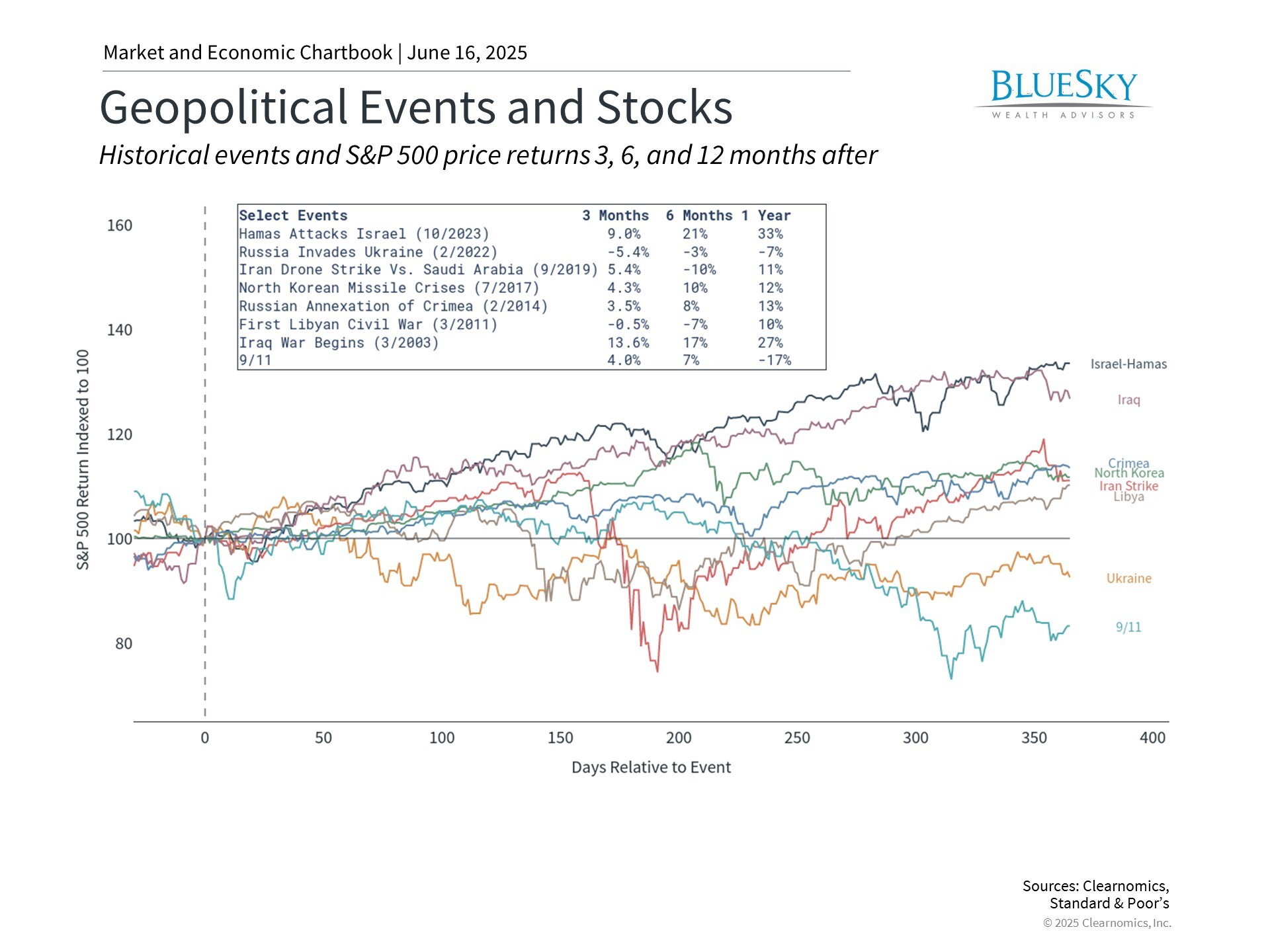
You can see it in the way the markets twitch every time a headline mentions a new drone strike or a naval movement. We are all waiting. We are waiting to see if the world’s most dangerous bottleneck will be squeezed.
JP Morgan isn't predicting the future; they are mapping the minefield. They are telling us that we are walking through a space where one wrong step changes everything.
The story of Kharg Island isn't about oil. It's about the terrifyingly thin line between a functioning society and a world in chaos. It’s about how a tiny island, inhabited mostly by birds and workers in greasy coveralls, holds the keys to the kingdom.
When you look at the price of oil tomorrow, don't just see a number. See the island. See the tankers waiting in the heat. See the fragility of the world we’ve built, and how quickly it could all turn to smoke.
The ghost of those six million barrels is haunting the market, and it hasn't even left the pipes yet.