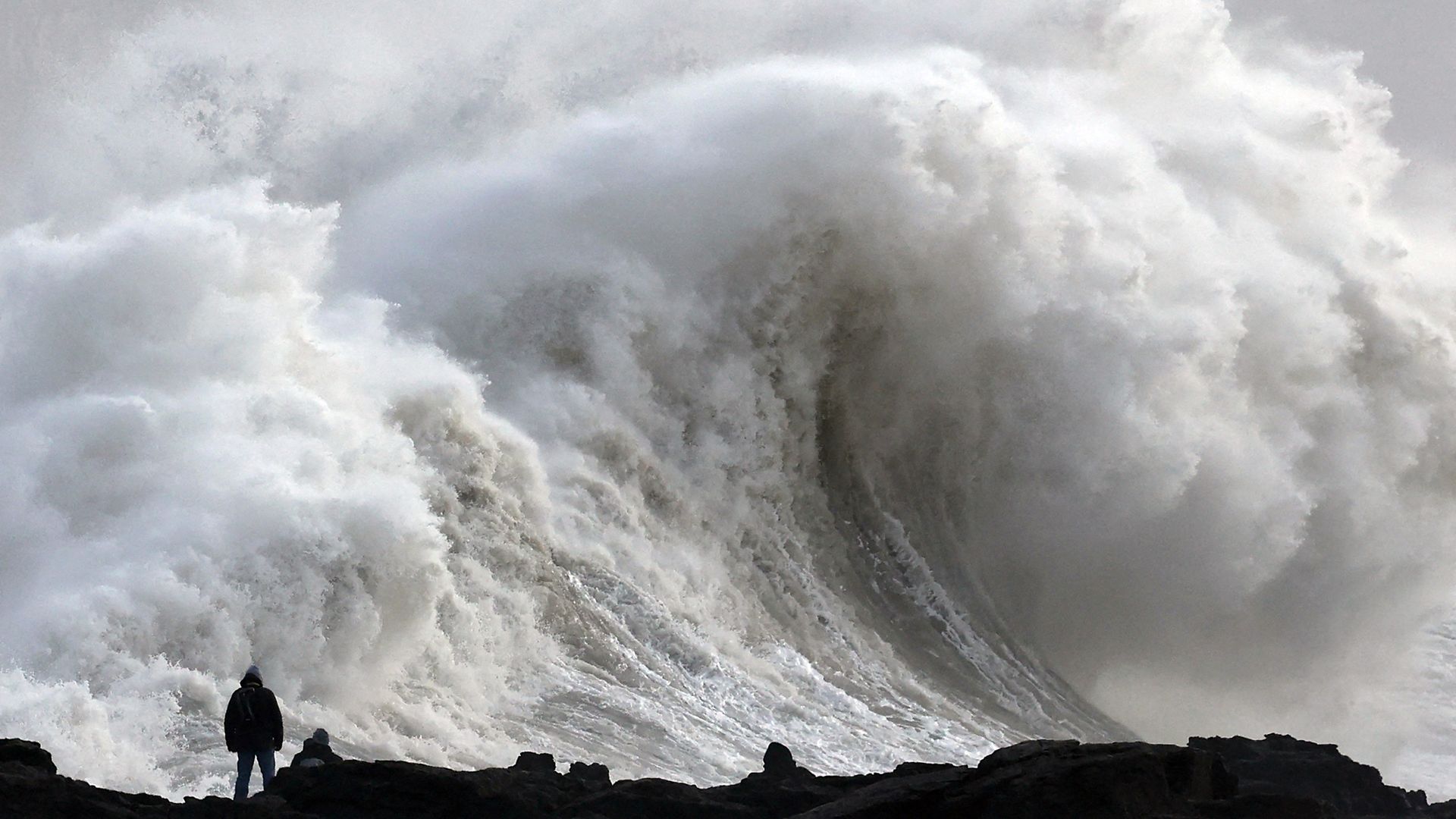
The Met Office just received a list of naming suggestions for the next storm season, and it reads like the bargain bin of a 2005 DVD store. Elon Gust? Dame Judi Drench? We’ve reached peak peak-irony. We are treating multi-billion-dollar natural disasters like a primary school creative writing project. It is cute. It is British. It is also an absolute failure of risk communication that treats life-threatening meteorological events as a quirky bit of social media engagement.
The "lazy consensus" among meteorologists and public safety officials is that naming storms makes them more "relatable" and "memorable." They claim that giving a low-pressure system a human name like "Storm Kathleen" helps people prepare. They are wrong. In fact, they are dangerously wrong. When you anthropomorphize a weather system with a pun, you strip away the visceral reality of 100mph winds. You turn a threat into a meme. Also making headlines in this space: NYC Snow Days Are a $500 Million Marketing Lie.
The Pun-to-Body-Count Ratio
We have been naming storms in the UK and Ireland since 2015. The logic was simple: give a storm a name, and people will track it on Twitter. It worked. People track the name, but they don't respect the wind.
A 2014 study from the University of Illinois suggested that female-named hurricanes were deadlier because people perceived them as less "aggressive" than male-named ones. While that specific data has been debated by every statistician with a laptop, the underlying psychological truth remains: names carry baggage. Further insights into this topic are detailed by Glamour.
When the Met Office filters through "Elon Gust," they aren't just being funny; they are inviting a specific type of cognitive bias. We don't fear an "Elon." We argue with an "Elon" on the internet. We don't seek shelter from a "Judi Drench." We buy tickets to see her play a monarch in a period piece.
The Commercialization of Chaos
If we are going to turn our weather into a circus, let’s at least make the circus pay for the tent. The current system is a missed revenue opportunity of epic proportions.
Instead of crowdsourcing puns from bored office workers in Slough, we should be auctioning off storm names to the highest bidder. Imagine Storm ExxonMobil or Storm British Airways.
I’ve seen local councils blow millions on "awareness campaigns" for flood defenses that nobody reads. If a storm is named after a major insurance provider, the "awareness" is baked into the brand. It creates a direct, psychological link between the disaster and the financial cost of the damage.
"But that’s tasteless," you say.
Is it more tasteless than a pun while someone's roof is being ripped off? The Met Office is a taxpayer-funded entity. In an era where every bridge and stadium is sponsored by a betting app or a tech giant, why are we leaving the branding of our most significant national events to the whims of the public's "wit"?
The "Relatability" Trap
The "People Also Ask" section of any search engine regarding storm names usually looks like this: "Who decides the storm names?" and "Why are storm names so common?"
The answer to the first is: a committee of people who are terrified of appearing "out of touch."
The answer to the second is: because it’s easier to market a person than a pressure gradient.
The reality is that storm naming is a distraction from the actual science. We have replaced $P_a$ (pascals) and $v$ (velocity) with personalities. We have replaced the Beaufort scale with a baby name book.
Consider the fluid dynamics of a standard Atlantic depression. The energy released by a mid-latitude cyclone can be equivalent to several nuclear explosions. The physics involved—Coriolis force, latent heat release, and baroclinic instability—are terrifying.
$E = \int \int \int \rho ( c_v T + gz + \frac{1}{2} v^2 ) , dV$
That is the energy of the system. That is what kills people. That is what destroys infrastructure. When you label that equation "Storm Nigel," you aren't "demystifying" the weather; you are lobotomizing the public's perception of risk. You are telling them that the atmospheric monster outside is just a guy who likes beige sweaters and puzzles.
Infrastructure over Influence
I have spent years working with logistics firms that lose millions every time the wind hits 60 knots. Do you know what they don’t care about? Whether the storm has a "fun" name. They care about the probability of the bridge closing and the reliability of the gust sensors.
The Met Office’s "Name our Storms" campaign is a masterclass in bureaucratic "busy work." It creates the illusion of public participation while doing absolutely nothing to improve the resilience of our power grid or the drainage capacity of our cities. It is the "Live, Laugh, Love" sign of disaster management.
We should be moving toward a severity-based naming convention.
- Storm Level 1: Alpha (Mild inconvenience)
- Storm Level 5: Omega (Stay in your house or you will die)
Instead, we have "Storm Bob."
Bob doesn’t sound like he’s going to flood your basement. Bob sounds like he’s coming over to borrow a lawnmower and stay for a beer. This "friendliness" is a liability. It creates a false sense of security that results in people walking their dogs on coastal piers during a surge because "it’s just Storm Bob."
The Counter-Intuitive Truth
The best way to save lives isn't to make the weather more "human." It’s to make it more alien.
We need to remind people that the atmosphere is a chaotic, indifferent system that doesn't care about their commute. By giving it a human name, we give it a human ego. We subconsciously expect it to behave with a modicum of human reason. It won't.
If we want to fix the "storm name" problem, we need to stop asking the public for their input. The public is terrible at risk assessment. The public wants puns. The government’s job is to provide safety, not entertainment.
We are currently treating the climate crisis like a reality TV show where we get to vote on the contestants. The storm doesn't care if you voted for it. The storm doesn't care if its name is a pun.
If you want people to take the weather seriously, start by treating it with the cold, clinical respect it deserves. Stop the puns. Stop the voting. Start naming storms after the projected cost of their damage in GBP.
Storm Five Billion has a much better ring to it if you actually want people to buy sandbags.
Stop asking for "Elon Gust." Start asking for better sea walls. If the Met Office wants to be helpful, they should delete the suggestion box and buy a bigger supercomputer.
The next time the wind starts howling, you won't be saved by a clever play on words. You'll be saved by the physics you ignored while you were busy laughing at a Dame Judi Drench meme.
Go buy a generator and stop tweeting at the weather.