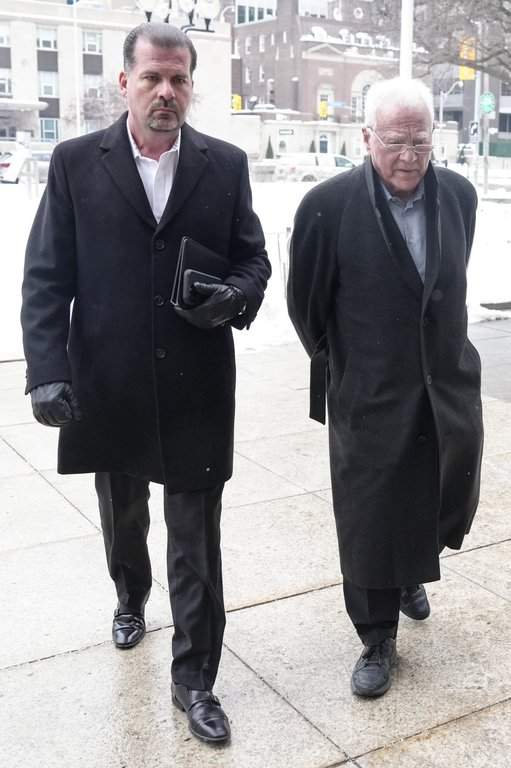
The media is currently obsessed with the optics of a billionaire in a courtroom. They are following the script: the fallen titan, the brave accusers, the salacious details of a decades-long timeline. But if you are watching the Frank Stronach sexual assault trial to see a moral reckoning, you are looking at the wrong map.
The defense is about to start making its case, and the "lazy consensus" suggests they will try to prove these events never happened. They won't. They shouldn't. In a high-stakes criminal trial involving historical allegations, "proof" is a red herring. The defense’s job isn’t to build a statue of a saint; it’s to set fire to the prosecution's paper-thin bridge of memory.
The Memory Trap
Most people believe that memory works like a video camera. You press play, and the truth unfolds. This is the first lie. Science, specifically the work of Dr. Elizabeth Loftus, has demonstrated for decades that memory is malleable, reconstructive, and prone to "contamination" from external information.
When the defense steps up, they aren't just attacking the accusers; they are attacking the biological limits of the human brain. We are talking about allegations spanning from the 1970s to the 2020s. Think about what you had for lunch three weeks ago. Now, try to recall the specific wording of a conversation from 1984 without being influenced by every news cycle, podcast, and social media post you’ve consumed since then.
The prosecution relies on the emotional weight of "believability." The defense relies on the mathematical certainty of "unreliability."
The Wealth Tax on Justice
There is a pervasive narrative that Stronach’s wealth buys him an unfair advantage. It buys him a top-tier legal team, certainly—Greenspan Partners doesn't work for exposure. But wealth in a trial of this nature is a double-edged sword that the public refuses to acknowledge.
In the court of public opinion, a billionaire starts with a "guilt surcharge." The assumption is that power always corrupts, so the acts must have occurred. The defense has to combat a structural bias where the defendant's success is used as circumstantial evidence of his capability for predation.
The Logic of the "Why Now"
The standard counter-argument to historical allegations is to ask: "Why did they wait?"
The "lazy consensus" says this question is victim-blaming. The contrarian truth is that the question is legally essential. Not because victims aren't afraid—they often are—but because the passage of time destroys a defendant’s ability to provide an alibi.
If someone accuses you of an assault that happened on a Tuesday in 1992, how do you prove where you were? You can't. Your calendar is gone. Your witnesses are dead. Your receipts are dust. The defense will highlight that the "delay" isn't just a psychological hurdle for the accuser; it is a tactical vacuum that sucks the oxygen out of the right to a fair trial.
Dismantling the Pattern Narrative
The prosecution wants to stack these cases like bricks to build a wall of "similar fact evidence." They want the judge to see a pattern.
The defense’s most surgical move will be to isolate each brick. If you can show that Case A has a factual inconsistency, and Case B relies on a witness with a documented grudge, the "wall" doesn't just crack—it vanishes. The legal threshold isn't "Does this look bad?" It is "Is there any other logical explanation for this specific piece of evidence?"
The Reality of the "He Said, She Said"
We are told this phrase is a relic of a sexist past. In reality, it is the fundamental state of most human interactions.
When the defense begins, expect a masterclass in forensic cross-examination. They won't call the accusers liars; that’s a rookie mistake that alienates the bench. Instead, they will find the "anchors"—dates, locations, specific weather patterns, or public events—and show where the testimony drifts away from the recorded history.
The High Cost of Reasonable Doubt
Is it possible for a man to be both a visionary who built Magna International and a person who committed these acts? Absolutely. But the "industry insider" view of the legal system knows that "possible" is not "guilty."
The defense is going to exploit the gap between what we feel happened and what the prosecution can prove happened. In a case this old, that gap is a canyon.
Stop looking for a hero or a villain. Start looking for the inconsistencies in the calendar. The defense isn't looking for the truth; they are looking for the exit.
If you want to understand the actual mechanics of this trial, look past the headlines and ask yourself: if you were accused of a conversation you had 40 years ago, could you defend yourself?
Probably not. And that is exactly what Stronach’s lawyers are going to bet on.
Go back and read the transcripts from the first week. Don’t look at the emotions. Look at the dates. See if they align with the travel records. That is where the case will be won or lost.
Would you like me to analyze the specific legal precedents for historical sexual assault cases in Canada to see how they might apply here?