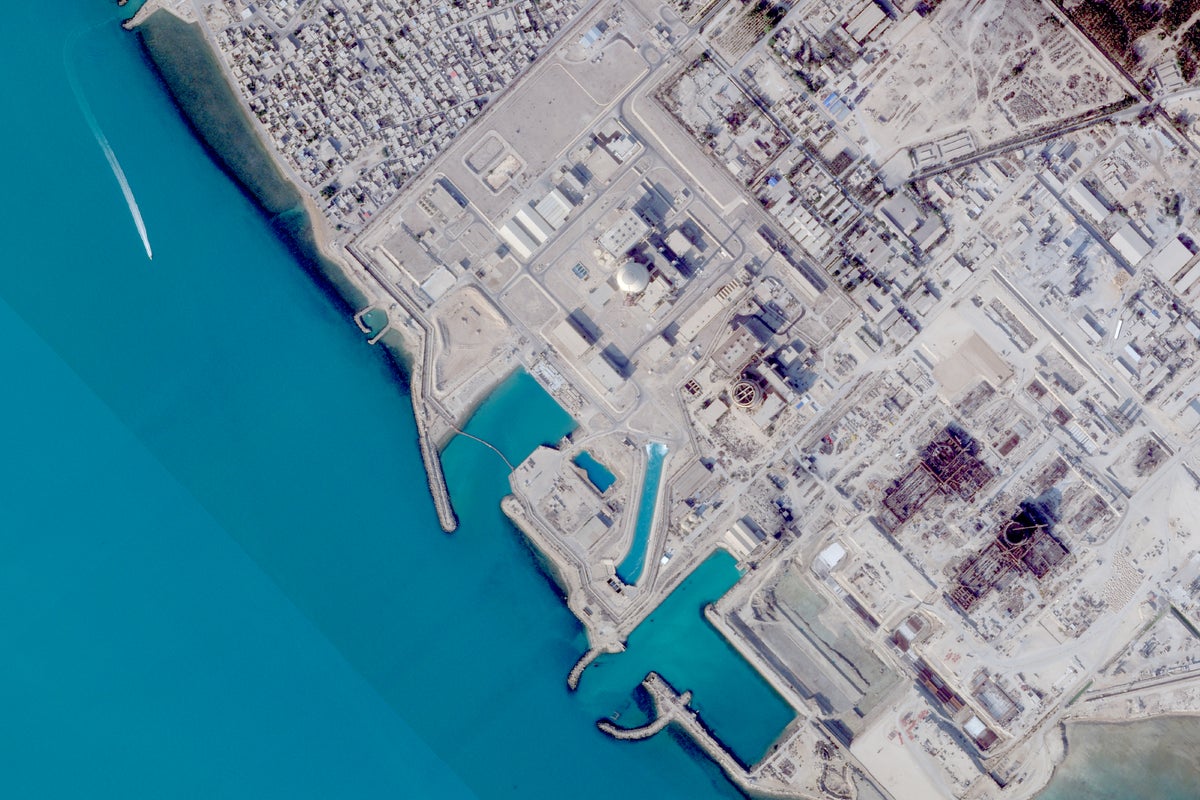
The operational integrity of the Bushehr Nuclear Power Plant (BNPP) represents the single most significant point of convergence between Iran’s energy infrastructure and its national security architecture. When reports emerge of projectiles or kinetic activity within the proximity of such a facility, the primary analytical concern is not merely the immediate physical damage, but the intersection of containment physics, radiological risk thresholds, and the geopolitical escalation ladder. Understanding the implications of a strike on Bushehr requires a deconstruction of the plant’s unique VVER-1000 pressurized water reactor (PWR) design and its placement within a high-stakes maritime and military environment.
The Triad of Reactor Vulnerability
Assessing the impact of a kinetic event at a nuclear facility requires categorizing risks into three distinct structural pillars: the containment shell, the cooling synchronization, and the spent fuel storage.
1. The Primary Containment Boundary
The Bushehr-1 reactor employs a reinforced concrete containment structure designed to withstand internal pressure spikes and external impacts. However, the efficacy of this shell is contingent upon its ability to remain hermetic. A projectile impact introduces variables that standard safety assessments often overlook:
- Spallation and Scabbing: Even if a projectile does not penetrate the wall, the shockwave can cause the inner surface of the concrete to break off (spall), potentially damaging internal circulation pumps or control rod mechanisms.
- Structural Resonance: High-velocity impacts can induce vibrations that compromise the seals of the primary coolant loop, leading to a Loss of Coolant Accident (LOCA) without a direct breach of the reactor vessel itself.
2. The Cooling Synchronization Dependency
A nuclear reactor does not "turn off" like a gas turbine. Even after a successful SCRAM (emergency shutdown), decay heat continues to be generated by the fission products. This heat must be removed continuously to prevent fuel cladding failure and subsequent meltdown. The vulnerability here is rarely the reactor core itself, but the "Balance of Plant" (BoP):
- External Power Supply: The facility relies on the 400kV and 230kV grids to power cooling pumps. If a projectile strikes the switchyard or the backup diesel generator housings, the facility enters a "station blackout" scenario.
- Ultimate Heat Sink: Bushehr utilizes seawater from the Persian Gulf for cooling. Damage to the intake structures or the pumping stations creates a terminal cooling failure, regardless of the reactor's structural state.
3. Spent Fuel Pool (SFP) Risk Profile
The SFP often represents a higher radiological risk than the reactor core during an active conflict. Unlike the core, which is encased in a heavy pressure vessel and a thick containment dome, spent fuel pools are often housed in less robust structures.
- Density of Radioactive Inventory: SFPs contain years of accumulated fuel assemblies.
- Zirconium Fire Risk: If a strike causes the pool to drain, the zirconium cladding on the fuel rods can ignite upon exposure to air, creating a plume of radioactive isotopes that is significantly harder to contain than a localized reactor leak.
The Logistics of the Bushehr Hybrid Design
Bushehr is a technological hybrid, combining German Siemens-KWU foundations (started in the 1970s) with Russian Atomstroyexport VVER-1000 technology. This hybridization creates specific maintenance and safety bottlenecks.
The integration of Russian nuclear steam supply systems into a site originally designed for Western specifications necessitated "adapter" engineering. This complexity increases the Mean Time To Repair (MTTR) for critical components. In the event of damage to the secondary loop—where steam is converted to electricity—the replacement of specialized turbines or heat exchangers is not a simple procurement task. It requires deep-tier coordination with Russian state-corporation Rosatom, which is currently navigating its own international sanctions and logistical constraints.
Kinetic Calculus: Intent vs. Collateral Damage
When analyzing reports of projectiles hitting a nuclear complex, the distinction between a targeted strike on critical infrastructure and collateral damage from air defense systems is paramount.
Air Defense Saturation and Interception Shrapnel
Iran protects Bushehr with a multi-layered Integrated Air Defense System (IADS), including S-300 batteries and domestic variants like the Bavar-373.
- Kinetic Interception: When an interceptor hits an incoming drone or missile, the resulting debris field can cover several square kilometers.
- Primary vs. Secondary Damage: Shrapnel might not penetrate a concrete dome, but it can easily shred the delicate cooling fins of backup transformers or puncture thin-walled chemical storage tanks necessary for water chemistry control.
The Escalation Ladder of "Near-Miss" Events
A strike on the complex—even if it hits an auxiliary parking lot or an administrative building—serves as a "signal flare" in international relations. It demonstrates a breach of the exclusion zone. For the operator, the immediate protocol is not just damage assessment but a comprehensive audit of the seismic and vibration sensors throughout the primary loop to ensure no hairline fractures were induced in the high-pressure piping.
Radiological Dispersion Models and Local Geography
The geography of the Bushehr province dictates the consequence of any containment failure. The plant is situated on a peninsula, meaning any atmospheric release is heavily influenced by the Persian Gulf’s diurnal wind patterns (land and sea breezes).
- Onshore Flow: During the day, winds typically blow from the sea toward the land, potentially carrying particulates toward the city of Bushehr (population ~220,000) and further inland toward the Zagros Mountains.
- Offshore Flow: At night, the breeze shifts, which would carry a plume over the Gulf, potentially affecting maritime shipping lanes and the desalinated water supplies of neighboring Gulf states like Kuwait and the UAE.
The economic fallout of even a non-lethal radiological "scare" would be catastrophic for the regional fishing and desalination industries, which provide the majority of the potable water for the Arabian Peninsula.
Operational Constraints and the "Red-Line" Threshold
Iran’s nuclear regulatory framework operates under intense scrutiny from the IAEA. However, the physical security of the site is managed by the Islamic Revolutionary Guard Corps (IRGC). This dual-command structure can lead to information delays during a kinetic event.
The "Red-Line" for Bushehr is not a single point but a series of cascading failures:
- Level 1: Breach of the perimeter/auxiliary buildings (Low immediate risk, high psychological impact).
- Level 2: Loss of off-site power (High risk, manageable if backup systems engage).
- Level 3: Damage to the seawater intake or pumping station (Critical risk, requires immediate reactor shutdown).
- Level 4: Breach of the primary containment or SFP (Catastrophic risk).
Reports of projectiles hitting the "complex" usually fall into Level 1 or 2. However, the structural aging of the original 1970s concrete foundations—which were exposed to the elements for decades before the Russian completion—means the facility may have lower tolerances for shock and vibration than a modern, purpose-built VVER-1000 site.
Strategic Recommendation for Risk Mitigation
The stability of the Bushehr site depends on a shift from reactive defense to proactive redundancy. For regional stakeholders and the facility operators, the priority must be the "Hardening of the Boring."
Energy analysts and security consultants should focus on the following maneuvers:
- Decentralization of Backup Power: Moving diesel generators into subterranean, hardened bunkers separate from the main turbine hall to ensure that a single "lucky strike" on a switchyard does not lead to a station blackout.
- International Transparency on Seismic Data: Following any kinetic event, Iran should allow for the immediate remote transmission of seismic and structural integrity data to international monitors. This prevents "information vacuums" that lead to market volatility and regional panic.
- Regional Desalination Contingency: Gulf states must treat a potential Bushehr failure as a "High Impact, Low Probability" (HILP) event by accelerating the construction of inland brackish water desalination and strategic water reserves.
The strategic play is to decouple the survival of the reactor from the survival of the grid. Until the cooling systems are functionally independent of the surface-level infrastructure, the Bushehr plant remains a glass jaw in the regional security architecture.
Would you like me to generate a detailed radiological plume model based on the prevailing March wind patterns in the Persian Gulf?