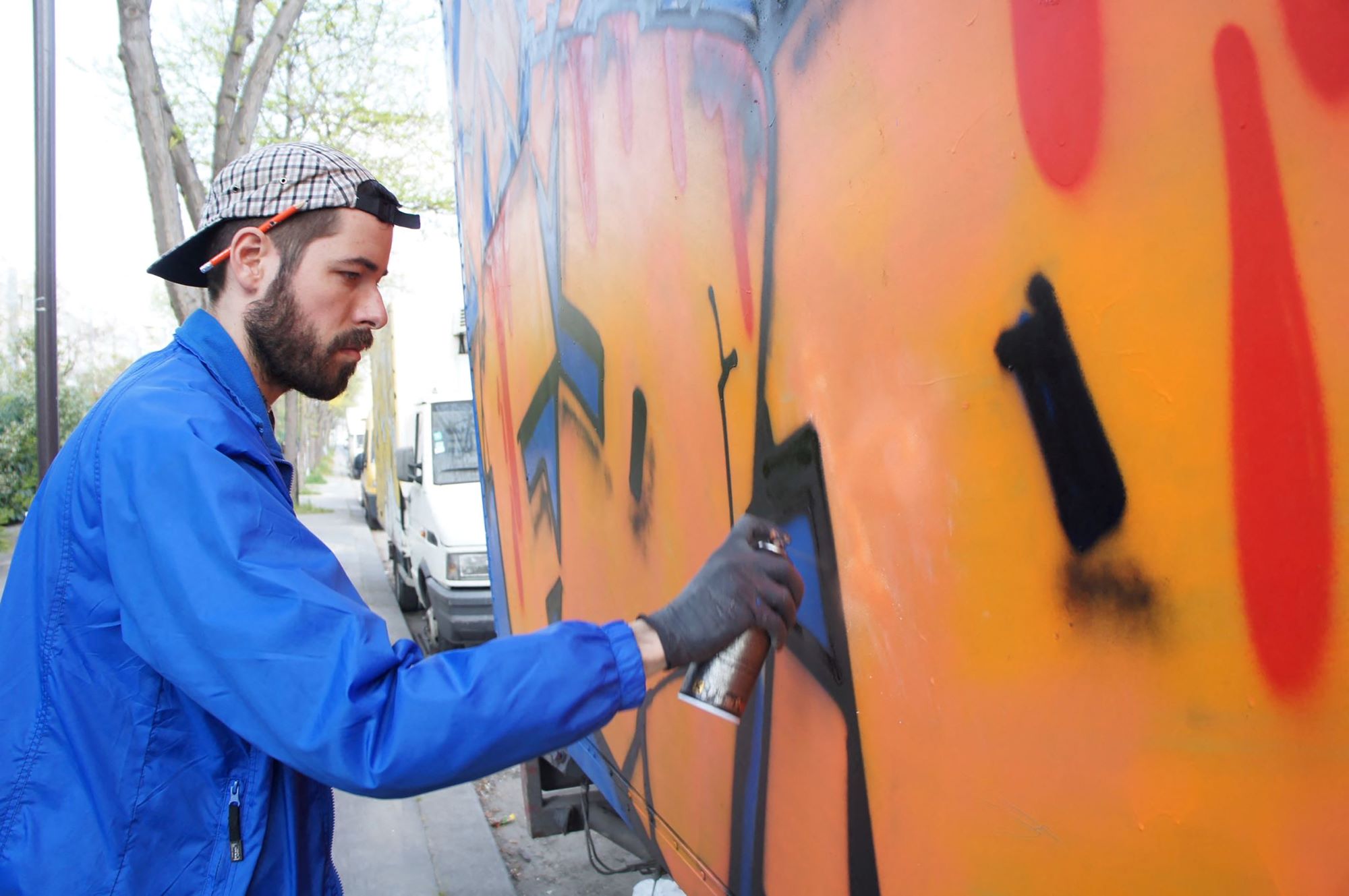
Théo Clerc did not go to Baku to dismantle a government or steal state secrets. He went to paint. But in a legal system increasingly used as a blunt instrument of foreign policy, the distinction between a street artist and a professional intelligence operative has effectively vanished. A court in Azerbaijan recently sentenced the 38-year-old French national to three years in prison, later escalated to a staggering ten-year term on charges of espionage. This is not merely a case of a tourist overstepping local laws. It is a calculated signal from the Aliyev administration that Western bodies are now tradable commodities in a deteriorating diplomatic standoff with Paris.
The core of the issue lies in the total collapse of Franco-Azerbaijani relations following the 2023 offensive in Nagorno-Karabakh. As France increased its military and political support for Armenia, Baku responded by tightening the noose on French interests within its borders. Clerc’s detention is the physical manifestation of this friction. While his legal team and family maintain his innocence, insisting he was targeted for nothing more than graffiti in the Baku subway, the state's narrative has shifted toward a broader, more sinister conspiracy.
The Graffiti Pretext and the Intelligence Pivot
In the early stages of the case, the narrative appeared straightforward, if harsh. Clerc and two other foreigners—a New Zealander and an Australian—were detained for allegedly spray-painting subway cars. For many travelers, this would result in a fine, a short stint in a holding cell, and a swift deportation. Indeed, Clerc’s companions were merely fined and released. Clerc, however, was held back.
The disparity in treatment was the first red flag. There is no logistical or legal reason why three people committing the same act of vandalism would face such wildly different outcomes, unless the nationality of one of those individuals held specific value. By upgrading the charges from "damage to property" to "espionage," the Azerbaijani prosecutor's office moved the case out of the realm of petty crime and into the murky waters of national security.
This pivot allows the state to bypass standard transparency. Once a case is labeled as espionage, evidence can be classified, hearings can be closed to the public, and the "security of the state" becomes a catch-all justification for procedural irregularities. For a veteran analyst, this pattern is familiar. It is the "hostage diplomacy" model, where a legal system is repurposed to manufacture leverage for future negotiations.
A Timeline of Escalation
To understand why a French artist is facing a decade in a Baku prison, one must look at the events of the last eighteen months. The timeline suggests that Clerc was not caught in a dragnet, but rather selected as a pressure point.
- September 2023: Azerbaijan launches a lightning military operation to seize control of Nagorno-Karabakh. France vocally condemns the move, calling for international sanctions.
- December 2023: Azerbaijan arrests Martin Ryan, another French national, also on espionage charges. Ryan’s family and the French government vehemently deny the accusations, calling them "arbitrary."
- January 2024: Azerbaijan expels two French diplomats. France retaliates in kind.
- April 2024: Théo Clerc is detained. While his companions are released, his case begins to move through the judiciary with uncharacteristic speed.
The judicial math is simple. If Paris continues to supply radar systems and armored vehicles to Yerevan, Baku will continue to find "spies" in its cafes and subway tunnels. It is a grim exchange rate.
The Mechanism of Judicial Pressure
Azerbaijan’s judicial system operates with a high degree of executive oversight. When the State Security Service (DTX) takes an interest in a foreign national, the outcome is rarely in doubt. In Clerc’s case, the transition from a three-year sentence to a ten-year sentence is particularly telling. A seven-year jump upon "review" is not a legal correction; it is a political directive.
The message to the Quai d'Orsay is clear: the cost of supporting Armenia is rising. By holding Clerc, Baku creates a domestic distraction and a foreign policy tool. They can use him as a chip in a prisoner swap, or keep him as a permanent reminder of the risks associated with French presence in the region.
For the individual caught in this machine, the reality is harrowing. Azerbaijani prisons are notorious for their poor conditions and the psychological toll they exert on foreign detainees who lack local language skills or an understanding of the Byzantine legal maneuvers being used against them. Clerc is not just a prisoner; he is a living message sent from the Caspian Sea to the banks of the Seine.
The Risks of the New Geopolitical Tourism
Travelers often operate under the assumption that their passport provides a layer of protection. This is a dangerous fallacy in the current climate. In nations where the rule of law is subservient to the needs of the executive branch, a Western passport can be a liability rather than an asset.
The "espionage" label is the perfect tool for an authoritarian state because it is nearly impossible to disprove. How do you prove you weren't looking at a bridge with "hostile intent"? How do you justify a photograph of a government building that happened to be in the background of a selfie? In Clerc’s case, the "evidence" is often irrelevant to the verdict. The verdict was decided the moment France signed its first major defense contract with Armenia.
Companies operating in the region must now account for this. It is no longer enough to ensure employees follow local laws. They must now monitor the temperature of bilateral relations. If a diplomat in Paris makes a stinging comment about Baku's human rights record on Tuesday, a French engineer in Baku might find his visa under "review" by Wednesday.
The French Dilemma
Emmanuel Macron’s government finds itself in a corner. If they negotiate for Clerc’s release, they risk appearing weak and encouraging further detentions. If they take a hardline stance, they leave a citizen to rot in a cell for a decade for the crime of holding a spray can.
There is also the matter of the COP29 climate summit, which Azerbaijan hosted to much fanfare. The government in Baku wants to be seen as a modern, reliable international partner, a "bridge between East and West." Yet, their treatment of foreign nationals suggests a much older, more parochial style of governance—one based on intimidation and the extraction of concessions.
The international community’s silence is largely bought with natural gas. As Europe seeks to diversify away from Russian energy, Azerbaijan has become a vital, if problematic, partner. This energy leverage gives Baku the confidence to ignore French protests. They know that while Paris might be angry, Brussels is hungry for the gas flowing through the Southern Gas Corridor.
Beyond the Individual
Théo Clerc’s ten-year sentence is a tragedy for his family, but for the rest of the world, it is a warning. The era of the "unaligned" traveler or businessperson is ending in the Caucasus. Every action is viewed through the lens of the state’s survival and its regional ambitions.
The absurdity of the charges—that a man would fly across the world to conduct high-stakes espionage by painting graffiti in a public subway—is the point. The absurdity proves that the state doesn't feel the need to be believable. It only needs to be feared. When the law becomes a weapon, the truth is the first casualty, followed closely by the unlucky individuals who happen to be in the wrong place with the wrong passport.
Check the travel advisories before you go, but understand they are often six months behind the reality on the ground. The real indicator of safety isn't the crime rate; it's the state of the arms deals between your home country and your destination. If those deals are souring, your safety is already compromised.
If you are a French national or an employee of a French firm currently in Azerbaijan, audit your digital footprint and your daily routines immediately. The line between a civilian and a "spy" is now thin enough to be drawn with a spray-paint nozzle.