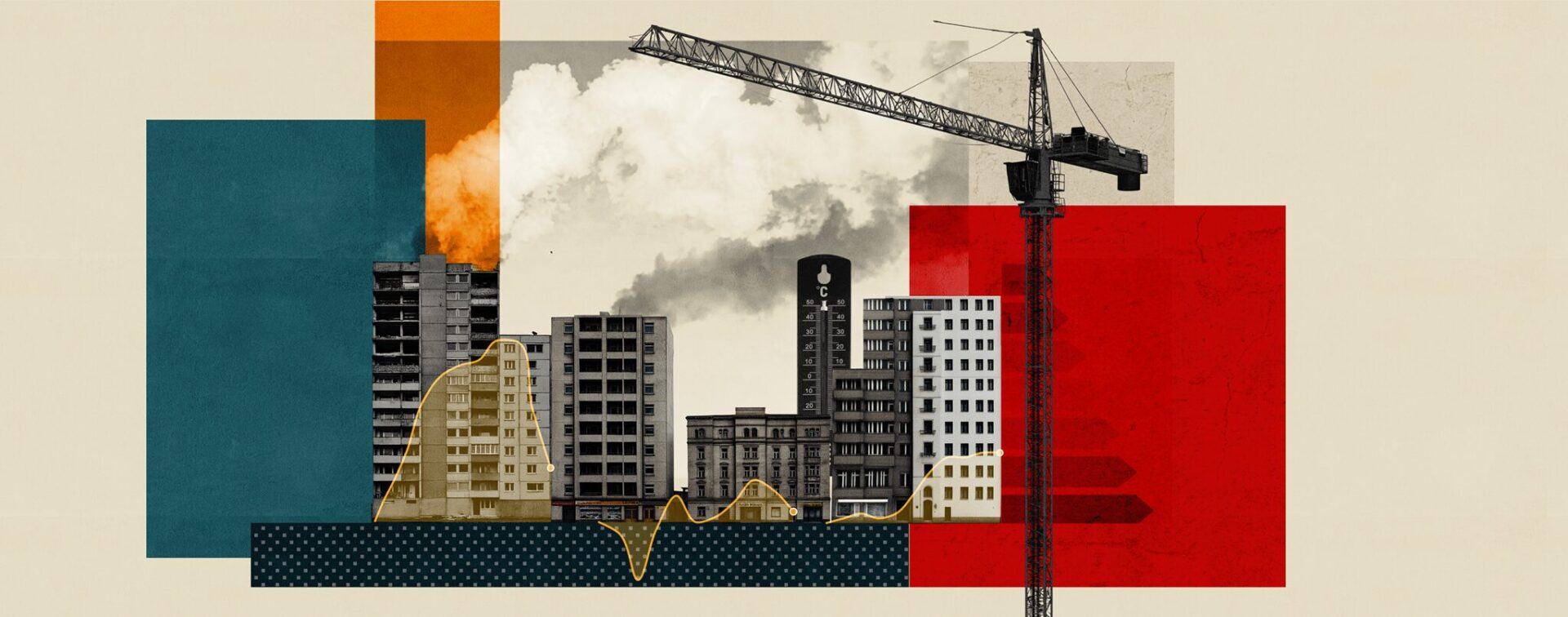
The gas station attendant in a small town outside of Des Moines doesn't check the Bloomberg terminal. He doesn't need to. He watches the faces of the people pulling up to pump number four. There is a specific kind of hesitation that happens when the price of a gallon ticks past a certain psychological barrier. It is a flinch. A momentary freeze of the thumb over the trigger. When oil storms past $100 a barrel, that flinch becomes a national tremor.
For the first time since the volatile summer of 2022, the world’s most essential commodity has breached the century mark. On paper, it is a data point. In the real world, it is a tax on existence.
Consider a hypothetical long-haul trucker we will call Elias. He sits in a diner, staring at a lukewarm cup of coffee and a fuel receipt that feels like a weight in his pocket. To the analysts on the CNBC ticker, $100 oil is a "market correction" or a "supply-side pressure point." To Elias, it is the difference between a new pair of shoes for his daughter and a month spent eating canned soup in his cab. Every cent added to the price of diesel is a direct extraction from his family’s future.
We are not just talking about gas. That is the common mistake. We think of the pump, the commute, the weekend trip to the coast. But oil is the ghost in the machine of everything you touch.
The plastic in your toothbrush. The synthetic fibers in your gym clothes. The asphalt under your tires. The nitrogen-based fertilizer that allowed the spinach in your fridge to grow. When crude oil breaches that $100 ceiling, it sends a shockwave through the global nervous system. It is a slow-motion car crash that begins at a refinery and ends at your kitchen table.
The current surge isn't some freak accident. It is the result of a calculated tightening of the screws. Major producers, led by Saudi Arabia and Russia, have leaned into significant production cuts. They are holding back millions of barrels a day. They call it market stability. The rest of the world calls it a squeeze.
Imagine a giant faucet controlled by a few hands. They aren't turning it off. They are just letting it drip a little slower while the rest of the world is parched. This isn't just about supply and demand. It is about leverage.
By keeping the market undersupplied, these nations ensure that the price remains buoyant, even as the global economy shows signs of a stutter. They are betting that the world’s thirst for energy will outweigh its fear of a recession. It is a high-stakes poker game played with the world's thermostat.
But the real problem lies elsewhere.
The Federal Reserve has spent the last year and a half trying to tame the beast of inflation. They have raised interest rates at a pace that has made homeownership a pipe dream for many. They were finally seeing the numbers go down. They were finally beginning to breathe.
Then comes the $100 barrel.
Energy costs are the "sticky" part of inflation. If energy stays high, everything stays high. Shipping a pallet of electronics from Shenzhen to Los Angeles gets more expensive. Moving a truckload of tomatoes from Florida to New York gets more expensive. The Fed looks at $100 oil and realizes their job just got ten times harder.
The dream of a "soft landing"—where inflation goes away without the economy crashing—is suddenly looking a lot more like a crash landing.
We have been here before.
In 1973, the world learned just how much it relied on a few specific regions for its lifeblood. The oil embargo changed the architecture of the American car. It gave birth to the compact, the fuel-efficient, the "boring" sedan. In 2008, oil hit $147, and the world economy followed it off a cliff shortly after. In 2022, the invasion of Ukraine sent prices screaming toward $130, sparking the highest inflation in forty years.
Every time we hit the $100 mark, it feels like a test of our collective resilience. It is a reminder of a vulnerability we keep trying to ignore. We talk about the green transition. We talk about EVs and wind farms and solar arrays. But when the price of oil spikes, we realize how deeply we are still tethered to the prehistoric soup buried miles beneath the earth's crust.
We are addicts who haven't quite finished the first week of rehab.
For the average consumer, the math is brutal. If oil stays at this level for an extended period, it effectively wipes out any wage gains made over the last year. It is a silent thief. It steals from the vacation fund. It steals from the retirement account. It steals from the peace of mind of anyone who has to look at their bank account before they swipe their card.
There is a ripple effect that most people miss. Think about the airline industry. Fuel is their single largest variable cost. When oil jumps, those "cheap" flights to see family for the holidays evaporate. The ticket prices rise. The planes get more crowded. The world gets a little bit smaller and harder to navigate.
Or look at the manufacturing sector. A factory in Ohio that makes plastic components for medical devices suddenly sees its raw material costs double. They can't eat that cost. They pass it on. Suddenly, the cost of a hospital stay or a piece of medical equipment ticks upward.
The $100 barrel is a ghost that haunts every transaction in the modern world.
It is easy to get lost in the jargon of "Brent Crude" and "West Texas Intermediate." It is easy to look at the graphs and see lines going up and think of them as abstract concepts. But those lines are tied to the pulse of a family sitting around a dinner table trying to figure out why their grocery bill is $50 higher than it was last month despite buying the same things.
They aren't looking at OPEC+ meetings. They aren't reading the IEA reports. They just know that the world feels heavier.
The irony is that the high price of oil contains the seeds of its own destruction. High prices eventually kill demand. People drive less. They turn down the heat. They stop buying the extra things. Eventually, the price collapses under the weight of its own greed. But the period between the peak and the collapse is where the damage is done. It is the friction that wears down the gears of society.
Wait for the next set of retail data. Watch the confidence surveys. You will see the $100 barrel reflected there, even if the word "oil" is never mentioned. It will be there in the "cautious outlooks" and the "softened consumer spending."
The pump isn't just a place where you buy fuel. It is a scoreboard for the global economy. And right now, the score is not in our favor.
As Elias pulls his rig back onto the interstate, the sun setting behind him in a haze of orange and grey, he isn't thinking about the geopolitical chess match in Riyadh. He is thinking about the three hundred gallons of diesel he just pumped and the math he has to do to make the next three hundred worth it. He is a single cell in a massive, struggling organism, trying to move forward while the very fluid that makes motion possible is becoming too expensive to afford.
The number on the sign isn't just a price. It’s a warning.
We are living in the shadow of the three-digit barrel, and the shade is getting colder.