Donald Trump's approach to Tehran isn't a straight line. It's a series of zig-zags that leave both his allies and his enemies scratching their heads. If you've been watching the headlines lately, you've seen the "mixed signals" everyone talks about. One day he’s threatening total destruction. The next, he's saying he'd love to sit down for coffee and a new deal. This isn't just chaos for the sake of it. It’s a deliberate, high-stakes game of keeping the Iranian leadership off-balance while he tries to squeeze a better bargain out of a regime that’s been an American headache for decades.
The media likes to frame this as inconsistency. They call it "foreign policy by whim." But if you look at the track record, there’s a clear pattern of "maximum pressure" combined with an open door. Trump wants to be the one who finally closes the book on the 1979-era hostility, but he wants to do it on terms that make the 2015 JCPOA look like a starter kit.
The Art of the Pressure Cooker
The core of the strategy is simple. You break their economy first. By reimposing heavy sanctions and targeting Iran's oil exports, the administration has basically cut off the lifeblood of the Iranian Revolutionary Guard Corps (IRGC). We're talking about a massive drop in GDP and inflation that has sent the rial into a tailspin.
Why do this? Because a desperate opponent is a flexible opponent. Or at least, that’s the theory. While the State Department under various administrations has tried "strategic patience," Trump opted for "strategic exhaustion." He’s betting that the internal pressure from a frustrated Iranian public will eventually force the Supreme Leader’s hand.
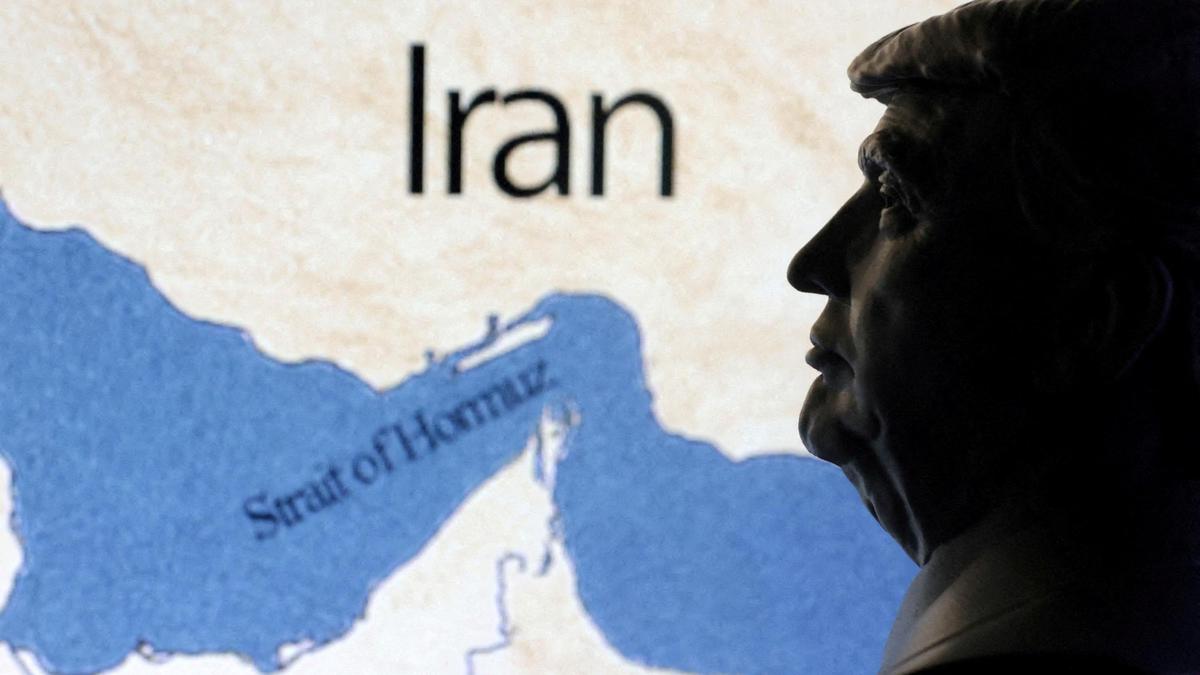
It's risky. Extremely risky. When you corner a regime that views survival as a divine mandate, they don't always come to the table with a white flag. Sometimes they lash out. We saw this with the drone strikes on Saudi oil facilities and the constant tension in the Strait of Hormuz. Trump’s "mixed signals" are his way of saying, "I can ruin you, but I’d rather trade with you." It’s the ultimate carrot-and-stick routine, just with a much bigger stick and a much shinier carrot.
Why the Tough Talk Fails to Predict the Next Move
One minute, Trump is tweeting about "obliteration" if Iran touches American interests. The next, he’s praising the Iranian people and saying they have a great future. This drives the Washington foreign policy establishment insane. They want a white paper. They want a five-year plan with measurable benchmarks.
Trump doesn't work that way. He views international relations as a series of bilateral transactions. To him, the "mixed signals" are a tool to prevent Iran from ever feeling comfortable. If they think he’s a hawk, they prepare for war. If they think he’s a dove, they try to stall. If they think he’s both, they don't know what to do.
The Soleimani Factor
We can’t talk about this without mentioning the January 2020 strike on Qasem Soleimani. That was the loudest signal Trump ever sent. It broke the "shadow war" rules that had existed for years. By taking out Iran's most powerful military commander in broad daylight, Trump showed he was willing to ignore the traditional escalation ladder.
Yet, even after that, he didn't follow up with a full-scale invasion. He didn't even push for regime change officially. He went right back to saying he wanted to talk. This is the part that confuses people. He'll take the most extreme military action possible, then immediately offer an olive branch. It’s a psychological game. He’s trying to prove that he’s unpredictable enough to be dangerous, but reasonable enough to deal with.
What the Critics Get Wrong About the Mixed Signals
The loudest criticism is that this "unpredictability" makes it impossible for Iran to negotiate even if they wanted to. The argument goes that the Iranian leadership—specifically the hardliners—can't sell a deal to their own people if they don't know which Trump they're getting.
But look at it from a different angle. The "old way" of doing things resulted in a deal that many felt gave away too much for too little. The JCPOA had "sunset clauses" that would eventually let Iran return to enrichment. Trump’s "mixed signals" are essentially a refusal to accept the old boundaries of the debate. He’s not looking for a "better" version of the old deal. He’s looking for a total reset.
He wants:
- A permanent end to the nuclear program.
- An end to the ballistic missile development.
- A cessation of support for regional proxies like Hezbollah and the Houthis.
- The release of all detained American citizens.
That’s a huge list. It’s basically asking for a total transformation of the Iranian state. You don’t get that by being consistent and polite. You get that by making the alternative look absolutely terrifying.
The Economic Reality on the Ground in Tehran
While the politicians argue, the people in Iran are feeling the weight. This is where the strategy gets real. If you talk to anyone with family in Tehran, they'll tell you about the price of eggs, the lack of medicine, and the disappearing middle class.
The administration argues that this pain is necessary to stop the IRGC from funding wars in Syria and Yemen. Critics argue it just hurts the very people we should be trying to win over. It's a brutal calculation. Trump’s signals are mixed because he’s trying to speak to two audiences at once. He’s telling the regime "I’m your worst nightmare," while telling the people "I’m your best hope for a booming economy."
It's a narrow tightrope. If he leans too hard into the threats, he risks a war he doesn't actually want to fight. If he leans too hard into the "let's talk" vibe, he looks weak to his base and gives the regime breathing room.
Is there a "Deal of the Century" for Iran?
Trump loves the big stage. He loves the summit. We saw it with Kim Jong Un. The mixed signals are the "pre-show." He’s setting the stage for a moment where he can walk into a room, shake hands with an Iranian leader, and claim he fixed the unfixable.
The problem is that Iran isn't North Korea. The power structure is more complex. You have the Supreme Leader, the President, the Parliament, and the IRGC. They don't all want the same thing. Some want to wait Trump out. They’re betting that a different president will come along and go back to the old rules.
But Trump’s gamble is that the Iranian economy won't last that long. He’s betting that the "mixed signals" will keep them paralyzed just long enough for the sanctions to do the heavy lifting. He doesn't need to be consistent. He just needs to be there when they finally decide they’ve had enough.
Moving Past the Rhetoric
Stop looking at the tweets. Stop listening to the off-the-cuff remarks at rallies. Instead, look at the Treasury Department’s list of sanctioned entities. Look at the carrier strike group movements. That’s the real policy. The "mixed signals" are just the smoke and mirrors used to keep the opposition guessing while the actual machinery of American power grinds away.
If you’re trying to figure out what happens next, don't wait for a formal policy shift. Watch for the next big "unpredictable" move. Whether it’s another targeted strike or a surprise invitation to Mar-a-Lago, it’ll be part of the same playbook. The goal isn't clarity. The goal is leverage.
To stay ahead of this, you need to track the specific economic indicators coming out of the Middle East, particularly the black market exchange rates for the rial. When those numbers hit a certain breaking point, that’s when the "mixed signals" will likely consolidate into a single, very clear demand. Keep an eye on the diplomatic back-channels in Oman and Switzerland. That’s where the real talking happens while the public is busy trying to decode the latest "fire and fury" rhetoric.