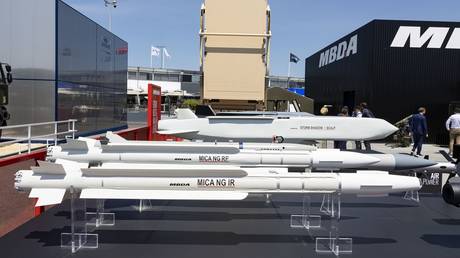
The math of modern warfare is broken. Right now, the United States and its allies are engaged in a high-stakes game of interceptor chicken with Iran, and the balance sheet looks grim. For every $30,000 Shahed drone Tehran launches, the US Navy or a regional ally often counters with a missile costing between $2 million and $28 million. You don't need a PhD in economics to see that this isn't a sustainable way to fight.
Operation Epic Fury, launched in early 2026, has pushed this fiscal and physical exhaustion to a breaking point. In the first 100 hours of the conflict alone, the Pentagon burned through an estimated $3.7 billion. While Defense Secretary Pete Hegseth points to a 90% drop in Iranian missile volume as a sign of victory, he's ignoring a terrifying reality. We're winning the individual engagements but running out of the very bullets we need to stay in the fight.
The Empty Magazine Problem
Modern air defense isn't like a video game where you have infinite ammo as long as you have the cash. These interceptors—specifically the Standard Missile (SM) family and the Patriot PAC-3—take years to build. We've spent the last 15 months firing more air defense missiles than we did in the entire 30-year period following Desert Storm.
The US Navy entered this latest escalation with roughly 400 SM-3 interceptors in its global inventory. According to analysts at the Stimson Center, we've already chewed through a massive chunk of that. If the current rate of fire continues, some estimates suggest the most critical high-end stockpiles, like the THAAD (Terminal High Altitude Area Defense) missiles, could be depleted in a matter of weeks.
This isn't just a "us" problem. It's an "everyone" problem. European allies are staring at their own empty warehouses. Germany and Poland have already sent much of their reserve capacity to Ukraine over the last few years. Now, with the Strait of Hormuz effectively closed and global energy prices spiking, President Trump is leaning on NATO to step up. But you can't ship what you don't have.
A $20,000 Drone vs A $4 Million Missile
The asymmetry is the point. Iran isn't trying to win a dogfight; they're trying to bankrupt the West's defense industrial base. They've turned the Red Sea and the Persian Gulf into a laboratory for low-cost attrition.
- Shahed-136 Drones: Roughly $20,000 to $50,000 per unit.
- Standard Missile-2 (SM-2): Approximately $2.5 million.
- Standard Missile-6 (SM-6): Around $4.3 million.
- Patriot PAC-3: Upwards of $4 million per shot.
When you're forced to fire two interceptors at a single drone to ensure a kill, you're spending $8 million to stop $30,000 worth of fiberglass and a lawnmower engine. It's a strategic disaster. The US has tried to pivot by using "LUCAS" drones—essentially American-made copies of Iranian tech—to flip the script. These cost about $35,000 and are finally being used to hunt Iranian launchers. But these are new, and the "old" way of firing million-dollar missiles is still the default for protecting billion-dollar destroyers.
The Industrial Base is Choking
You can't just tell a factory to "work harder" and expect a complex missile to pop out tomorrow. A single Tomahawk cruise missile requires a two-year lead time. The specialized rocket motors and guidance sensors come from a handful of suppliers who are already running three shifts a day.
The Navy has about 10,000 vertical launch cells across its fleet. Right now, we don't have enough missiles in the entire global inventory to fill those cells even once. This creates a massive opening for other adversaries. If the US drains its magazine in the Middle East, what's left to deter a conflict in the Pacific? This is the "interceptor gap" that keeps planners at the Pentagon awake at night.
Europe is Caught in the Middle
For Central European states like Poland and the Baltics, the Iran war is a direct threat to their own security—not because they're being bombed, but because their "umbrella" is being used elsewhere. Every Patriot battery deployed to defend a Gulf oil terminal is one less battery available to guard the border with Russia.
European leaders are trying to fast-track the "European Drone Defence Initiative" to build cheaper interceptors, but the timeline is 2027 or later. The war is happening now. The reality is that US allies are currently dependent on a supply chain that is failing to keep up with the sheer volume of 21st-century proxy warfare.
What Needs to Change Immediately
If you're looking for a silver lining, there isn't one—unless the strategy shifts from "defend everything" to "destroy the source." Relying on interceptors is a losing game. Here’s what’s actually happening on the ground to fix this:
- Switching to Guns: Navy ships are increasingly using 5-inch main guns and smaller Phalanx systems for close-in drone defense. It’s riskier, but a shell costs thousands, not millions.
- Directed Energy: There’s a massive push to get laser weapon systems (HEL) off the test beds and onto every deck. Lasers run on diesel and electricity, meaning the "magazine" is basically the ship's fuel tank.
- The "LUCAS" Pivot: We're finally seeing the mass deployment of low-cost uncrewed systems to fight drones with drones.
The era of using the world's most expensive missiles to swat away cheap drones has to end, or the US and its allies will find themselves standing on the world's most advanced warships with nothing left to fire. Keep a close eye on the upcoming emergency supplemental funding bills in Congress. If the Pentagon doesn't get at least $11 billion just to refill the racks, the "victory" in the Middle East will be a very short-lived one.