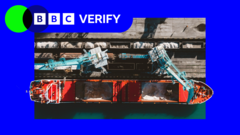
The maritime corridor between Mexico’s Gulf Coast and the Port of Mariel has become a graveyard for transparency. Recent reports confirming that two vessels laden with humanitarian aid for Cuba have effectively vanished from tracking systems after departing Mexico are not merely a tale of nautical misfortune. They represent a systemic failure in the oversight of regional logistics. When a ship carrying essential supplies—ranging from food staples to medical equipment—goes dark in these waters, it isn't always a case of piracy or engine failure. More often, it is a deliberate maneuver in a high-stakes shell game played by state actors and private contractors.
The disappearance of these vessels highlights a brutal reality. Cuba is currently grappling with its most severe economic crisis since the collapse of the Soviet Union. Blackouts are frequent. Food shortages are chronic. In this environment, every ton of rice and every gallon of fuel takes on a political weight that far exceeds its market value. The fact that these ships have dropped off the radar suggests a breakdown in the chain of custody that should alarm international observers and humanitarian organizations alike.
The Mechanics of a Maritime Disappearance
Modern shipping relies on the Automatic Identification System (AIS). This is a broadcast of a ship’s position, speed, and heading. It is designed for safety and collision avoidance. However, "going dark"—manually disabling the AIS transponder—has become a standard tactic for vessels operating in politically sensitive or sanctioned zones.
In the Caribbean, this behavior is frequently linked to "ship-to-ship" transfers. A vessel departs a port with a declared cargo and a clear destination. Somewhere in the middle of the Gulf of Mexico or the Caribbean Sea, the transponder is cut. The ship meets another vessel. Cargo is moved. Papers are altered. By the time the original ship reappears on tracking software, it may be empty, or its cargo may have been "legalized" through a series of bureaucratic sleights of hand.
This isn't just about hiding from the United States Treasury Department. It is about controlling the flow of goods into a command economy. When aid is "lost" or delayed, the scarcity creates a premium. Those who control the eventual distribution of that aid gain immense leverage over a desperate population.
Political Optics versus Operational Reality
The relationship between Mexico and Cuba has tightened significantly over the last few years. Mexico has moved from being a quiet neighbor to a vocal supporter and primary supplier of both fuel and food. This shift is not purely philanthropic. It is a strategic move to establish regional leadership, but it comes with a logistical price.
The vessels used for these runs are often aging bulk carriers or tankers, many of which are operating near the end of their service lives. They are frequently owned by obscure shell companies registered in jurisdictions like Panama or Liberia, specifically designed to insulate the primary stakeholders from legal liability. If one of these ships breaks down or is seized, the owners can simply walk away, leaving the cargo—and the people waiting for it—in a state of limbo.
The "disappearance" of aid ships often follows a predictable pattern of official silence. Mexican port authorities provide the departure data, but once a vessel enters international waters, the responsibility shifts. If the Cuban government does not acknowledge a delay, and the shipping company remains silent, the cargo effectively ceases to exist in the public record. This lack of accountability is where the corruption takes root.
The Logistics of Desperation
To understand why these ships go missing, one must look at the math of the Cuban embargo and the internal mechanics of the Cuban military-run economy. The Cuban entity GAESA, a conglomerate run by the military, controls the vast majority of the island’s retail and import infrastructure. When aid arrives from a friendly nation like Mexico, it does not always go directly to the people. It enters a system where the lines between "humanitarian assistance" and "commercial inventory" are intentionally blurred.
Consider a hypothetical scenario where a ship carries 5,000 tons of flour. If that ship "disappears" for ten days, it provides a window of time for the cargo to be diverted to state-run tourist bakeries rather than being distributed as subsidized rations. By the time the ship "arrives" at its destination, the manifest might be adjusted to reflect a smaller load, citing "spoilage" or "logistical loss" during the unexplained delay.
The human cost of this maritime opacity is staggering. In Havana and the outlying provinces, the arrival of a ship is a matter of survival. When those ships fail to appear on schedule, the ripple effect is immediate. Prices in the informal market spike. Tensions in the streets rise. The "missing" ships are not just a data point on a tracking map; they are the difference between a meal and a fast for thousands of families.
Broken Chains and Silent Ports
The failure to track these vessels is also a failure of regional maritime security. The Gulf of Mexico is one of the most heavily monitored bodies of water in the world. Between the U.S. Coast Guard, regional navies, and commercial satellite arrays, it is nearly impossible for a large merchant vessel to truly vanish without someone knowing exactly where it went.
The silence from regional authorities suggests a quiet consensus. Tracking these ships would mean exposing the methods used to bypass sanctions and the entities profiting from the misery of the Cuban people. For Mexico, admitting that aid ships are being mismanaged would be a diplomatic embarrassment. For Cuba, transparency would mean losing control over its most precious resource: the supply chain.
We are seeing the emergence of a "gray fleet" in the Caribbean, mirroring the one used by sanctioned oil producers in the Middle East. These ships operate outside the norms of international maritime law, with poor maintenance records and dubious insurance coverage. They are a ticking environmental time bomb, but more importantly, they are a tool for authoritarian survival.
The Cost of the Gray Market
When aid is treated as a tactical asset rather than a human right, the system is designed to fail. The disappearance of these two ships is a symptom of a larger rot. It is a world of false manifests, disabled transponders, and back-room deals in Mexico and Havana. In this shadow economy, there is no room for the hungry families waiting for a delivery that may never come.
The ultimate question remains: who is the true beneficiary of the missing cargo? It is rarely the intended recipient. The real reason these ships go dark is because they are moving from a world of law and tracking into a world of political favor and personal profit. Until there is a demand for radical transparency from the international community, the Gulf of Mexico will continue to swallow ships and their promises.
The next step is for independent maritime watchdogs to cross-reference satellite imagery with the last known positions of these vessels. This will reveal the "ship-to-ship" transfers that the official records hide.