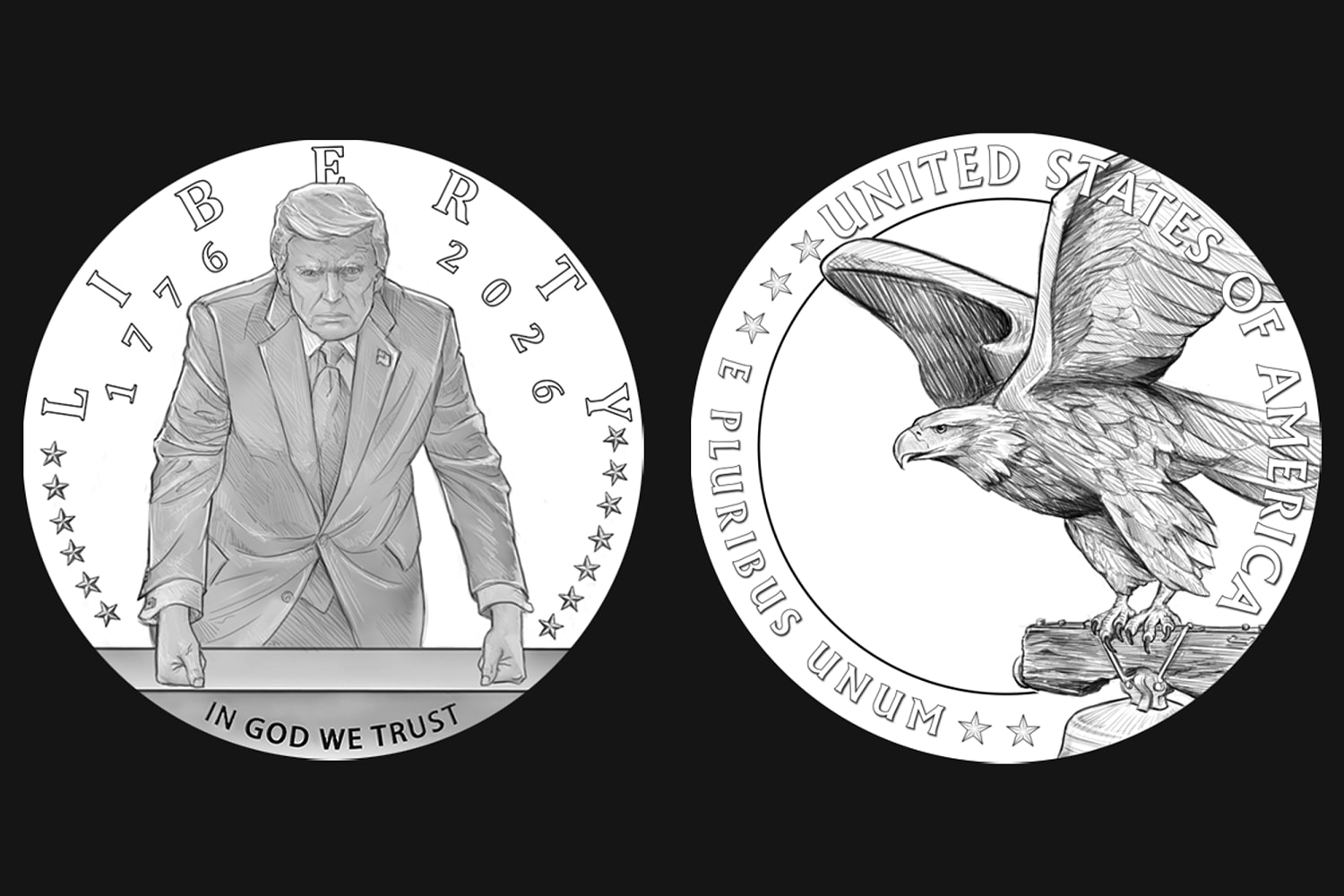
The recent greenlighting of a United States gold coin featuring the image of Donald Trump by a hand-picked panel marks a departure from two centuries of American numismatic tradition. This move, sanctioned by the Citizens Coinage Advisory Committee (CCAC), bypasses the usual decade-long waiting period required for a former president to appear on legal tender. By accelerating this process, the administration has effectively weaponized the U.S. Mint, turning a symbol of national stability into a tool for political branding.
Historically, the U.S. Mint has functioned as a neutral arbiter of national heritage. The process of selecting who graces our currency is designed to be slow, deliberate, and insulated from the whims of the current occupant of the Oval Office. This insulation exists to ensure that those honored have stood the test of time, their legacy solidified by the perspective that only history can provide. When that process is truncated, the resulting currency loses its status as a shared national symbol and instead becomes a partisan artifact. This is not merely about a coin; it is about the integrity of the institutions that define American value.
The Committee and the Craft of Consent
The CCAC is technically an advisory body, but its influence is absolute when the political stars align. Comprising members appointed by the Secretary of the Treasury, the panel is supposed to provide expertise on themes, designs, and the artistic merit of American coinage. However, the recent shift in the panel’s composition reveals a more tactical objective. By installing loyalists and industry insiders with specific political leanings, the administration has ensured that "advice" is synonymous with "approval."
This isn't just about aesthetics. It is about the physical manifestation of power. When a president’s hand-picked committee approves a gold coin bearing his likeness while he is still a dominant force in active politics, it creates a feedback loop of ego and economics. The CCAC has transitioned from a guardrail of tradition to an accelerant for a specific political agenda. This maneuver effectively silences the nuanced debate that usually precedes such an honor, replacing it with a streamlined path to production.
Gold as a Marketing Engine
Gold coins occupy a unique space in the American psyche. They are seen as the ultimate store of value, a hedge against inflation, and a piece of history you can hold in your hand. By associating the former president’s image with 24-karat gold, the administration is attempting to transfer the inherent "goodness" and stability of the metal to the man himself. It is a brilliant, if cynical, piece of marketing.
For the collector market, this is a windfall. The numismatic industry thrives on scarcity and controversy. A coin that breaks tradition is a coin that sells. But for the average citizen, the implications are more troubling. If the U.S. Mint becomes a factory for political merchandise, the line between government service and private branding disappears. We are seeing the "merchandising of the presidency" reach its logical, metallic conclusion.
The economic ripple effects are also worth noting. The Mint operates as a self-funding agency, meaning it relies on the sale of coins to collectors to fund its operations. When the Mint leans into high-margin, politically charged products, it risks alienating a broad swath of the public that views the institution as a non-partisan entity. If the "brand" of the U.S. Mint becomes synonymous with one political faction, its long-term viability as a trusted source of bullion and commemorative items is called into question.
The Death of the Ten Year Rule
There is a reason the Treasury traditionally waits ten years after a president’s death before featuring them on a coin. Time has a way of smoothing out the jagged edges of a presidency. It allows for a full accounting of successes and failures. It ensures that the person being honored is viewed through the lens of history rather than the lens of the current news cycle.
By discarding this convention, the CCAC has set a precedent that will be difficult to reverse. If one administration can push through a coin for its leader, what is to stop the next from doing the same? We face the prospect of a revolving door of political currency, where the face of the dollar or the gold eagle changes with every shift in the balance of power. This volatility is the antithesis of what a currency should represent.
The Technical Reality of Mintage
From a technical standpoint, the production of these coins is a massive undertaking. It involves high-pressure presses, master engravers, and a supply chain of precious metals that must be strictly audited. When the CCAC fast-tracks a design, they are putting immense pressure on the artisans at the Mint to deliver a product that meets exacting standards on an accelerated timeline.
Material Integrity and Valuation
The value of a gold coin is determined by two factors: its melt value (the price of the gold content) and its numismatic value (its worth to collectors).
- Melt Value: Fixed to the global spot price of gold.
- Numismatic Value: Driven by demand, rarity, and historical significance.
By injecting raw politics into the numismatic equation, the CCAC has made the secondary market for these coins highly unpredictable. While loyalists may pay a premium today, the long-term value of a "political" coin is often lower than that of a "historical" one. If future generations view the coin as a relic of a divisive era rather than a tribute to a unified nation, its value will inevitably suffer.
Counter-Arguments and the Defense of the Coin
Proponents of the coin argue that the president’s impact on the country is undeniable and that his supporters deserve a way to commemorate his tenure. They point to other instances where the Mint has moved quickly to honor figures of national importance. They claim that the CCAC is simply responding to public demand and that the gold coin is a legitimate way to generate revenue for the Treasury.
However, this argument ignores the fundamental difference between a "figure of national importance" and a "divisive political leader." True national heroes—like the astronauts of the Apollo missions or civil rights leaders—tend to enjoy broad, cross-partisan support. Using the Mint to cater to a specific base of voters is a different endeavor entirely. It transforms the government into a vendor for a political party.
The Structural Shift in Government Branding
This move is part of a larger trend where government institutions are being repurposed for personal brand building. From the use of federal property for campaign events to the blurring of lines between official government social media and personal accounts, the "Trump Coin" is just the latest example of this erosion.
The long-term danger is that the public begins to view all government outputs as inherently biased. If you can’t trust the image on your coin to be a neutral representation of history, what can you trust? The integrity of the Mint is a proxy for the integrity of the state. When the Mint becomes a tool for a specific leader, the state itself appears to be for sale.
Practical Steps for the Concerned Investor
If you are looking at this coin as a financial investment, caution is the only rational approach. Gold is always a solid asset, but "commemorative" coins often carry high premiums that are difficult to recoup.
- Check the Premium: Calculate the difference between the coin's price and the actual spot price of the gold it contains. If the premium is over 15%, you are paying for the "story," not the metal.
- Consider the Liquidity: Will a local coin shop buy this back from you in ten years? Or is its market limited to a specific political group?
- Analyze the Mintage Limits: Lower mintage usually means higher value, but only if demand remains high.
The gold market does not care about politics, but the coin market lives and breathes it. Buyers should decide if they are purchasing a piece of history or a piece of campaign memorabilia.
The Final Appraisal
The approval of the Trump gold coin by a hand-picked panel is a masterclass in institutional capture. It demonstrates how easily long-standing norms can be dismantled when they stand in the way of a powerful brand. The U.S. Mint, once a bastion of boring, reliable tradition, has been dragged into the center of the culture war.
This isn't just a story about a coin. It’s a story about how we value our history and who gets to decide which faces are worthy of being cast in gold. When the "how" and "why" of our currency are dictated by political convenience, the currency itself is devalued in ways that the spot price of gold can never reflect. We are witnessing the transformation of national symbols into private assets, and the cost of that transition will be paid by the credibility of our public institutions for decades to come.
Demanding transparency in the CCAC appointment process and a return to the ten-year waiting period is the only way to preserve the sanctity of American coinage.