The year is 1120. The city is Kaifeng. It is the largest, loudest, and most fragrant metropolis on the planet. While London is little more than a muddy collection of wooden huts and Paris is struggling with its first paved streets, Kaifeng is a neon-bright fever dream of silk, coal smoke, and ginger.
The sun has long since dipped below the horizon, but the city doesn't sleep. It breathes. It eats. Specifically, it eats at 2:00 AM, 4:00 AM, and every hour in between.
In the heart of the Great Inner Palace, a eunuch hurries through a corridor of lacquered vermilion. He isn't carrying a weapon or a scroll. He is carrying a craving. The Emperor has decided he wants pan-fried buns filled with minced pheasant and seasonal leeks. The imperial kitchens are legendary, but tonight, the Son of Heaven wants the specific, charred crunch that only comes from a street stall in the Dongjie district.
This is not a historical footnote. This is the birth of the modern world.
We think of food delivery as a child of the internet, a byproduct of the gig economy and the smartphone. We imagine that before the 21st century, dinner was a labor of love or a chore of survival. We are wrong. A thousand years ago, during the Song Dynasty, the citizens of China had already solved the problem of the empty cupboard. They didn't have apps, but they had an infrastructure of speed that would put a modern courier to shame.
The Mechanics of a Midnight Craving
Imagine a merchant named Zhao. He is hypothetical, but his life is documented in the bones of the Dongjing Meng Hua Lu, a memoir of the city’s lost splendor. Zhao has spent twelve hours haggling over Sichuan silk. He is exhausted. His feet ache. The thought of lighting a charcoal brazier and cleaning a fish is physically painful.
He leans out of his window and signals to a passing boy. Minutes later, a waiter from the local tavern—the "Blue Lotus"—arrives. He doesn't bring a menu; Zhao knows the specials by heart. He wants the "Mountain-Style" noodles and a side of pickled plums.
The waiter disappears into the throng. He isn't just a server; he is a human algorithm. He runs back to the tavern, shouting the order to the kitchen before he even crosses the threshold. The chef drops the noodles into boiling water. The plums are packed into a tiered ceramic container designed to retain heat.
The waiter returns, balancing the heavy vessel on one shoulder. He weaves through a crowd of fortune tellers, acrobats, and tea-sellers. He arrives at Zhao’s door while the noodles are still steaming.
This was the chuansong, the "delivery and sending." It was so ubiquitous that the historian Meng Yuanlao recorded that the people of Kaifeng "did not cook at home." Why would they? The street was a pantry that never closed.
The Innovation of the Thermal Box
The biggest enemy of delivery has always been the cooling curve. A cold dumpling is a tragedy. A soggy noodle is an insult.
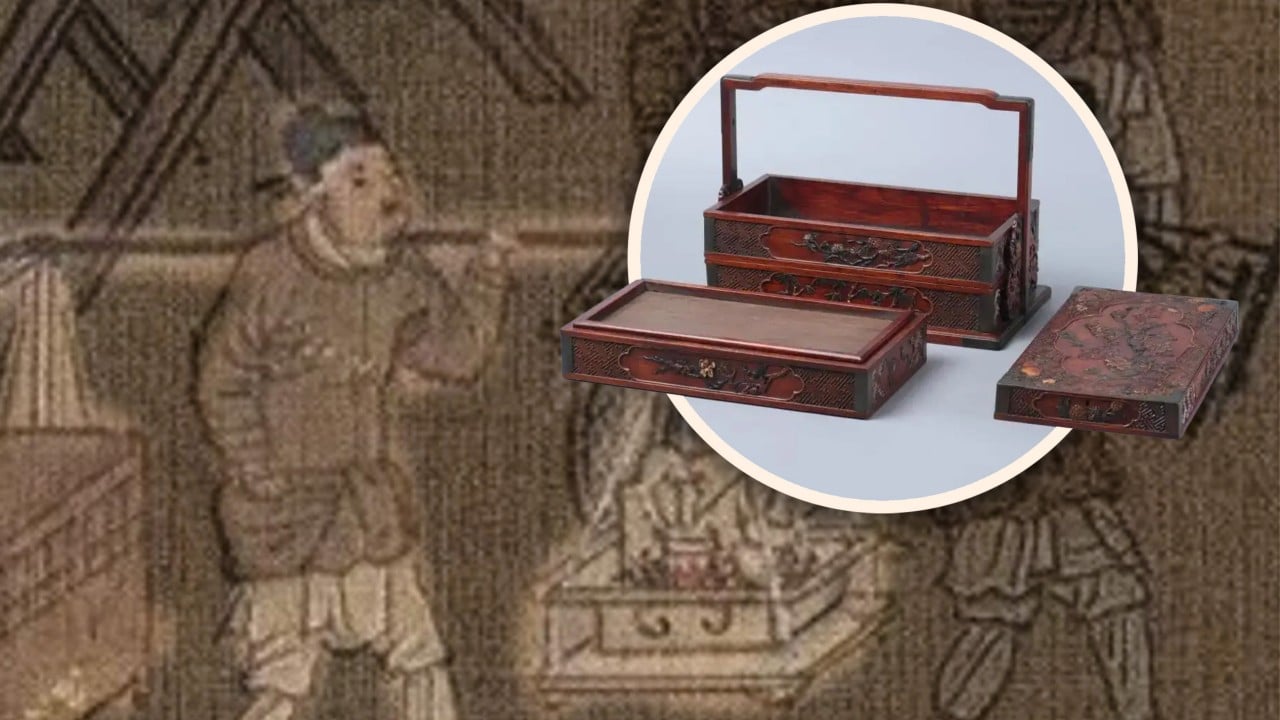
The Song Dynasty engineers—and they were engineers, even if they wore silk robes—solved this with the wenzhu, a double-walled warming vessel. Think of it as the 12th-century ancestor of the insulated bag. They used hot water or heated sand trapped between layers of ceramic or metal to create a portable oven.
When an emperor ordered a meal from the city markets, it had to travel miles through the palace complex. By the time the eunuch reached the royal table, the food had to be at the exact temperature it left the wok. If it wasn't, the consequences weren't a one-star review. They were far more permanent.
This demand for excellence drove a level of logistics we find difficult to fathom. The city was organized into trade guilds. There were guilds for fish, for grains, and for the couriers themselves. They mapped the city’s veins. They knew which alleyways flooded during the spring rains and which shortcuts were blocked by the night markets. They moved with a frantic, rhythmic grace.
The Social Contract of the Doorstep
There is a specific kind of intimacy in food delivery. You are letting a stranger into the periphery of your private life. You are trusting them with your sustenance.
In Kaifeng, this trust was the currency of the street. The delivery men were often young, athletic, and incredibly well-acquainted with the city's gossip. They were the connectors. They brought the news of a border skirmish in the north along with a bowl of mutton soup. They linked the secluded scholar in his library to the chaotic energy of the butcher’s block.
But the real magic was the accessibility. While the Emperor utilized eunuchs and elite servants, the average clerk used the same system. The Song Dynasty was a period of incredible social mobility and urban wealth. The "delivery fee" was baked into the price of the meal, a tiny tax on convenience that allowed a culture of leisure to flourish.
Consider the psychological shift this represents. For most of human history, food was a static thing. You went to the food, or you made the food. The Song Dynasty flipped the script. They decided that the city should serve the individual. The mountain should come to Muhammad, and the noodles should come to the tired merchant.
The Ghost of Kaifeng in Your Pocket
When you open an app today and watch a little digital bicycle move across a map, you are participating in an ancient ritual. You are feeling the same pang of anticipation that the merchant Zhao felt while listening for the clatter of the waiter’s wooden sandals on the cobblestones.
The stakes haven't changed. We are still hungry. We are still tired. We still seek the comfort of a meal we didn't have to kill or clean ourselves.
The tragedy of Kaifeng is that it ended. In 1127, the city fell to invaders from the north. The "Dream of the Eastern Capital" vanished. The restaurants were burned, the guilds were scattered, and the warming vessels were smashed. For centuries, the level of urban sophistication seen in the Song Dynasty remained a peak that the rest of the world struggled to climb back toward.
We often view history as a slow, steady climb from darkness into light. We assume we are the most "advanced" humans to ever walk the earth because we have high-speed internet and satellites. But walk through the ruins of a Song Dynasty site and you realize we are just rediscoverers. We are finally catching up to the efficiency of a thousand-year-old kitchen.
The next time you hear a knock at your door in the middle of the night, take a second. Look at the steam rising from the container.
You aren't just looking at dinner. You are looking at a ghost of the Great Inner Palace. You are part of a lineage of hunger that spans ten centuries, connecting a modern high-rise to a vermilion corridor where a eunuch once hurried, carrying pheasant buns for a man who believed he ruled the world, but really just wanted a snack.
The city is still awake. It is still breathing. And it is still, very much, hungry.