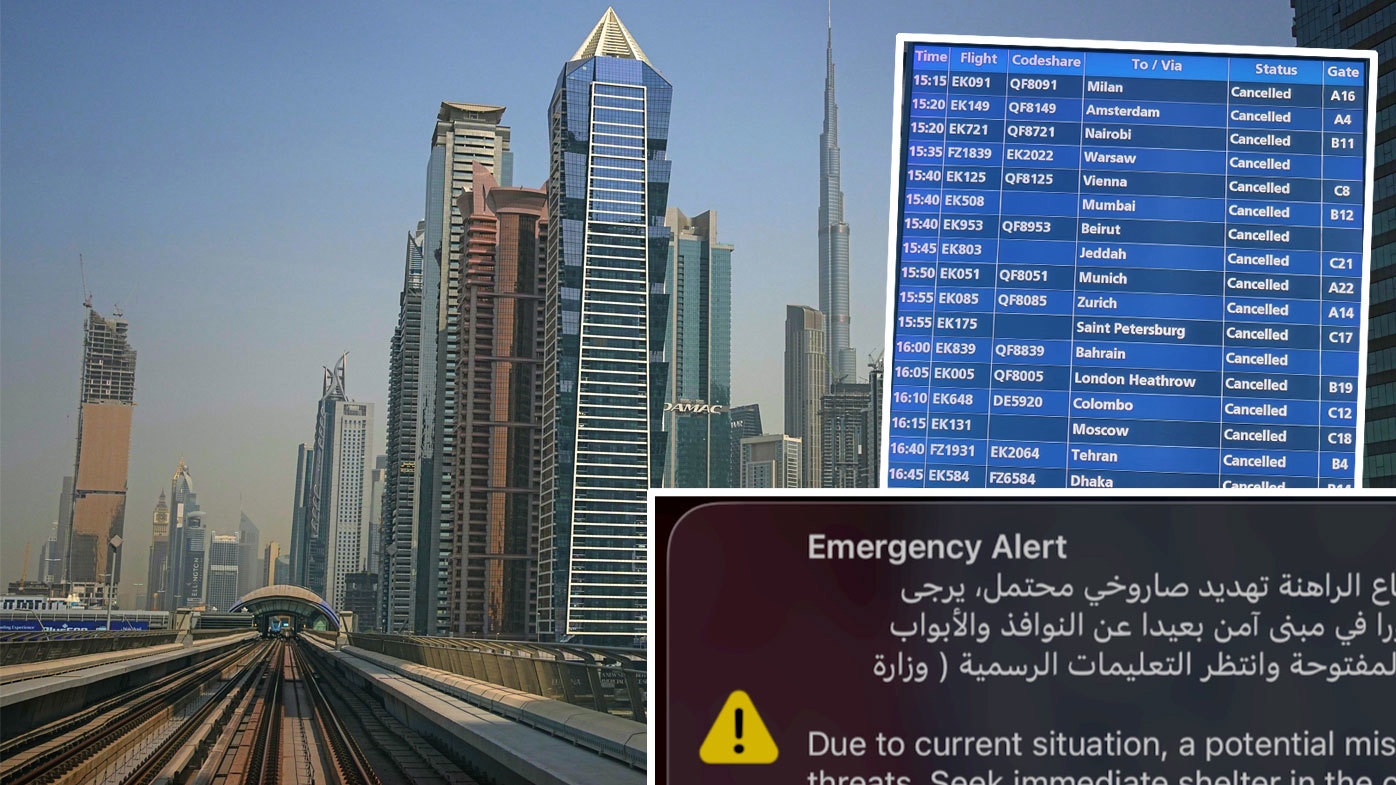
The modern travel industry operates on a razor-thin illusion of permanence. We book tickets months in advance, trusting that the complex machinery of global aviation—fuel hedges, crew rotations, and airspace treaties—will remain static. That illusion shattered this week as tens of thousands of passengers found themselves abandoned in airport terminals from Dubai to Istanbul. While headlines scream about the immediate panic of a regional conflict, the deeper reality is a systemic failure of the airline industry to manage geopolitical risk in an era of instant escalation. Travelers aren’t just stranded by war; they are stranded by an industry that has no Plan B for the closure of the world’s most critical crossroads.
The current chaos stems from the sudden shuttering of Iranian and Iraqi airspace, the primary corridors connecting Europe to Asia. When these "highways in the sky" go dark, the ripple effect is not linear—it is exponential. Airlines do not just "fly around" the problem. They face a brutal mathematical reality involving fuel weight, crew duty limits, and the sudden scarcity of landing slots at secondary hubs. For the passenger sitting on a linoleum floor in Doha, the struggle is about a missed wedding or a lost job opportunity. For the industry, it is a glaring indictment of a hub-and-spoke model that has become too centralized for a fractured world.
The Geography of a Chokepoint
Airspace is the most undervalued commodity in international business. For decades, the industry has relied on the predictability of the "Mid-East Corridor." When tensions between regional powers transition from cold rhetoric to active missile exchanges, the insurance markets react faster than the pilots. Within minutes of the first reports of kinetic activity, war-risk insurance premiums for commercial hulls spike to levels that make flight operations economically impossible.
This is why your flight was canceled three hours before the government officially closed the borders.
The geography of the region offers few alternatives. To the north lies the restricted airspace over Ukraine and Russia, currently a no-go zone due to the ongoing conflict there. To the south, the Red Sea corridor is increasingly complicated by maritime-based anti-aircraft threats. When you remove the center—the massive Iranian FIR (Flight Information Region)—you create an aerodynamic vacuum. Carriers are forced to reroute through narrow corridors over Saudi Arabia and Egypt, creating "traffic jams" at 35,000 feet. These diversions add two to four hours of flight time, meaning planes often have to land at unintended airports simply to refuel, further displacing passengers and crew.
The Myth of the Rebooking System
Airlines spent the last decade automating their customer service, replacing experienced gate agents with algorithms and chatbots. In a localized storm in Chicago, these systems work reasonably well. In a regional war that strands 50,000 people simultaneously, the algorithms fail.
The software is programmed to find the "next available seat." It is not programmed to handle a situation where the "next available seat" does not exist for six days. We are seeing a total breakdown in the digital infrastructure of travel. Passengers report being stuck in endless loops where the app tells them to go to the counter, and the counter tells them to use the app. This isn't a glitch; it's the natural result of an industry that stripped away human contingency to satisfy quarterly earnings.
The Hidden Cost of the Low-Cost Carrier
Budget airlines operating in the region face an even bleaker reality. Unlike legacy carriers—think Emirates, Qatar, or Lufthansa—low-cost carriers (LCCs) operate with "point-to-point" efficiency. They do not have the deep pockets to put thousands of people in hotels for a week. Their business model relies on the plane being in the air 18 hours a day. When the plane is stuck on the tarmac in Amman because it cannot fly over Iran, the revenue disappears while the leasing costs remain.
If you are traveling on a budget ticket during a conflict, you are effectively at the bottom of the food chain. Legacy carriers will prioritize their own high-value frequent flyers for the few remaining seats on diverted routes, leaving the budget traveler to fend for themselves in a foreign city with a devalued ticket.
Why "Force Majeure" is the Airline's Best Friend
There is a legal gray area that airlines are currently exploiting to avoid massive payouts. Under most international regulations, such as the European Union’s EC 261, airlines are required to compensate passengers for delays. However, there is an "extraordinary circumstances" clause.
War is the ultimate extraordinary circumstance.
By declaring the situation a matter of regional safety beyond their control, airlines can legally wash their hands of the costs associated with hotels, meals, and alternative transport. While some premium carriers provide these as a gesture of "goodwill," it is not a guaranteed right. This leaves the traveler as the sole bearer of the financial burden. The industry relies on this loophole to protect its margins during a crisis, effectively shifting the cost of geopolitical instability onto the individual.
The Technical Nightmare of Rerouting
To understand why the "backlog" will take weeks to clear, one must look at the cockpit. Pilots are governed by strict Flight Duty Period (FDP) limits. If a flight from London to Singapore is diverted around Iranian airspace, adding three hours to the journey, the crew may legally "time out" before they reach the destination.
- Crew Exhaustion: Once a crew hits their legal limit, they must rest for a mandatory period, usually 10 to 12 hours.
- Out-of-Position Aircraft: If a plane is diverted to Cyprus to refuel, it is now in the wrong city for its next scheduled flight.
- Maintenance Cycles: Extra flight hours mean planes hit their "Check A" and "Check B" maintenance milestones faster, pulling them out of service for inspections exactly when they are needed most.
The system is a series of interlocking gears. When one gear stops—like the ability to fly over Tehran—the entire machine grinds to a halt. You cannot simply "add more flights" because there are no spare planes and, more importantly, no spare pilots who haven't already hit their legal flying limits for the month.
The Failure of Travel Insurance
Many travelers believe they are protected by their insurance policies. They are often wrong. Most standard travel insurance policies have specific "Act of War" exclusions. If your trip is canceled because the airline decided it was too dangerous to fly, you might be covered. If your trip is ruined because the country you are in becomes a combat zone, the policy often becomes void.
We are seeing a massive wave of denied claims because the "triggering event" is classified as political instability rather than a mechanical failure or weather event. This is the fine print that is currently costing families thousands of dollars. The insurance industry, much like the airlines, has spent years refining the language of their contracts to ensure they are not liable for "black swan" events in the Middle East.
The Role of the Mega-Hubs
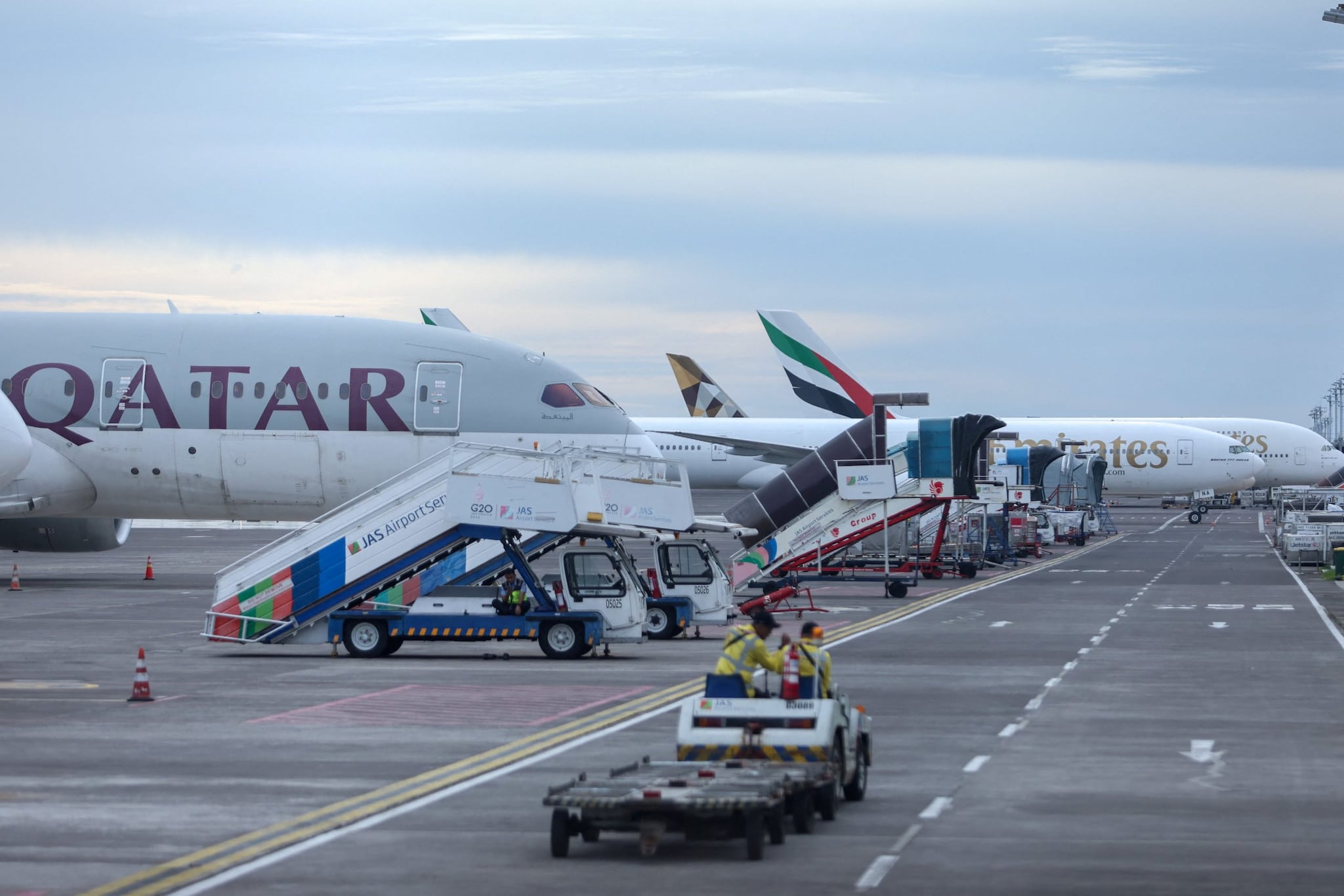
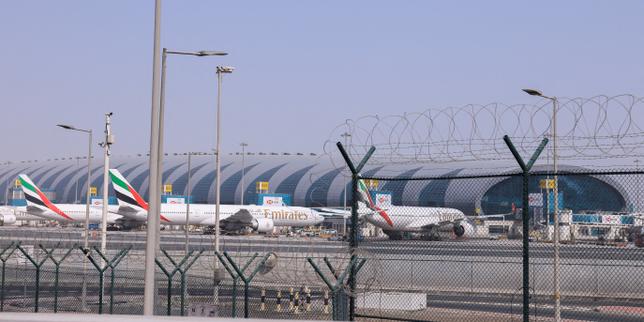
The rise of the "Middle East Three" (Emirates, Etihad, and Qatar Airways) was built on the premise that the world is a circle and they are at the center of it. This strategy was brilliant for thirty years. It turned small desert outposts into the busiest transit points on earth. But this centralization is now a vulnerability. When the "center" becomes a conflict zone, there is no bypass.
The industry is now facing a reckoning: Is the mega-hub model too risky? We may see a shift back toward "ultra-long-haul" flights that bypass the Middle East entirely—think London to Sydney direct, or New York to Singapore. These flights are more expensive and harder on the body, but they offer something the Middle East hubs currently cannot: certainty.
The Logistics of Displacement
On the ground, the situation is a humanitarian crisis disguised as a logistical one. Airports are not designed to be hotels. They lack the sanitation, sleeping facilities, and food supply chains to support ten thousand people staying for multiple days. In hubs like Istanbul and Dubai, the sheer volume of stranded passengers has overwhelmed local infrastructure.
Pharmacies are running out of essential medications for elderly travelers. Parents are struggling to find baby formula. This isn't just an "inconvenience" for the wealthy traveler; it is a breakdown of basic care for a captive population. The airlines, focused on their balance sheets, have largely left the management of these crowds to airport security and local police, who are trained for enforcement, not hospitality.
What Happens When the Smoke Clears?
Even if a ceasefire were signed tomorrow, the aviation "hangover" would last for a month. The backlog of passengers must be cleared alongside the existing flow of new travelers. Ticket prices will almost certainly spike as airlines try to recoup the millions lost in fuel burns and diverted operations.
We are entering a period of "High-Risk Travel" where the price of a ticket no longer guarantees a seat, but rather a chance at a seat. The industry has proven it cannot handle the reality of modern conflict. Until there is a fundamental shift in how airspace is managed and how passenger rights are protected during "extraordinary circumstances," every traveler is one missile launch away from being a refugee in a terminal.
Check your carrier’s "Contract of Carriage" today. You will find that while you are bound by a dozen rules, the airline is bound by almost none when the guns start firing. The burden of risk has been successfully transferred to you. If you are planning to transit through a global chokepoint, your only real protection is a backup fund and a willingness to abandon your itinerary at a moment’s notice. The era of seamless global travel has been replaced by a system that works perfectly—until it doesn't.