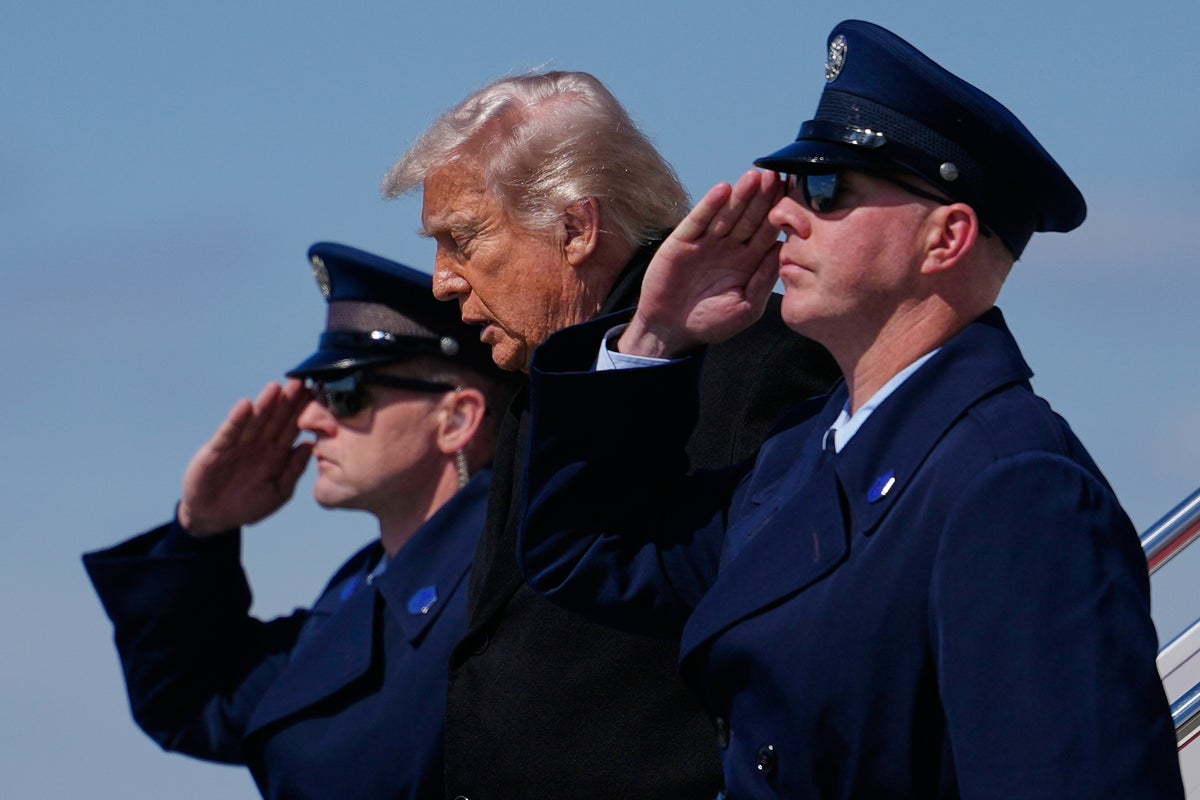
When Donald Trump took the stage to ridicule the speech patterns and cognitive processing of his political opponents, he wasn't just recycling a 2016 campaign tactic. He was stepping into a modern cultural minefield that has changed significantly since his first run for office. Jennifer Siebel Newsom, the First Partner of California and an outspoken advocate for the learning disabled, didn't just issue a standard political rebuttal. She targeted the specific cruelty of mocking conditions that affect millions of American families, framing the former president’s rhetoric not as "tough talk," but as a fundamental misunderstanding of human potential.
This clash goes beyond the usual partisan bickering. It highlights a widening gap between an older style of "strongman" politics, which views any perceived cognitive difference as a weakness to be exploited, and a growing segment of the electorate that views neurodiversity as a protected identity. For Trump, the goal is simple: de-legitimize an opponent by painting them as "low IQ" or mentally unfit. For those on the receiving end, like the Newsom family—who have been public about their own struggles with dyslexia—the attacks are a strike against the dignity of every child who learns differently.
The Strategy of Cognitive Derision
Political bullying is as old as the republic, but the specific focus on learning disabilities marks a shift in how candidates attempt to disqualify one another. In recent months, the rhetoric has shifted from policy critiques to playground-level taunts about how people process information. This isn't accidental. It is a calculated move designed to appeal to a base that values a very specific, traditional definition of "competence."
By mocking a stutter, a verbal slip, or a slower processing speed, a candidate attempts to trigger an instinctual bias in the voter. They want the audience to equate a physical or neurological trait with a lack of leadership ability. It is a primitive form of vetting that ignores how the brain actually works. We now know that many of the most successful leaders in history struggled with traditional learning. Standardized intelligence is a myth, yet it remains a potent weapon in the hands of a populist who knows how to work a crowd.
The reaction from the Newsom camp was swift because it was personal. Jennifer Siebel Newsom has spent years documenting the "toxic masculinity" that often drives this brand of humor. When she "torches" Trump, she isn't just defending a political ally; she is defending a worldview where empathy is a requirement for office, not a defect.
The Neurological Reality vs Political Theatre
To understand why these attacks are so polarizing, we have to look at the data on neurodivergence in the United States. Roughly 20% of the population has some form of learning disability, with dyslexia being the most common. These are individuals who often have high IQs but struggle with the mechanics of reading or rote memorization.
In a high-stakes debate or a televised town hall, a person with a learning disability might pause longer to find a word or stumble over a complex sentence. In the world of political theater, this is "blood in the water." To a neurologist, it is simply the brain taking a different path to reach the same conclusion.
The danger for any politician using this as a weapon is the "collateral damage" factor. Every time a candidate mocks a "slow" opponent, they are indirectly mocking the children and grandchildren of their own supporters. This is where the Newsom rebuttal finds its teeth. By framing the issue as an attack on kids who are "doing their best to navigate a world not built for them," the counter-argument moves from the political to the moral.
The Power of the Parental Vote
There is a massive, often silent constituency of parents who spend their weekends in IEP (Individualized Education Program) meetings and their evenings helping children decode sentences. This group is not monolithic in its politics, but it is fiercely protective.
When Jennifer Siebel Newsom speaks out, she is tapping into a reservoir of parental resentment. These parents know the sting of seeing their child underestimated. When a national figure validates that underestimation on a global stage, it triggers a visceral response. It ceases to be about "owning the libs" and starts to be about the dignity of their own household.
The Evolution of the "Strength" Narrative
For decades, the American presidency has been sold as a position for the "alpha." This archetype doesn't get sick, doesn't stumble, and certainly doesn't have a "disability." This outdated imagery is what Trump relies on. It’s the same impulse that led him to mock a disabled reporter in 2015—a moment many pundits thought would end his career, but which his base largely shrugged off or defended as a misunderstanding.
However, the cultural "landscape" (to use a forbidden term of the trade, let's call it the "social terrain") has shifted. We are currently seeing a massive increase in diagnoses and, more importantly, a decrease in the shame associated with those diagnoses. Silicon Valley—a place Gavin Newsom knows well—is famously populated by "twice-exceptional" individuals who failed traditional schooling but built the modern economy.
When a politician mocks these traits, they aren't just being "politically incorrect." They are sounding like a dinosaur to a generation that views neurodiversity as a competitive advantage in creative problem-solving.
Counter-Arguments and the "Softness" Critique
Those who defend the use of these attacks often argue that the presidency is the most demanding job on earth. They claim that any sign of cognitive struggle is a legitimate concern for national security. This is the "Red Phone" argument: if you can't get through a sentence, can you handle a nuclear crisis?
This perspective intentionally conflates a learning disability with cognitive decline or lack of intelligence. It is a nuance that often gets lost in a thirty-second clip on social media. The Newsom defense is built on highlighting this specific distinction. They aren't asking for a "softer" world; they are asking for an accurate one where a person's worth isn't measured by their ability to provide a flawless soundbite.
Why the Rebuttal Matters Now
We are entering an election cycle where the age and mental acuity of the candidates will be the primary focus. Every gape, every stutter, and every "senior moment" will be clipped and shared millions of times. By drawing a line in the sand now, advocates like Jennifer Siebel Newsom are trying to set the rules of engagement.
They are attempting to make "neurodiversity mocking" as socially unacceptable as racial or gender-based slurs. It is an uphill battle. The incentive structure of social media rewards the most "savage" or "brutal" takedowns. A video of a candidate looking confused generates more engagement than a nuanced discussion on tax policy.
The Long-Term Impact on Public Discourse
If this brand of rhetoric becomes the standard, the pool of people willing to run for office will shrink. Why would a brilliant mind with a speech impediment or a history of ADHD subject themselves to a national stage where their neurological makeup is used as a punchline?
The Newsom family’s decision to engage on this front is a gamble. It keeps the story alive, which some political consultants would advise against. But it also positions them as the defenders of a specific type of American family—the ones who feel ignored by a political culture that prizes polish over substance.
The real question isn't whether Trump will stop. He won't. The question is whether the electorate still finds this kind of humor effective, or if it has finally become a liability that outweighs the entertainment value. As more families see themselves in the struggle for neuro-inclusion, the "strongman" act starts to look less like strength and more like an insecurity that the modern world is quickly outgrowing.
Check the enrollment numbers for special education services in swing states if you want to see where this fight will actually be won or lost.